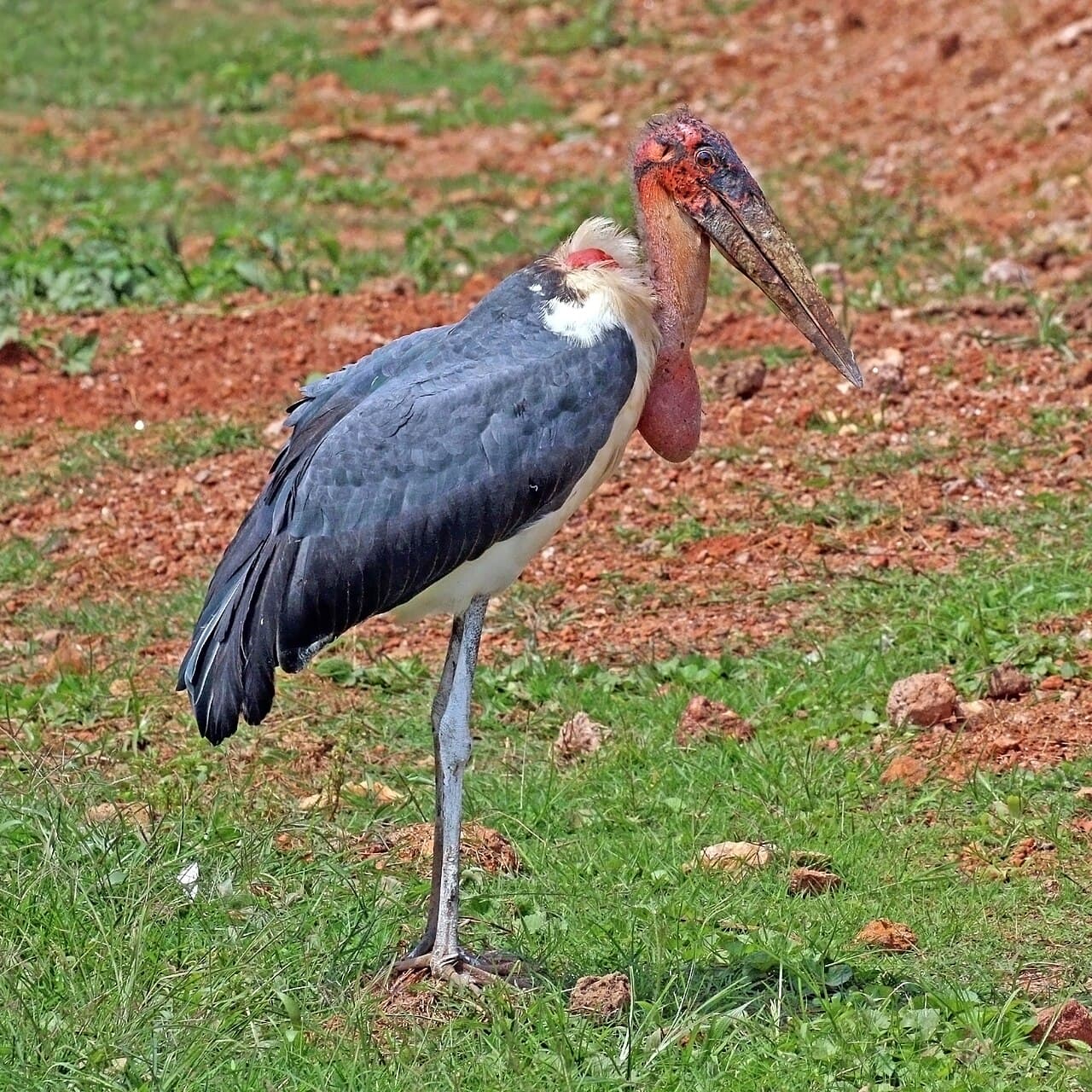
A marabou stork's bare head and hanging throat pouch give it a memorable silhouette. Its appearance can seem strange until we consider how the bird lives.
This large African stork is a scavenger, making use of food that many other animals leave behind.
A head suited to messy meals
The marabou stork is Leptoptilos crumenifer. Sparse feathers on its head and neck reduce the amount of plumage exposed when it feeds around animal remains.
The French National Museum of Natural History describes its role in consuming carrion and other food.
That service belongs to a wider process of nutrient recycling. A carcass is not simply waste; it is a resource shared by many organisms.
The pouch is not a food bag
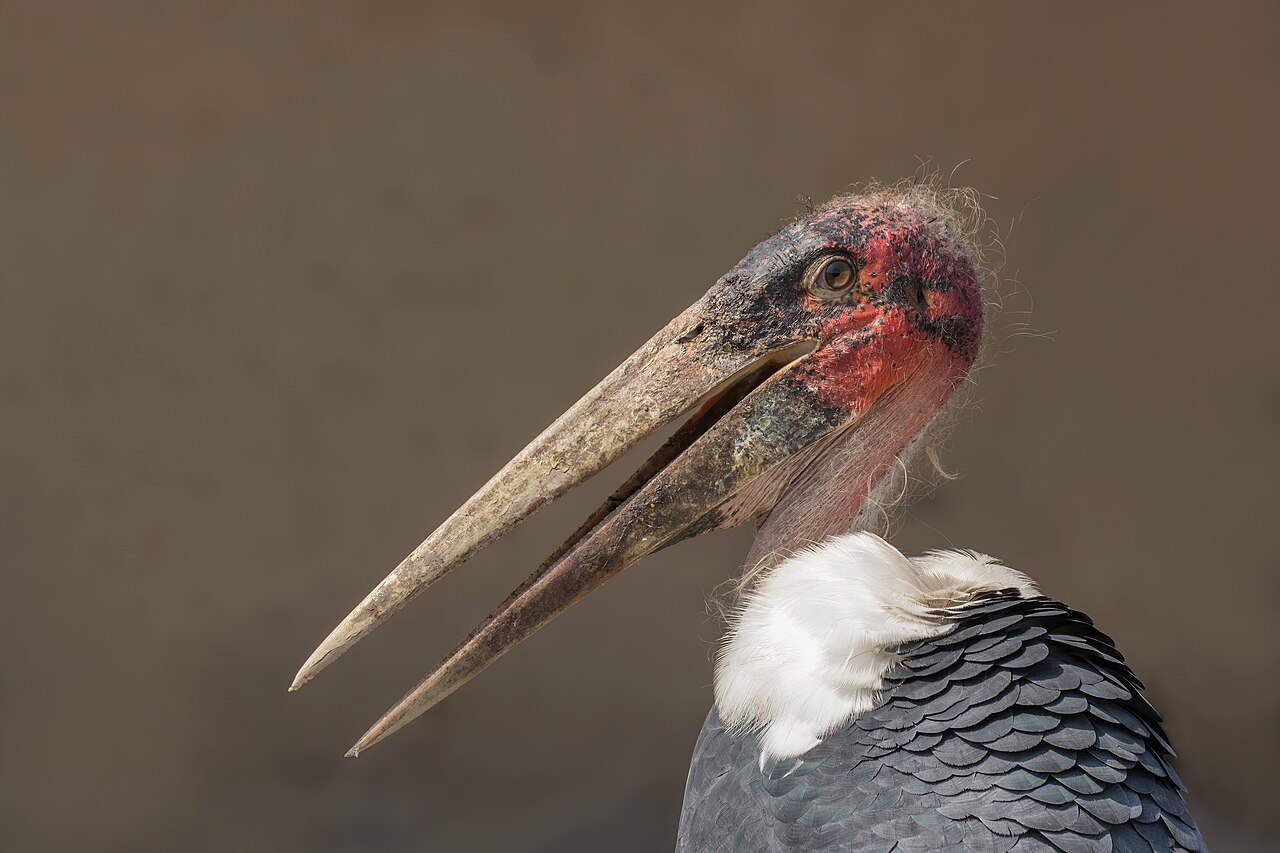
A marabou's hanging gular pouch can resemble a storage sack. It should not be confused with a pelican's feeding pouch or described as a bag of swallowed food.
Phoenix Zoo highlights its importance in displays.
Its appearance can change with the bird's condition and behavior. A close photograph reveals a feature that may be less obvious when the stork is flying.
More than a scavenger stereotype
Marabous also take living prey and other available food. Their diet is more flexible than a simple label suggests.
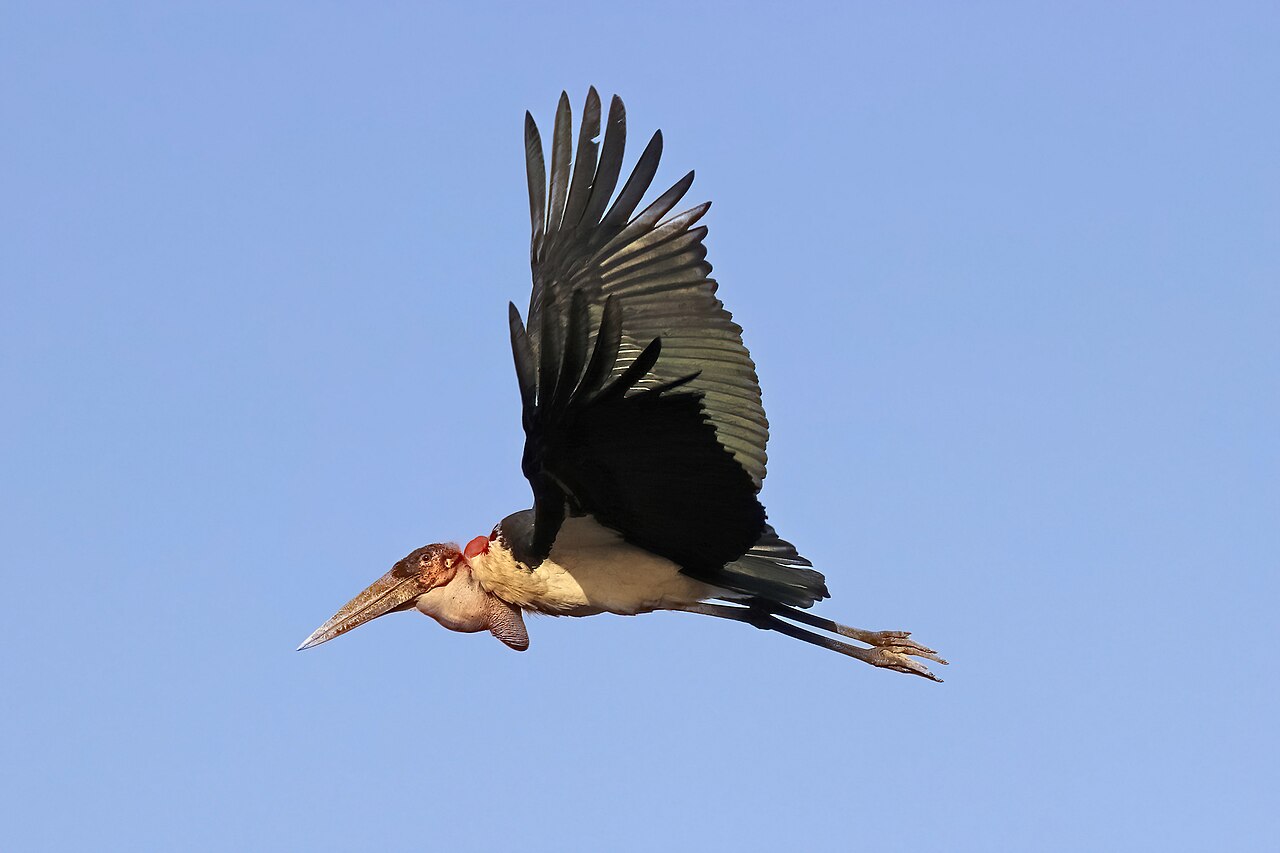
In flight, broad wings carry the bird above the ground, revealing a different impression from its hunched standing posture.
The photographs here show both the bare-headed feeding form and the wide-winged flyer.
Adaptable does not mean invulnerable
Some marabous use rubbish dumps, bringing them close to people and human waste. Such opportunities can carry hazards as well as food.
Respect for scavengers begins with recognizing their place in an ecosystem. The marabou's unusual appearance is not a mistake in nature's design; it is part of a life built around finding value in what remains.
Photo credits
Featured image: Charles J. Sharp; Source; CC BY-SA 4.0. Resized for web display.

Body image 1: Charles J. Sharp; Source; CC BY-SA 4.0. Resized for web display.

Body image 2: Charles J. Sharp; Source; CC BY-SA 4.0. Resized for web display.
