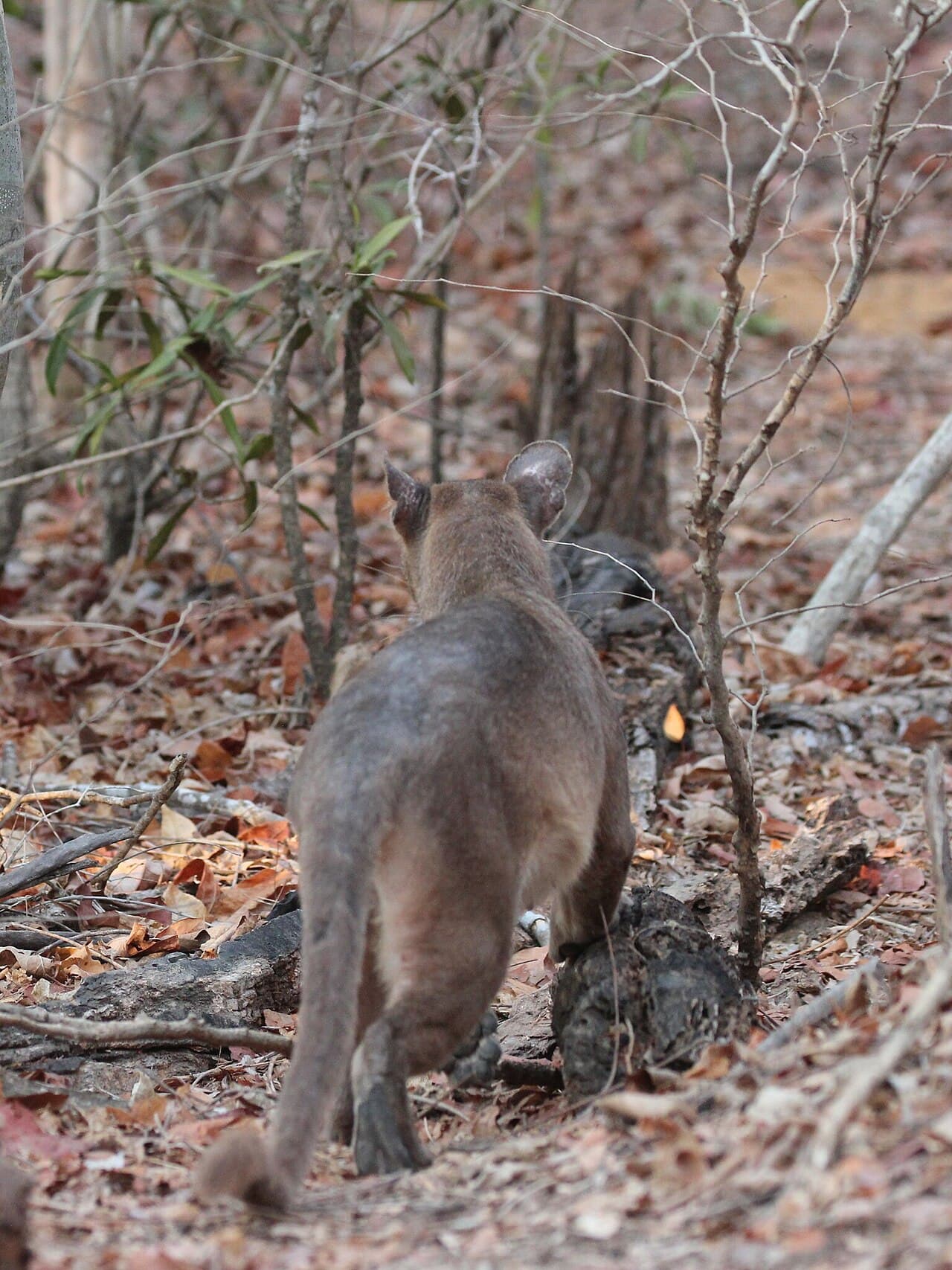
A fossa can descend a tree headfirst. Flexible ankles, gripping claws, and a long balancing tail help it move through a forest where dinner may be above the ground.
The animal looks catlike, but it is part of Madagascar's own remarkable carnivore family.
A familiar-looking unfamiliar predator
The fossa is Cryptoprocta ferox, a member of the family Eupleridae. Its rounded ears and muscular body invite comparisons with cats and other mammals.
San Diego Zoo Wildlife Alliance explains why similarities in appearance do not tell the whole evolutionary story.
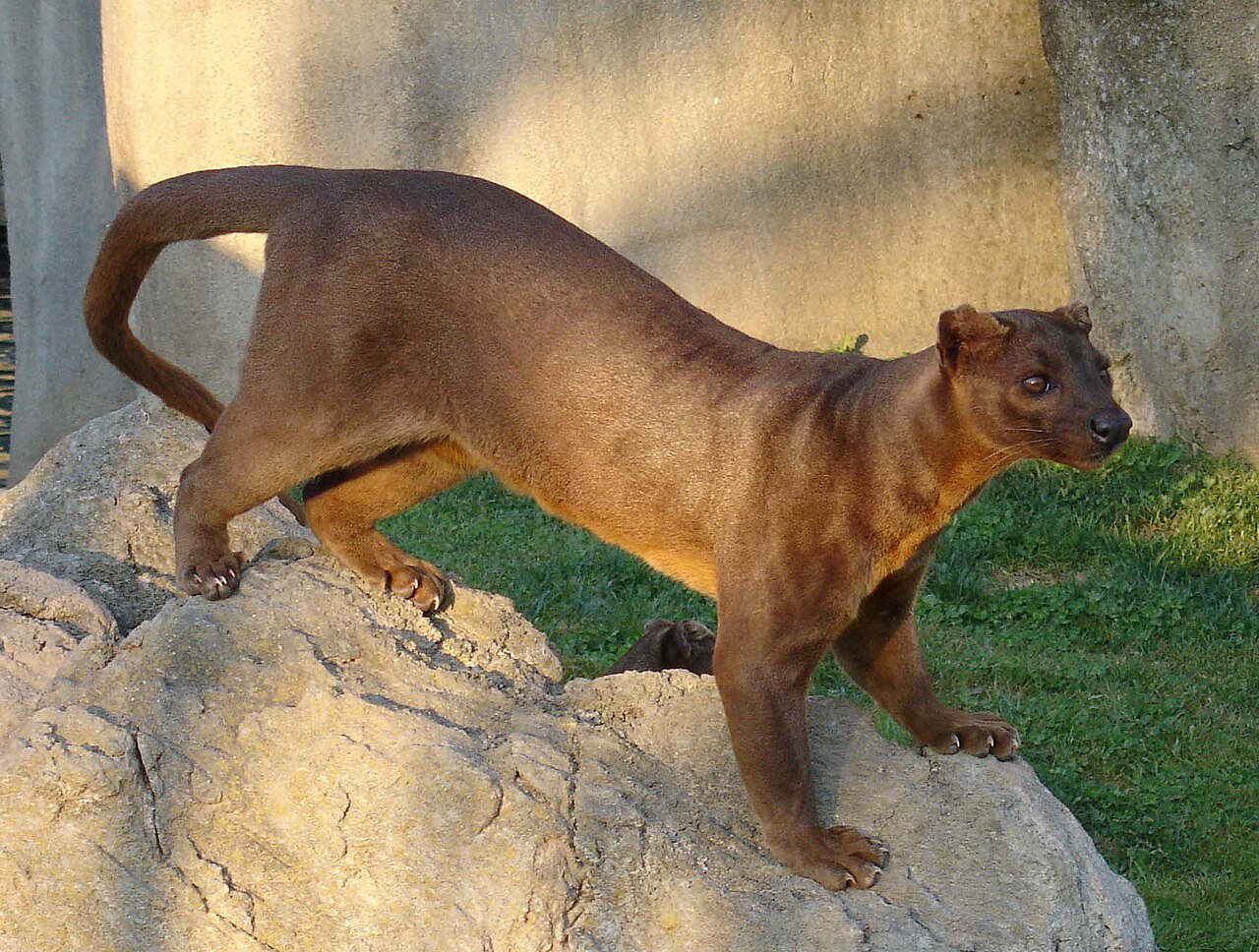
A long tail makes up a substantial part of the animal's overall length. It helps with balance rather than acting as a grasping extra hand.
Feet made for branches
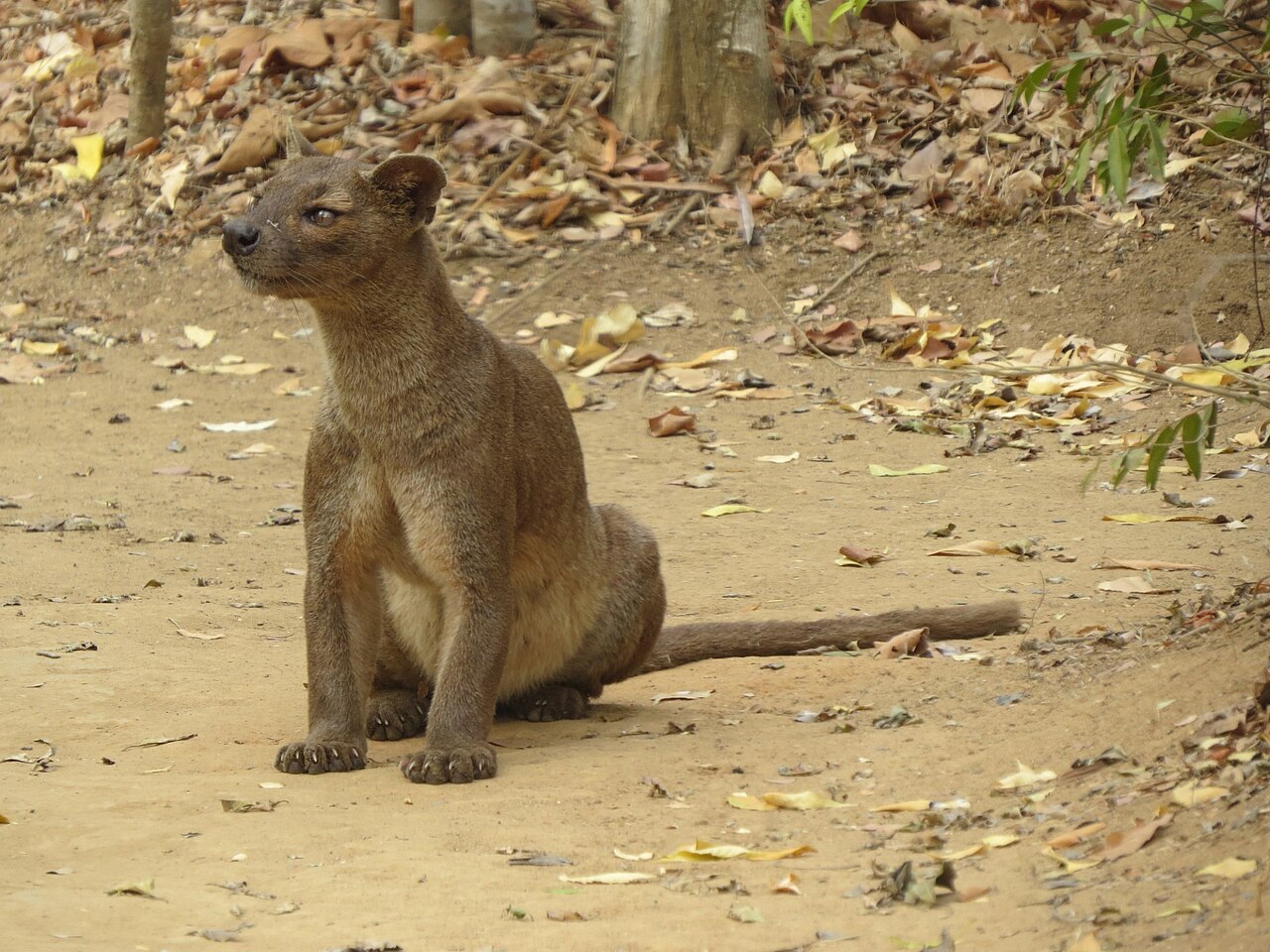
Semi-retractable claws help the fossa hold surfaces. Flexible ankle joints allow the feet to adjust as the animal changes direction on a trunk.
Singapore Zoo describes these climbing adaptations.
Together, the features support movement between branches and down steep supports. No single joint performs the whole task; the body works as a coordinated climbing system.
A hunter in a connected forest
Fossas take a variety of prey, including lemurs. Their role as predators links them to the health of the wider animal community.
They also use scent to communicate. A mark on a tree or rock can carry information long after its maker has moved away.
Watching only a brief moment of climbing would miss much of this hidden routine.
Keep the routes intact
Forest loss affects prey, shelter, and the connections used by climbing animals. Protecting a fossa therefore involves more than saving an individual tree.
Its headfirst descent is an extraordinary sight, but it is also practical biology. Madagascar's forests have shaped a predator whose remarkable feet make the vertical world part of its home.
Photo credits
Featured image: Rob Foster; Source; CC BY 4.0. Resized for web display.

Body image 1: Micha Baum; Source; CC BY-SA 4.0. Resized for web display.

Body image 2: Ran Kirlian; Source; CC BY-SA 4.0. Resized for web display.
