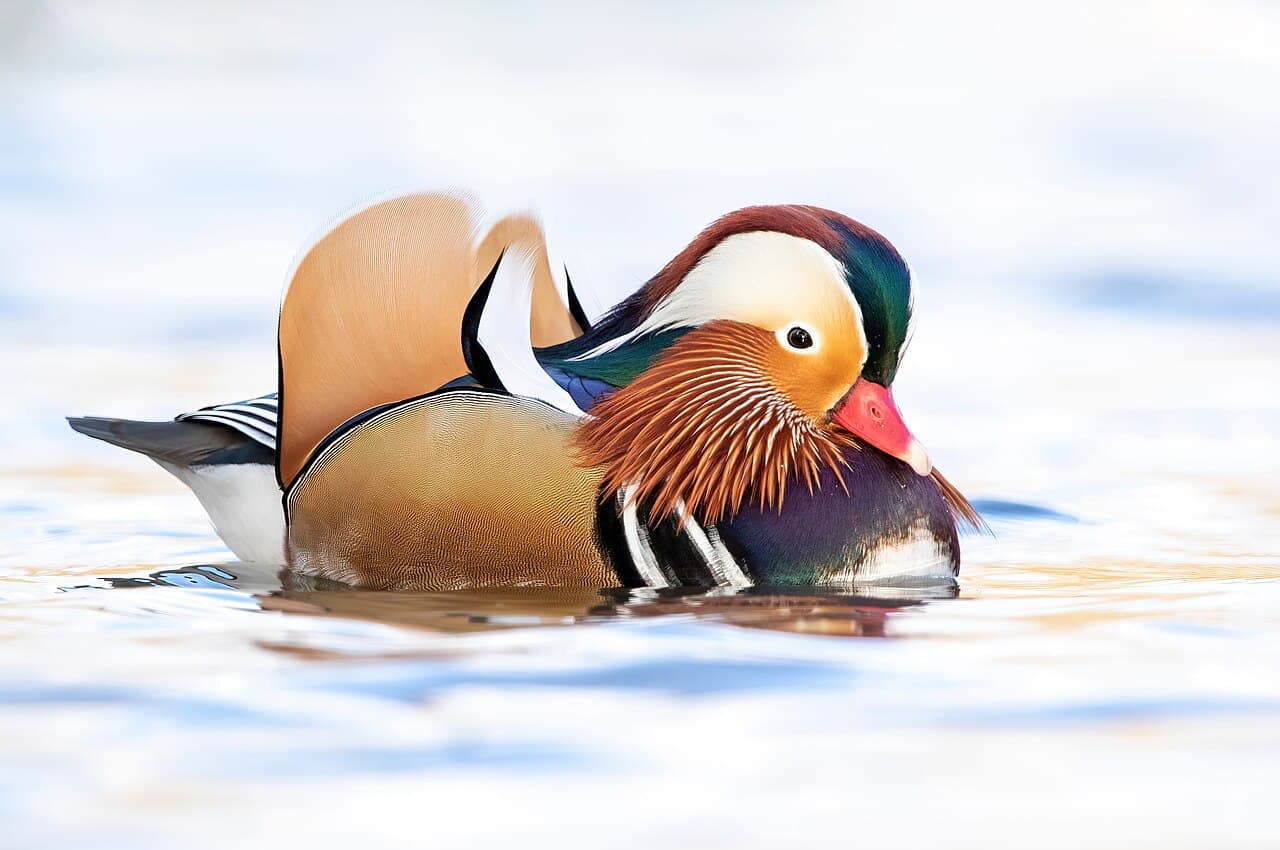
A male mandarin duck in breeding plumage looks as though someone fitted tiny orange sails to its back. Those striking feathers are real—and they do not stay equally dramatic all year.
This beautiful duck has a quieter side that many photographs leave out.
Meet the orange sails
The male's breeding appearance combines bold facial patterns, rich colors, and upright orange “sail” feathers near the wings.
The RSPB's mandarin duck guide describes the species and the contrast between males and females. Females have gray-brown plumage with a pale eye pattern.
Both are mandarin ducks. The more understated female is not an unfinished version of the male.
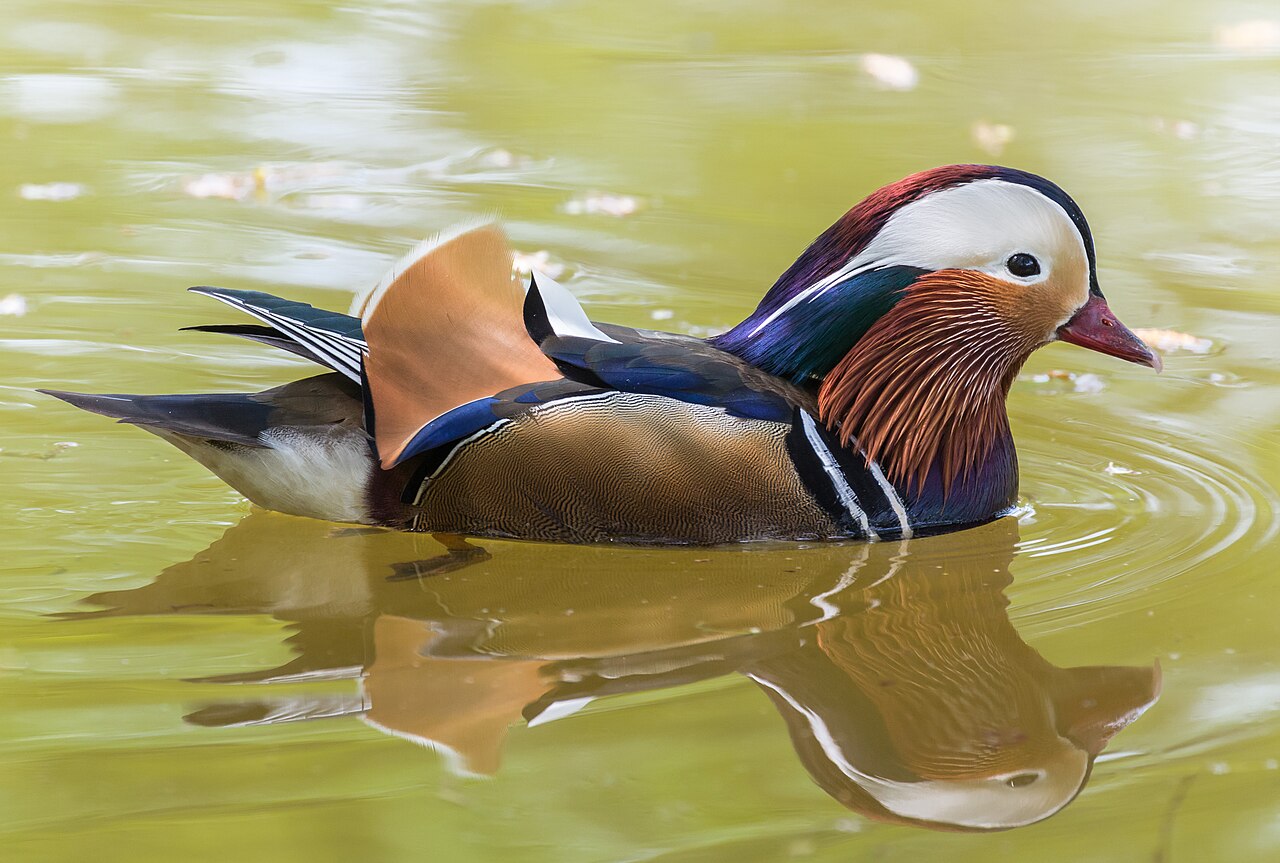
The same drake can look different
After breeding, males enter eclipse plumage, a period when their colors become much less showy. A duck that looked spectacular earlier can become harder to distinguish at a glance.
A 2025 study of mandarin duck feathers examined the development of the distinctive male sail feathers. Their appearance reflects growth and seasonal biology, rather than a fixed costume worn unchanged for life.
That is a useful reminder when identifying birds: season matters as well as species.
Native to East Asia, seen elsewhere
Mandarin ducks are native to East Asia. Introduced populations also live in other places, including Britain.
The Canal & River Trust describes their appearance and presence around British waterways.
A photograph from a European pond does not mean the species originated there. Captive collections and introductions have carried it beyond its native range.
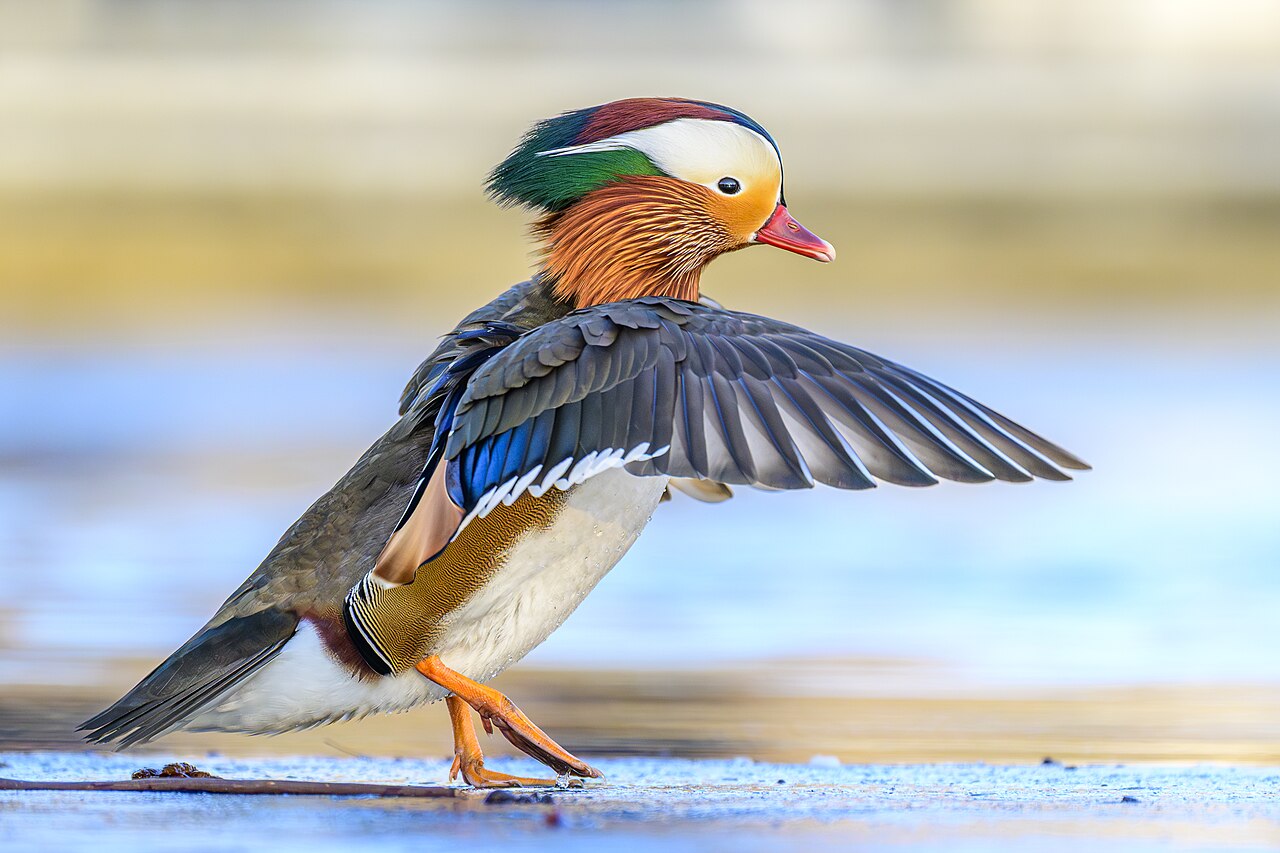
Beauty belongs in context
Wooded wetlands provide much more than a scenic background. Water, feeding places, and suitable nesting habitat support the birds' lives.
The mandarin duck rewards a second look. First come the extraordinary colors; then comes the discovery that this familiar beauty changes with the calendar.
Photo credits
Featured image: Alexis Lours; Wikimedia Commons source; CC BY 4.0. Resized for web display.

Body image 1: Diliff; Wikimedia Commons source; CC BY 3.0. Resized for web display.

Body image 2: Stephan Sprinz; Wikimedia Commons source; CC BY 4.0. Resized for web display.
