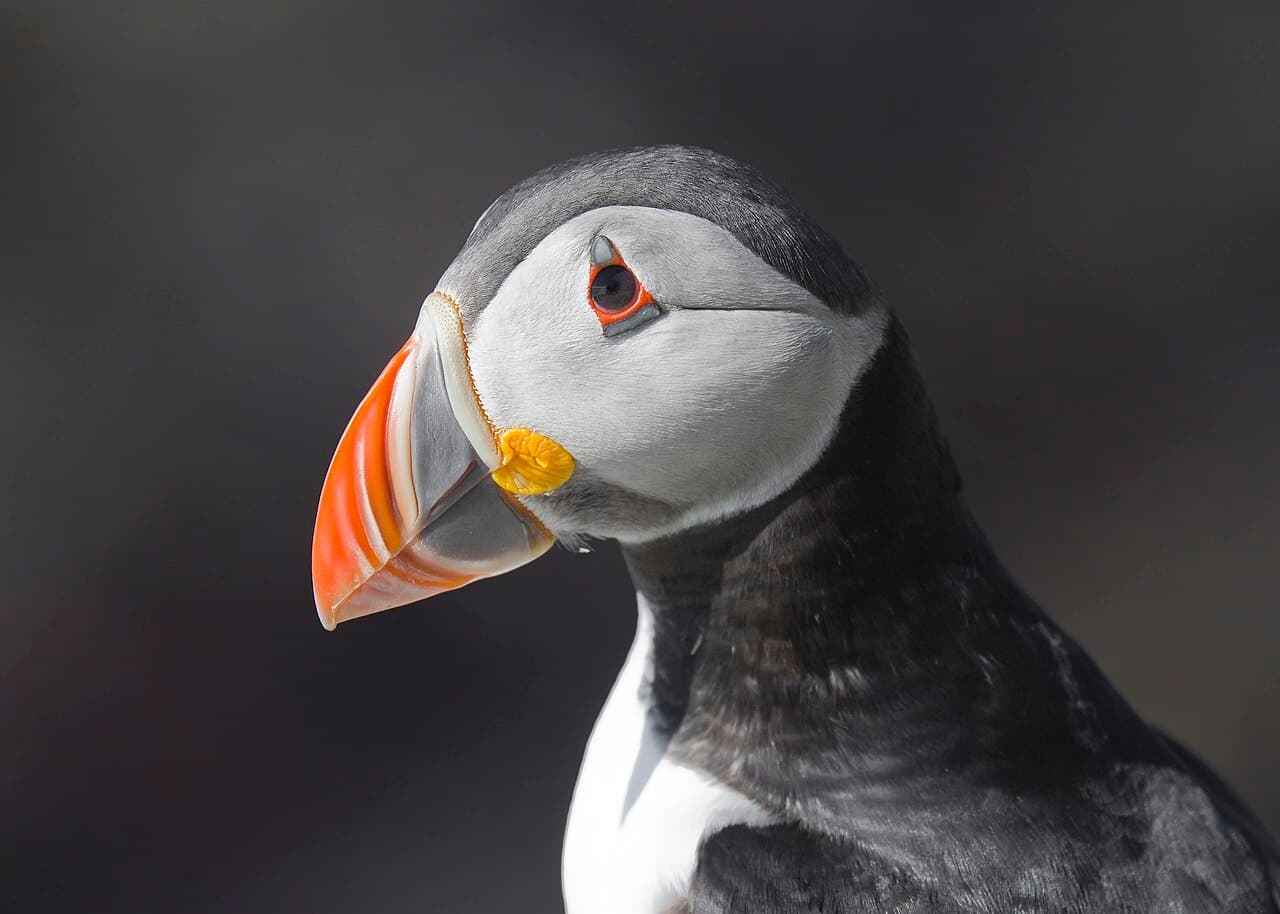
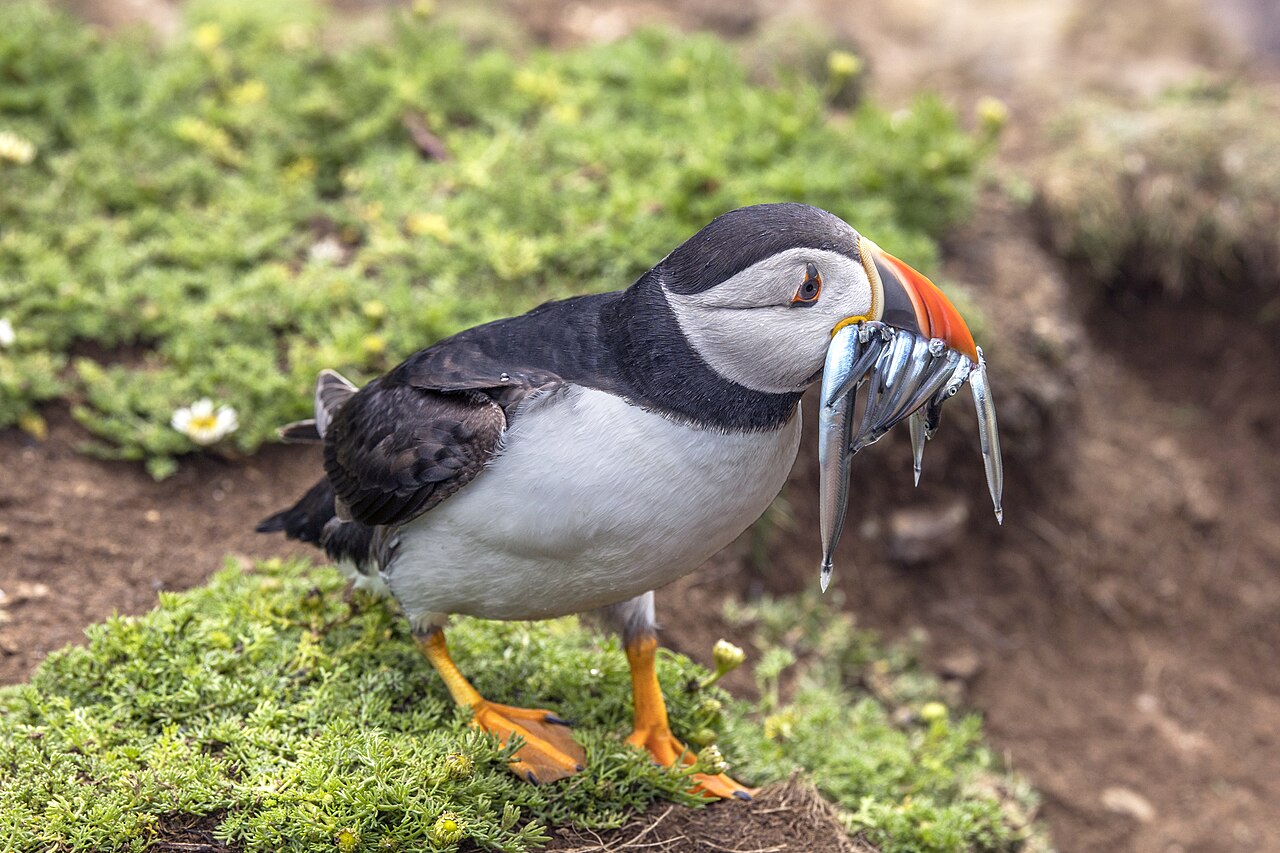
An Atlantic puffin can return to its nesting colony with several fish lined up across its beak. The surprising part is that it can keep hold of earlier catches while adding more.
Behind that colorful face is a very practical feeding system.
A beakful with a purpose
Puffins catch small fish underwater. A chick waiting at the nest depends on adults bringing food back from the sea.
The Cornell Lab of Ornithology explains how structures in the bill and the tongue help puffins retain fish. The bird can hold a catch while continuing to forage.
The result may look comical, but each neatly held fish represents a trip through the ocean food web.
A seabird that flies underwater
Atlantic puffins use their wings to propel themselves when diving. On land they can seem awkward; at sea, their bodies are built for a very different kind of movement.
The National Audubon Society describes their North Atlantic range and marine feeding habits.
They spend much of their lives away from the cliff-top scenes that make them famous. A breeding colony is one chapter, rather than their entire world.
A burrow and a single chick
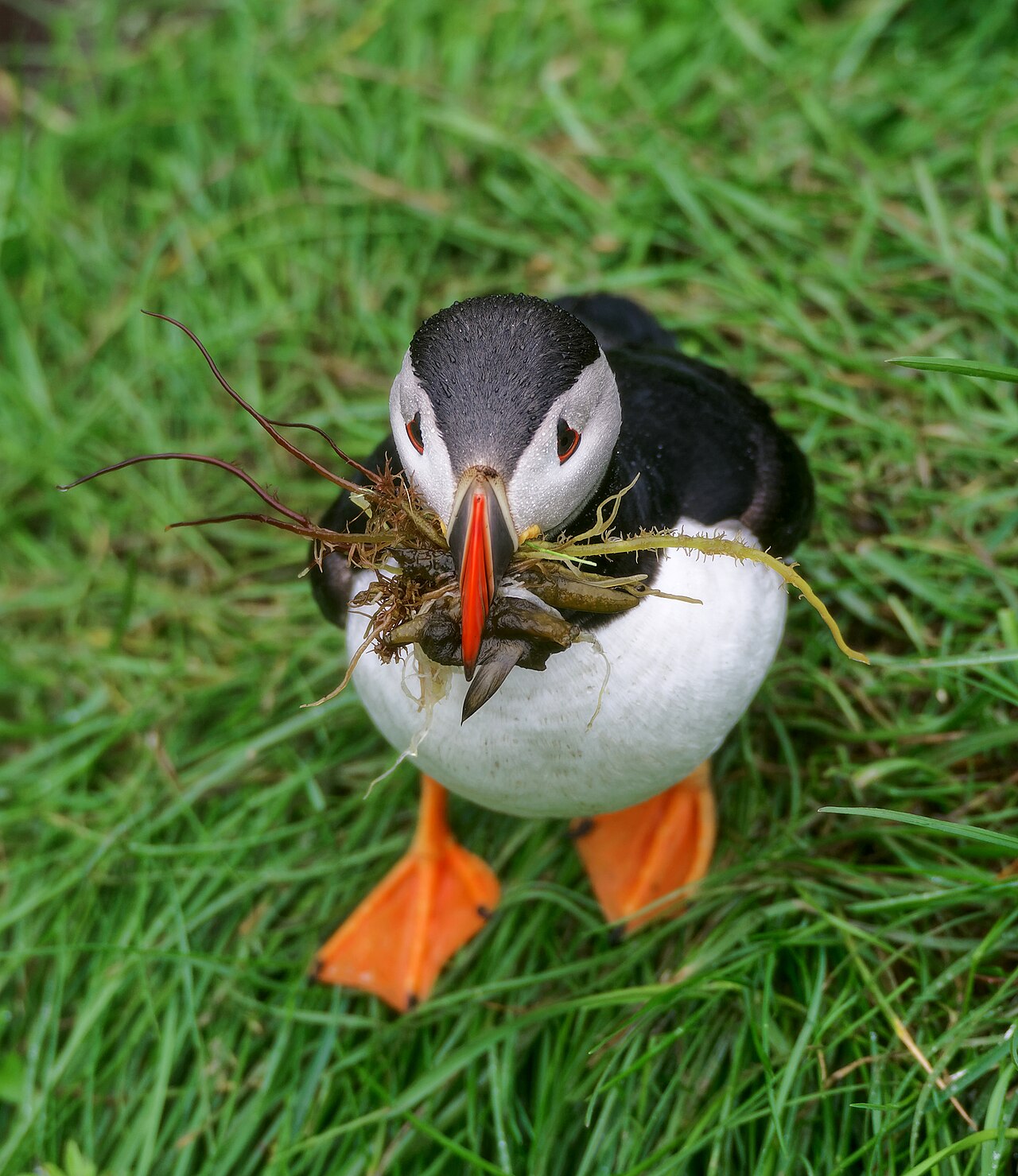
Atlantic puffins often nest in burrows or sheltered spaces at coastal colonies. A pair typically raises one chick in a breeding attempt.
That limited output makes successful feeding important. Adults must find suitable prey and carry it back while also meeting their own needs.
The ocean reaches the nest
Changes in prey availability and marine conditions can affect breeding success. Protecting a colony also means understanding the waters where its birds feed.
Audubon's work restoring puffins to Maine shows how sustained conservation can help rebuild a lost breeding presence.
The next time you see a puffin with a full beak, look beyond the amusing portrait. It is a working parent carrying the sea's resources home, one small fish at a time.
Photo credits
Featured image: Andreas Trepte; Wikimedia Commons source; CC BY-SA 2.5. Resized for web display.

Body image 1: Charles J. Sharp; Wikimedia Commons source; CC BY-SA 4.0. Resized for web display.

Body image 2: Jakub Hałun; Wikimedia Commons source; CC BY 4.0. Resized for web display.
