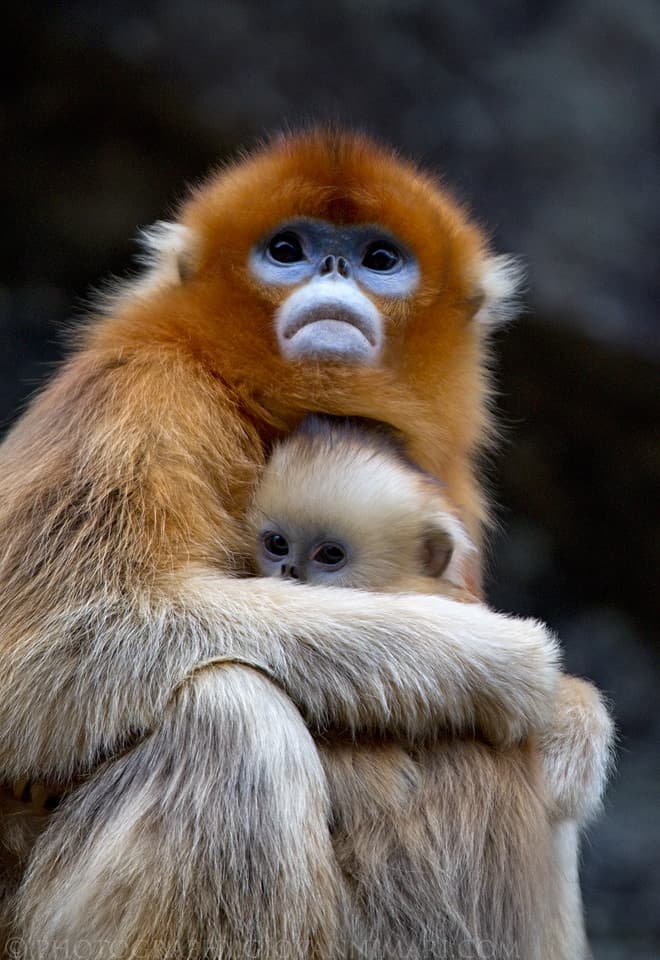
Golden snub-nosed monkeys live where many people would never expect monkeys: mountain forests that can become cold and snowy.
Their golden-orange fur and pale blue faces look almost unreal. Yet these striking animals are adapted to a demanding landscape in China.
A face unlike most monkeys
The golden snub-nosed monkey is Rhinopithecus roxellana. Its short, upturned nose and blue facial skin give it a distinctive profile.
Adults can have long golden hair, but appearance varies with age and sex. A photograph of a bright adult male should not be taken as the uniform appearance of every group member.
The University of Wisconsin's Primate Info Net describes its range and biology.
Finding meals when seasons change
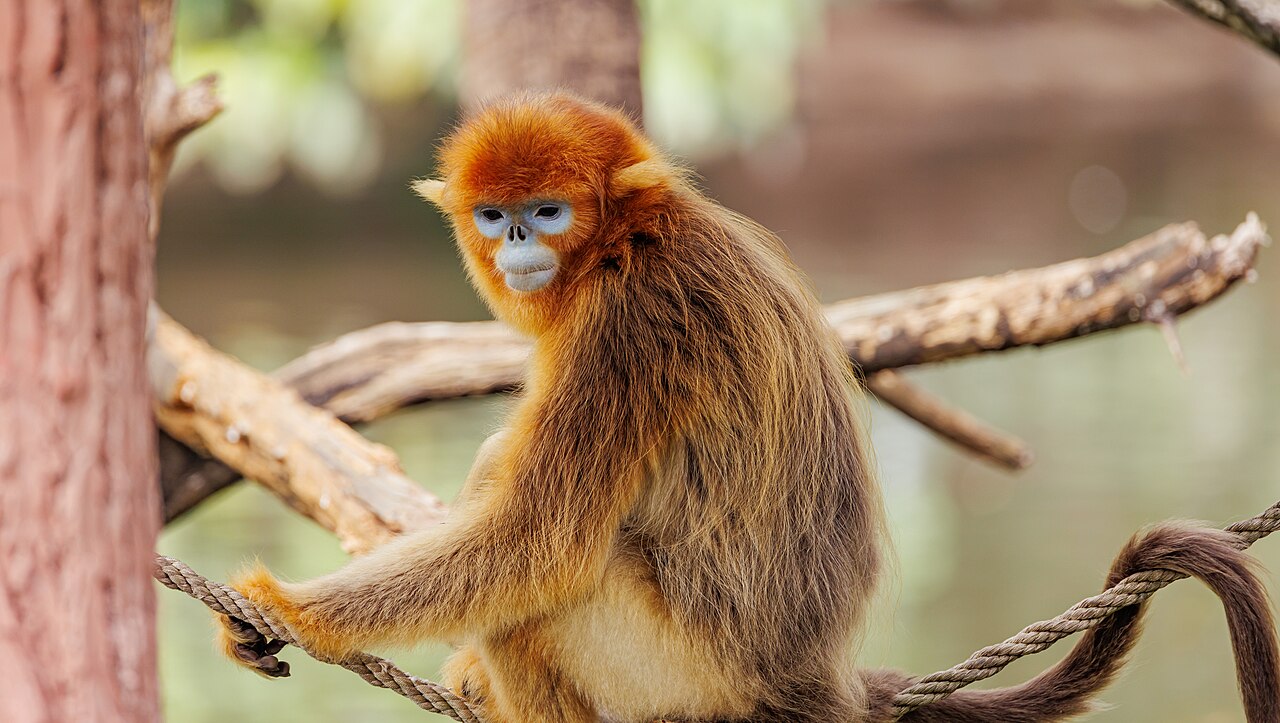
Leaves and fruit are not equally available throughout the year. These monkeys adjust their diets to local conditions and season.
Lichens, bark, and other foods can become important, especially when preferred foods are scarce. Lichens are living partnerships involving fungi and photosynthetic organisms.
Animal Diversity Web at the University of Michigan explains how feeding and habitat use vary. It is misleading to reduce the entire species to one menu.
A society within a society
Golden snub-nosed monkeys live in social systems that include smaller units within larger gatherings. Their relationships extend beyond a simple image of one group following one leader.
Moving and feeding together take place across a forest landscape. Seasonal conditions influence how the animals use that space.
Keep the mountain forest connected
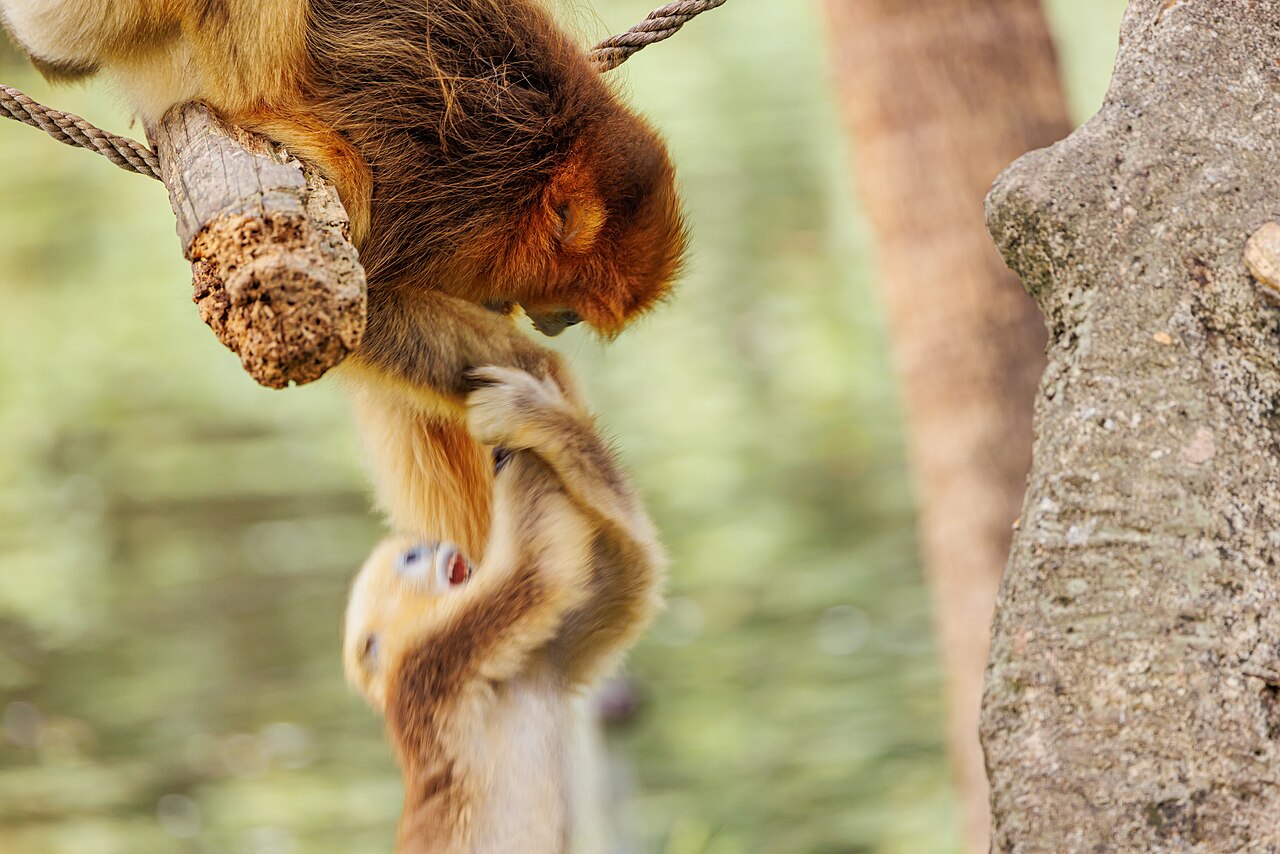
Habitat loss and fragmentation are central conservation concerns. A forest broken into isolated pieces can make it harder for wildlife to move between useful areas.
These monkeys show that primate life reaches far beyond the tropical scenes we often imagine. Their blue faces may be the first surprise; their place in a cold mountain ecosystem is the lasting one.
Photo credits
Featured image: Giovanni Mari; Wikimedia Commons source; CC BY-SA 2.0. Resized for web display.

Body image 1: Dinkun Chen; Wikimedia Commons source; CC BY-SA 4.0. Resized for web display.

Body image 2: Dinkun Chen; Wikimedia Commons source; CC BY-SA 4.0. Resized for web display.
