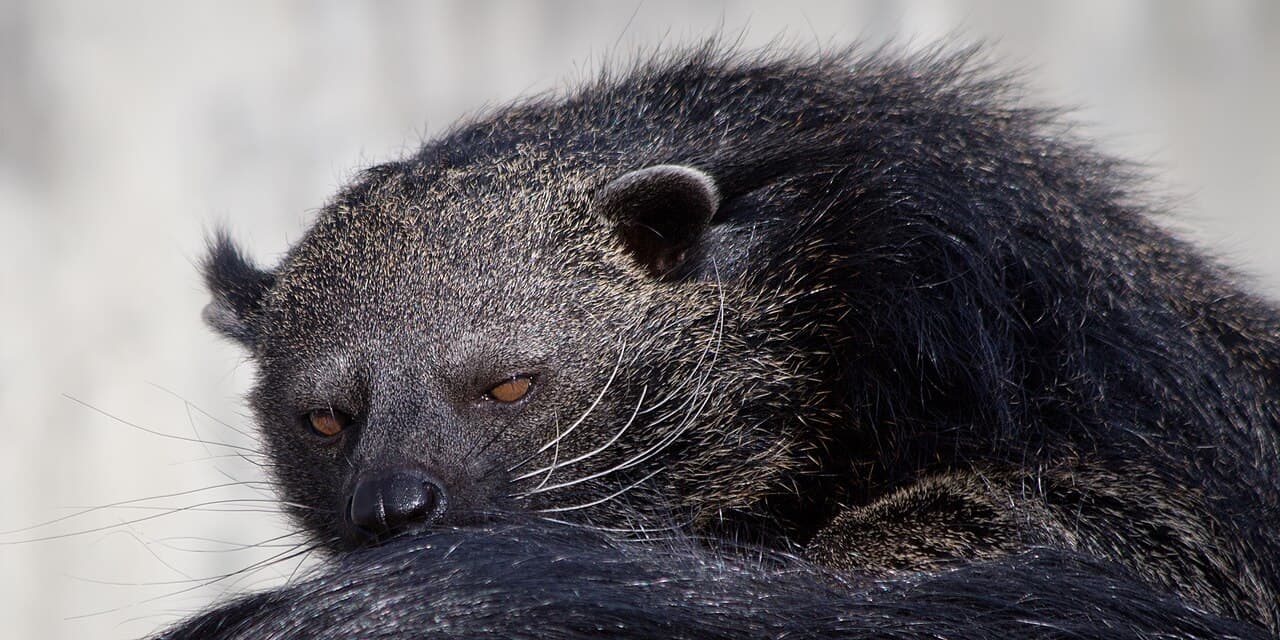
A binturong can bring the smell of popcorn to a forest enclosure—without a single kernel in sight. Scientists have identified a familiar aroma compound in its urine.
This shaggy Asian mammal is full of surprises, from its scent messages to a tail that helps it hold on among the branches.
The chemistry behind the smell
The compound is called 2-acetyl-1-pyrroline. It also contributes to the familiar smell of popcorn.
A 2016 study recorded by Duke University examined urinary compounds in binturongs. The finding helps explain an odor people have long noticed around the animals.
The important detail is the source: researchers detected the popcorn-associated compound in urine. Describing the smell simply as something sprayed from a special popcorn gland misses that evidence.
Scent leaves a message
Binturongs use scent in communication. Urine left behind as an animal moves can give other binturongs chemical information.
The Smithsonian's National Zoo describes this scent-marking behavior. To us, the odor may suggest a snack. To a binturong, it belongs to the information-rich world of animal smells.
A tail with a strong grip
Sometimes called a bearcat, the binturong is neither a bear nor a cat. It belongs to the viverrid family, alongside civets and their relatives.
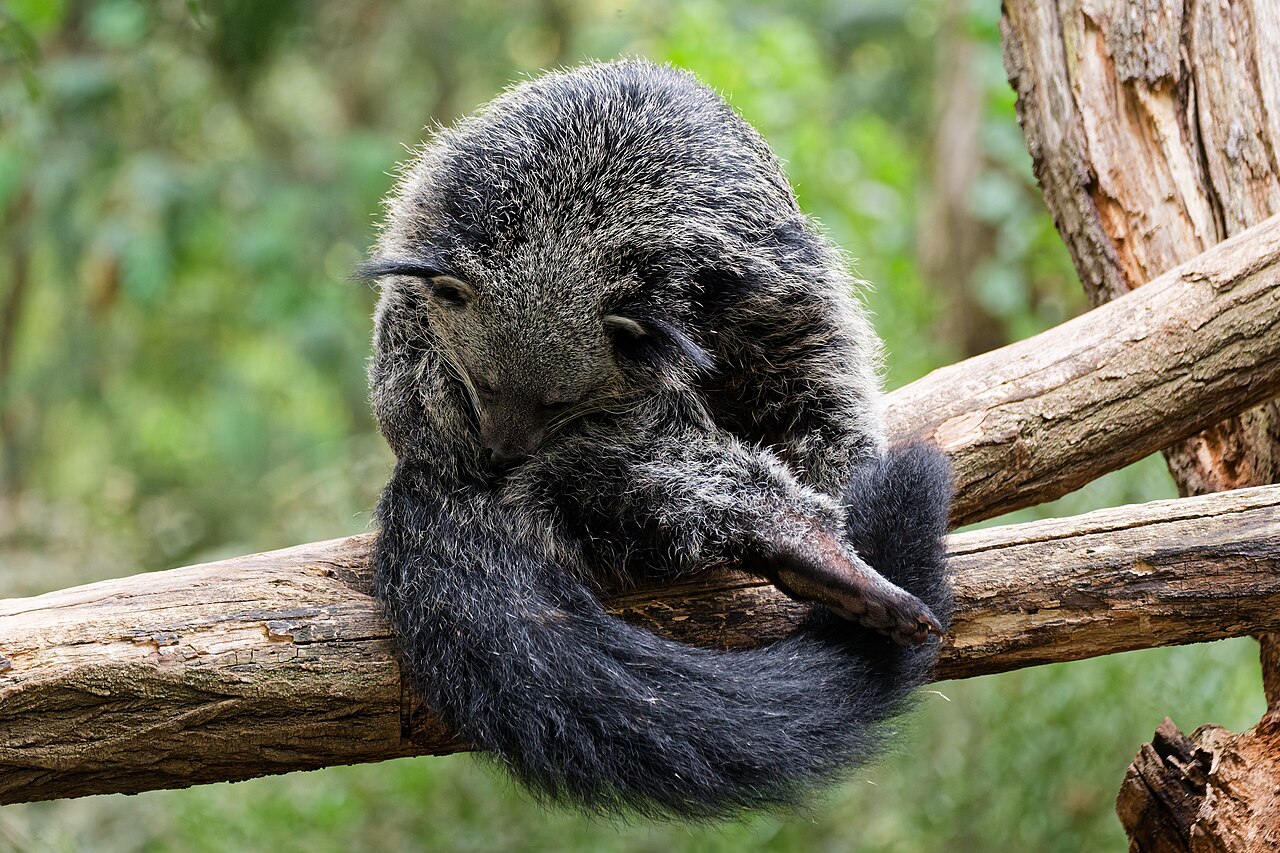
Its prehensile tail can grasp and support it as it climbs. Strong claws also help it move through trees.
Fruit is an important part of its diet, though it eats other foods too. Feeding on fruit connects the animal to the forest's plants and seed-dispersal processes.
More than a memorable odor
Forest loss and wildlife trade put pressure on binturongs. Protecting forest habitat supports both the animals and the ecological relationships around them.
The popcorn connection is a wonderful doorway into their story. Beyond it is an unusual tree-dwelling mammal whose gripping tail and chemical messages make sense in a forest, even when they surprise us.
Photo credits
Featured image: Carlos Delgado; Wikimedia Commons source; CC BY-SA 3.0. Resized for web display.

Body image 1: Marie-Lan Taÿ Pamart; Wikimedia Commons source; CC BY 4.0. Resized for web display.

Body image 2: Jastrow; Wikimedia Commons source; Public domain. Resized for web display.
