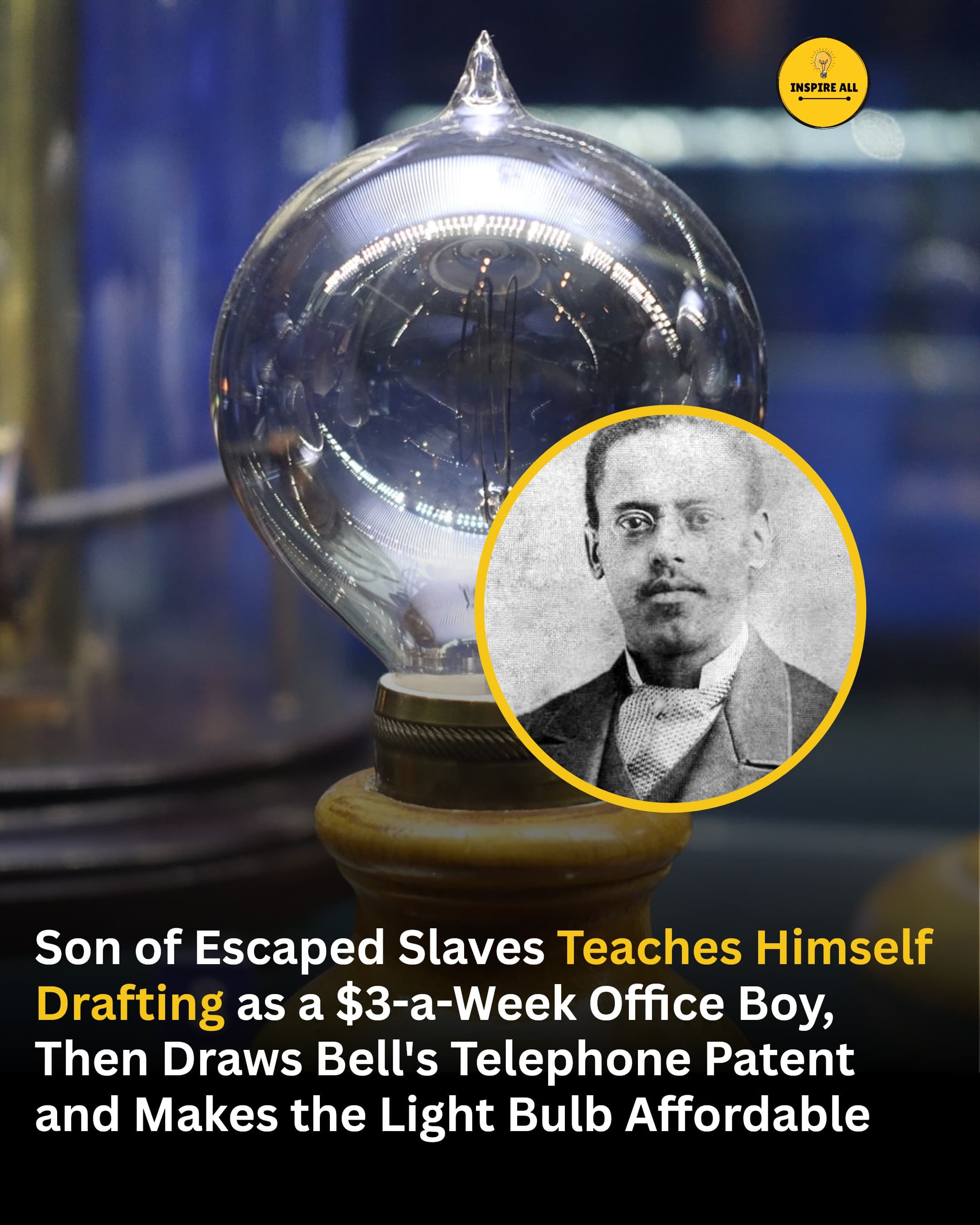
The self-taught draftsman’s career linked technical drawing, patent knowledge, and an important improvement in electric lighting.
Lewis Howard Latimer began working at a Boston patent firm as an office boy. Watching a draftsman and studying secondhand books, he learned the skills that would change his role.
The Engineering and Technology History Wiki’s biography documents how the firm recognized his ability and appointed him to the drafting position when it became vacant.
He went on to prepare drawings for an Alexander Graham Bell telephone patent and develop inventions of his own.
Learning inside a patent office
Latimer was born in Chelsea, Massachusetts, in 1848 to parents who had escaped slavery. He served in the Union Navy during the Civil War.
At the patent firm, technical drawing offered a way into the details of inventions. A drawing had to explain relationships between parts clearly enough to support a legal application.
That work developed both his engineering understanding and his familiarity with patents.
The progression from office work to drafting was therefore more than a promotion. It opened a field in which his skill could become visible.
Improving the carbon filament
The National Inventors Hall of Fame identifies Latimer’s durable carbon-filament process as a major contribution to incandescent lighting.
His 1882 manufacturing patent addressed how filaments could be produced more reliably. More durable filaments helped make practical electric lighting available to more people.
This was a specific improvement in an industry involving many inventors. Latimer did not invent the entire light bulb, and acknowledging the distinction makes his own contribution clearer.
A career beyond one patent
Latimer worked for the United States Electric Lighting Company and later for Edison’s organization. His work included helping establish lighting systems and applying technical expertise to patent disputes.
In 1890, he published a book on incandescent electric lighting, according to ETHW.
His career brought together skills that are sometimes treated separately: drawing, understanding machinery, communicating technical information, and navigating intellectual property.
The office boy who learned by watching became someone others depended on to explain how inventions worked.
Related: Garrett Morgan’s safety inventions and Michael Faraday’s scientific beginnings.