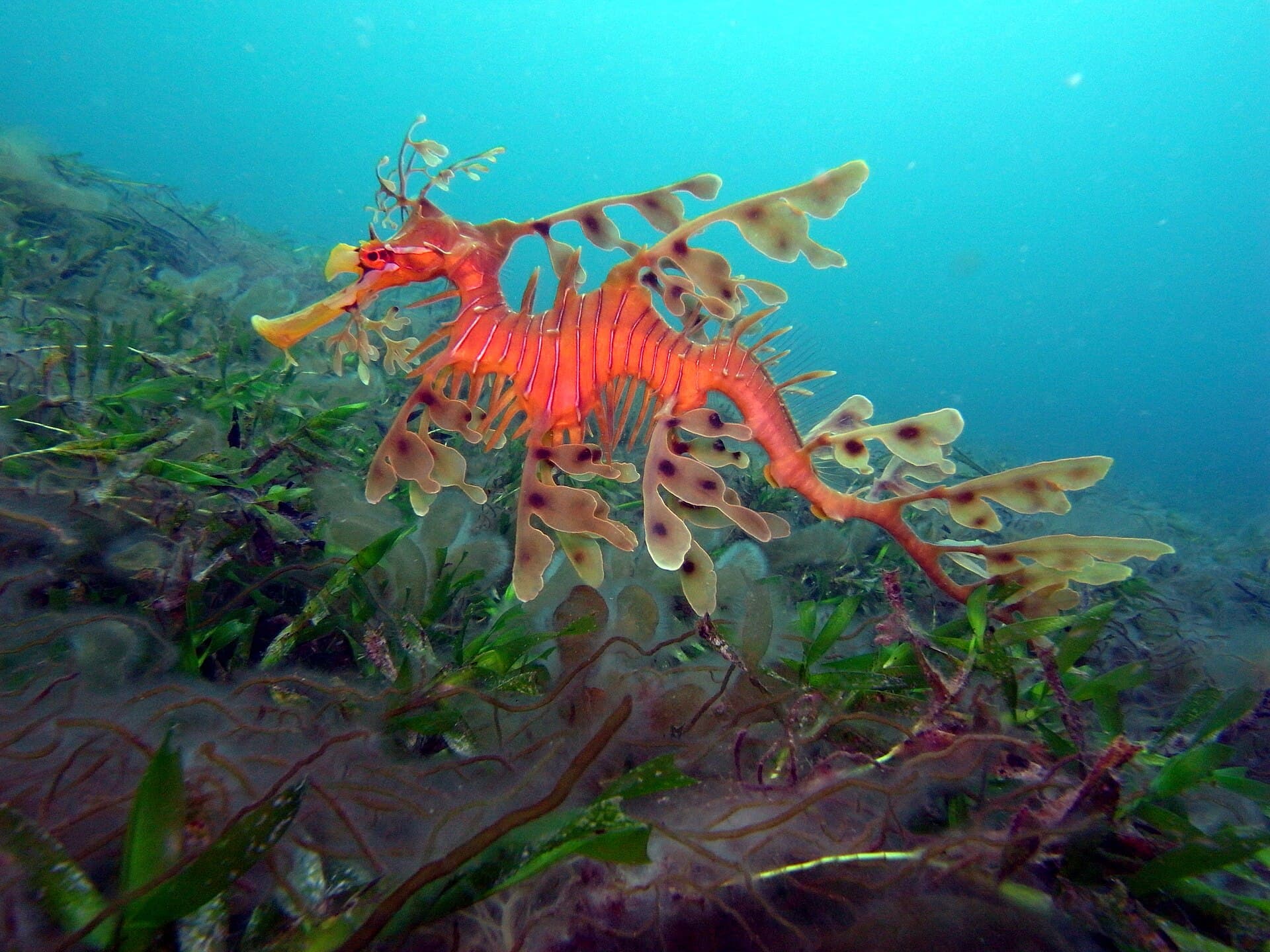
What looks like a drifting piece of seaweed may be a fish. The leafy seadragon’s elaborate skin flaps help it blend into a world of swaying marine plants.
Look closer and another shape appears: a long snout, a narrow body, and tiny fins working beneath the disguise.
A dragon from southern Australian waters
The leafy seadragon, Phycodurus eques, is related to seahorses and pipefishes. It inhabits temperate coastal waters of southern Australia.
The Aquarium of the Pacific describes habitats including rocky reefs, seaweed beds, and seagrass meadows. These are places where a plant-like outline can help an animal avoid being noticed.
Its “leaves” are parts of its body, not plants attached to its skin. They contribute to camouflage, while small dorsal and pectoral fins provide movement.
How does a disguised fish find dinner?
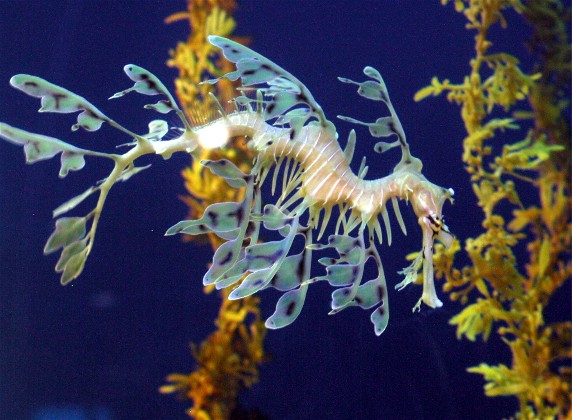
The long snout gives the seadragon a distinctive profile. It feeds on small prey, including mysid shrimp and other tiny crustaceans.
Rather than biting off pieces, it draws prey into its small mouth with suction. The aquarium compares this action to a pipette: a narrow opening taking in food with water.
A camouflage specialist still has to eat. Its feeding anatomy allows it to collect small animals within the same habitat that provides cover.
The male carries the eggs
One of the leafy seadragon’s most surprising features is its family arrangement.
As Waikīkī Aquarium explains, the female transfers eggs to the male, which broods them on a special area of skin on his tail.
Unlike the enclosed pouch familiar from many seahorses, the eggs develop attached to the tail’s brood area. When they hatch, the young begin life as small, independent seadragons.
This makes the male’s body part of the developing young’s temporary home.
A disguise depends on its surroundings
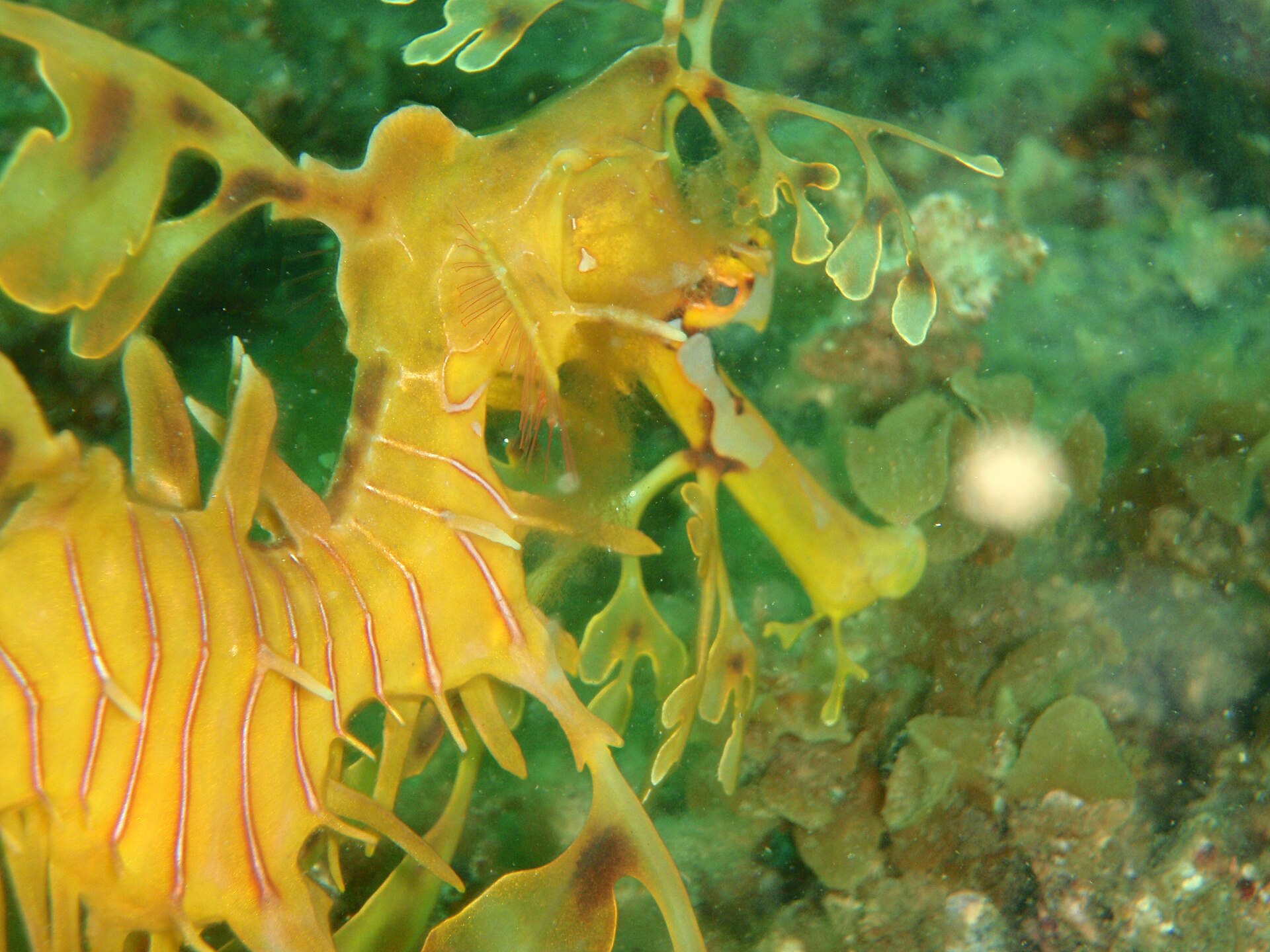
Camouflage works within a living setting. A seadragon’s outline makes sense among seaweed and seagrass, where plants and water movement help shape what predators see.
The Aquarium of the Pacific identifies habitat degradation and collection pressures among conservation concerns. Protecting the surrounding coastal environment supports more than the fish’s hiding places; it also supports its food supply.
A closer look rewards patience
The leafy seadragon reminds us that nature is not always easy to spot. Sometimes the animal is directly in front of us, its shape hidden inside a familiar pattern.
What seemed to be drifting seaweed becomes a remarkable fish—and a reason to look at coastal habitats with fresh attention.
Photo credits
Featured image: Sylke Rohrlach from Sydney — CC BY-SA 2.0.

Body image 1: Wendy Rathey — CC BY 2.5.

Body image 2: Peter Southwood — CC BY-SA 3.0.

Photographs are illustrative. Image adaptations remain under their respective source licenses.