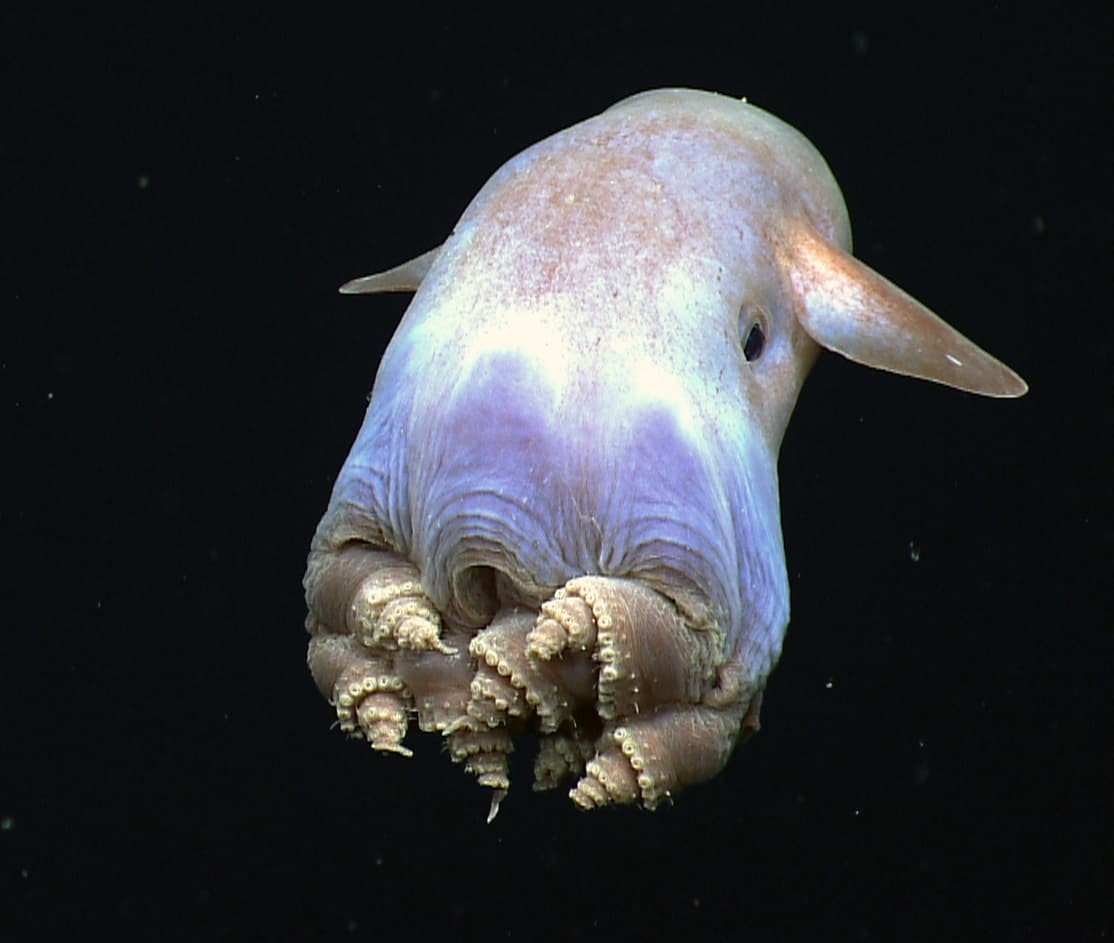
Thousands of feet below the ocean surface, an octopus swims by flapping a pair of fins that look like oversized ears.
That resemblance explains the dumbo octopus’s memorable nickname. Its real life is just as fascinating as its appearance: a quiet existence in cold, dark water far beyond ordinary diving depths.
Those “ears” are swimming fins
“Dumbo octopus” commonly refers to members of the genus Grimpoteuthis. The nickname is also sometimes used more broadly for other finned deep-sea octopuses.
NOAA’s Ocean Today describes footage of Grimpoteuthis bathynectes taken in 2005 off Oregon, at about 6,600 feet deep. Its fins and webbed arms help it move through the water.
The rounded body above the arms is the mantle. It contains organs and gills, rather than being simply an enormous head with ears attached.
A world explored by underwater robots
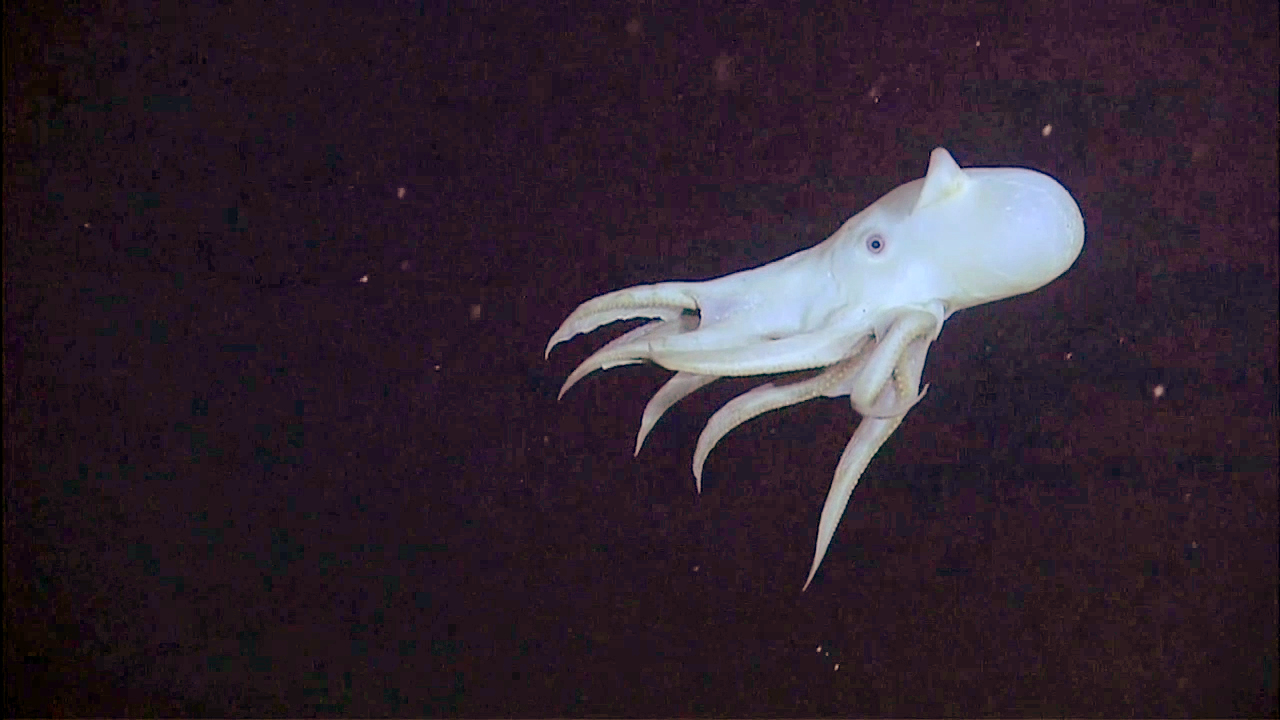
The Oregon footage came from a high-definition camera carried by a robot tethered to a research ship. Such equipment allows scientists to watch animals in places people cannot readily visit.
NOAA has recorded other finned octopuses during deep-ocean expeditions. Its Ocean Exploration image archive shows the prominent fins that make these encounters so recognizable.
A short video can reveal movement that a collected specimen cannot. That is especially valuable for delicate animals living under very different conditions from those at the surface.
Deep living leaves unanswered questions
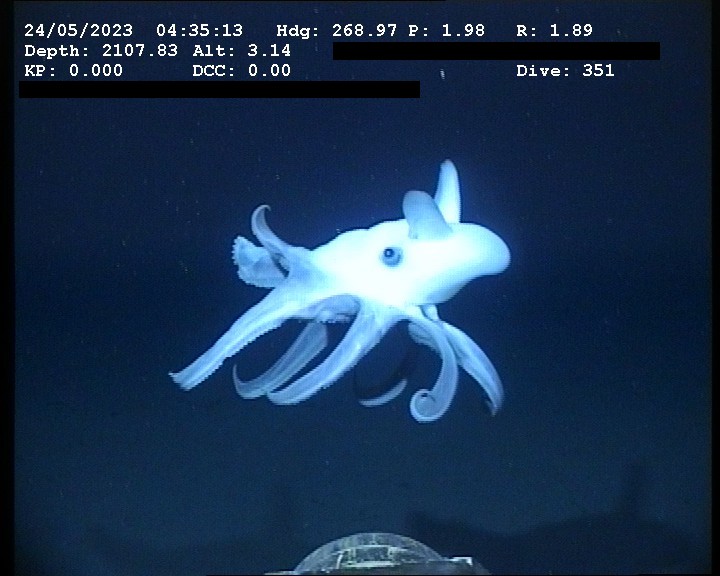
The Natural History Museum reports dumbo octopuses across a broad depth range, with a confirmed sighting near 7,000 meters in the Java Trench in 2020.
Those observations concern different species and locations. They do not mean every dumbo octopus lives at the same extreme depth.
Scientists still have much to learn about their senses, behavior, and populations. Even a recognizable animal can remain poorly understood.
Distant does not mean beyond our influence
The museum also notes potential pressures on deep-sea habitats, including seabed disturbance and pollution. Limited population information makes confident claims about the whole group’s conservation status difficult.
Protecting deep water therefore involves understanding ecosystems before assuming they can absorb change.
An ocean that still surprises us
The dumbo octopus gives the deep sea an unexpectedly gentle image: fins moving through darkness, with webbed arms spread below.
Its appeal can draw us toward a larger truth. The ocean holds living worlds we are only beginning to observe—and each careful encounter makes them a little less invisible.
Photo credits
Featured image: NOAA Okeanos Explorer — Public domain.

Body image 1: NOAA Okeanos Explorer — Public domain.

Body image 2: Renaud.marbet — CC BY-SA 4.0.

Photographs are illustrative. Image adaptations remain under their respective source licenses.