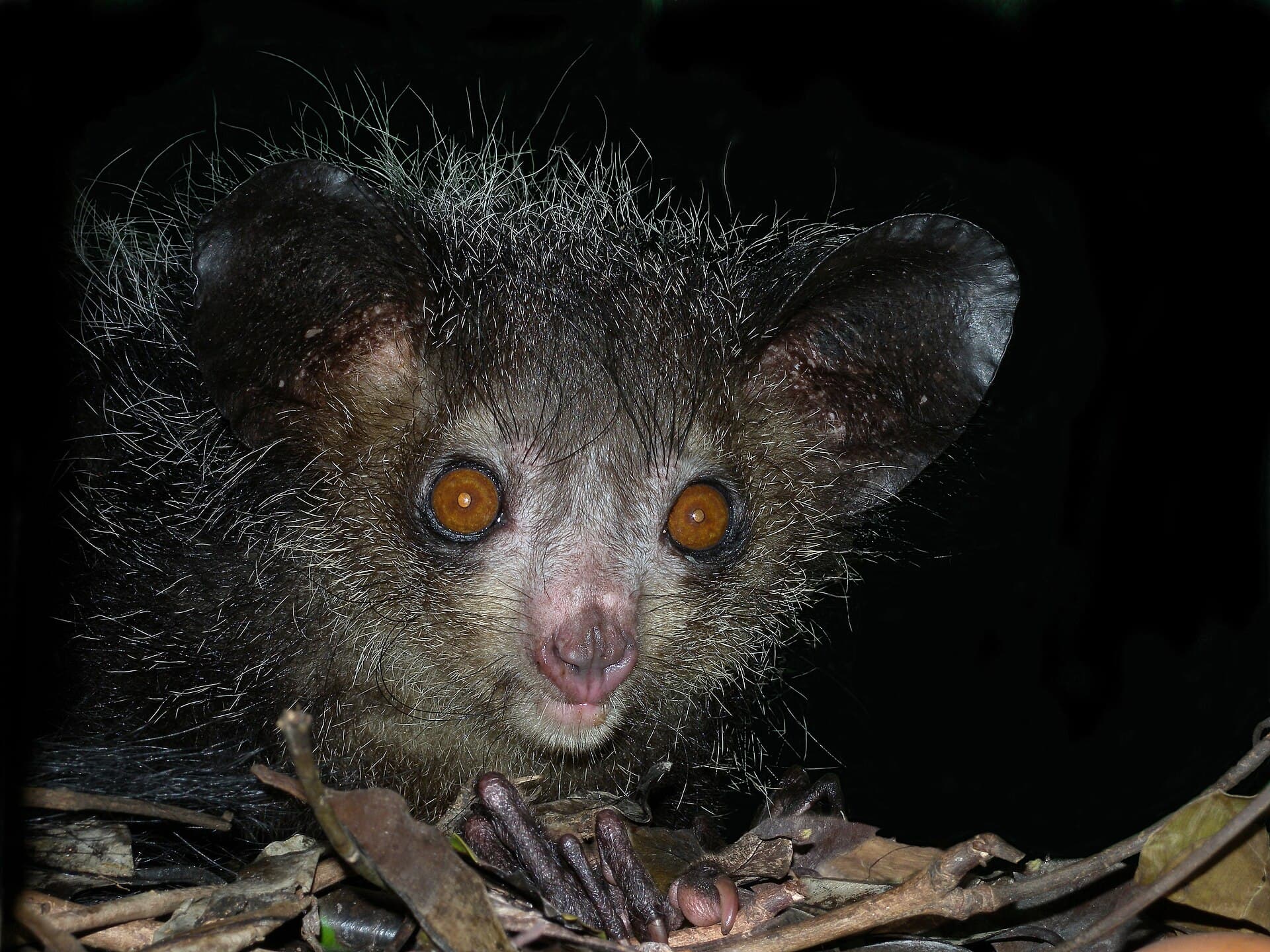
An aye-aye can find a meal hidden inside wood by tapping on the tree, listening carefully, and reaching in with a remarkably thin finger.
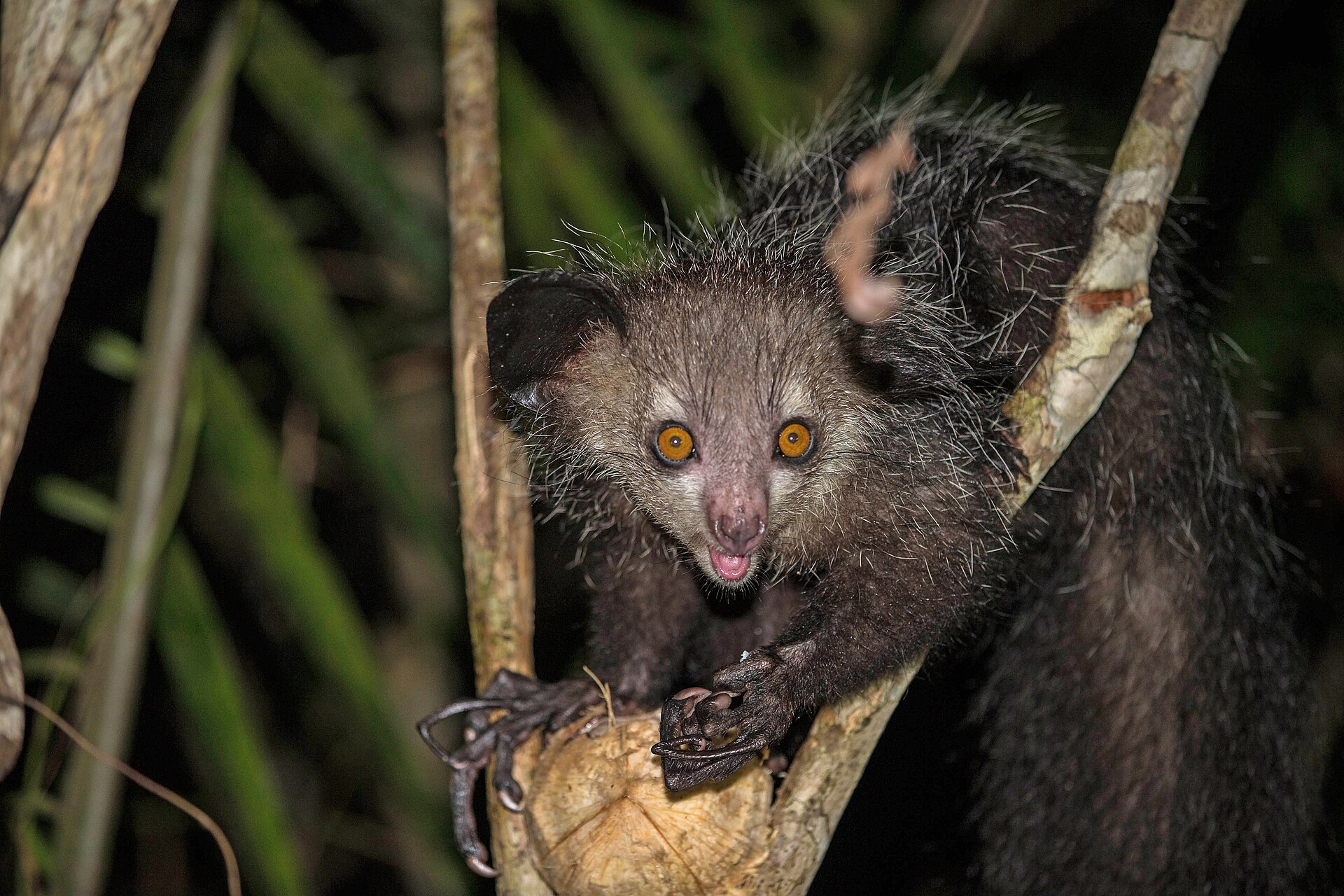
The sequence brings several unusual features together: large ears, strong front teeth, and a hand unlike that of most other primates.
A forest search guided by sound
The aye-aye, Daubentonia madagascariensis, is a lemur native to Madagascar. The Duke Lemur Center describes its method as tap foraging.
As it travels along wood, it taps rapidly with its slender middle finger. Differences in the sound help reveal hollow spaces where insect larvae may be concealed.
Once it identifies a promising place, the animal gnaws an opening and inserts the flexible finger to extract food.
A tree branch that looks solid to us may contain a hidden tunnel. The aye-aye has a way to investigate it without first tearing the whole branch apart.
The ears, teeth, and finger work together
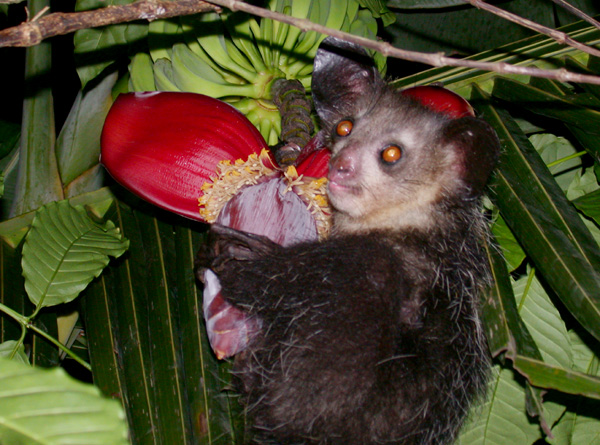
San Diego Zoo Wildlife Alliance explains how the aye-aye’s specialized fingers and large ears support feeding. Its powerful incisors keep growing and help it open hard materials.
The effect can look like a collection of mismatched animal parts. Seen through the task of finding food, however, the pieces fit.
It also eats foods such as nuts and fruits. A striking adaptation does not mean every meal follows exactly the same routine.
A nighttime life in Madagascar
Aye-ayes are nocturnal foragers. Duke describes animals that spend their active hours feeding and traveling, then rest in tree nests during the day.
Seeing one is therefore a very different experience from watching a daytime lemur. Its activity takes place when many human observers have stopped looking.
Unusual looks should inspire care
The aye-aye is listed as Endangered. Habitat loss, fragmentation, and hunting threaten its future, according to San Diego Zoo Wildlife Alliance.
The Lemur Conservation Foundation also identifies persecution as a crop pest as a concern. Conservation depends on protecting forest and working with the people who share the landscape.
Listen to what its body tells us
The aye-aye’s long finger is more than a memorable detail. It is part of a coordinated way of finding food that many other animals cannot reach.
Understanding that story turns surprise into appreciation. A creature that first seems strange becomes a remarkable example of life finding its own solutions.
Photo credits
Featured image: Frank Vassen from Brussels, Belgium — CC BY 2.0.

Body image 1: Tom Junek — CC BY-SA 3.0.

Body image 2: nomis-simon — CC BY 2.0.

Photographs are illustrative. Image adaptations remain under their respective source licenses.