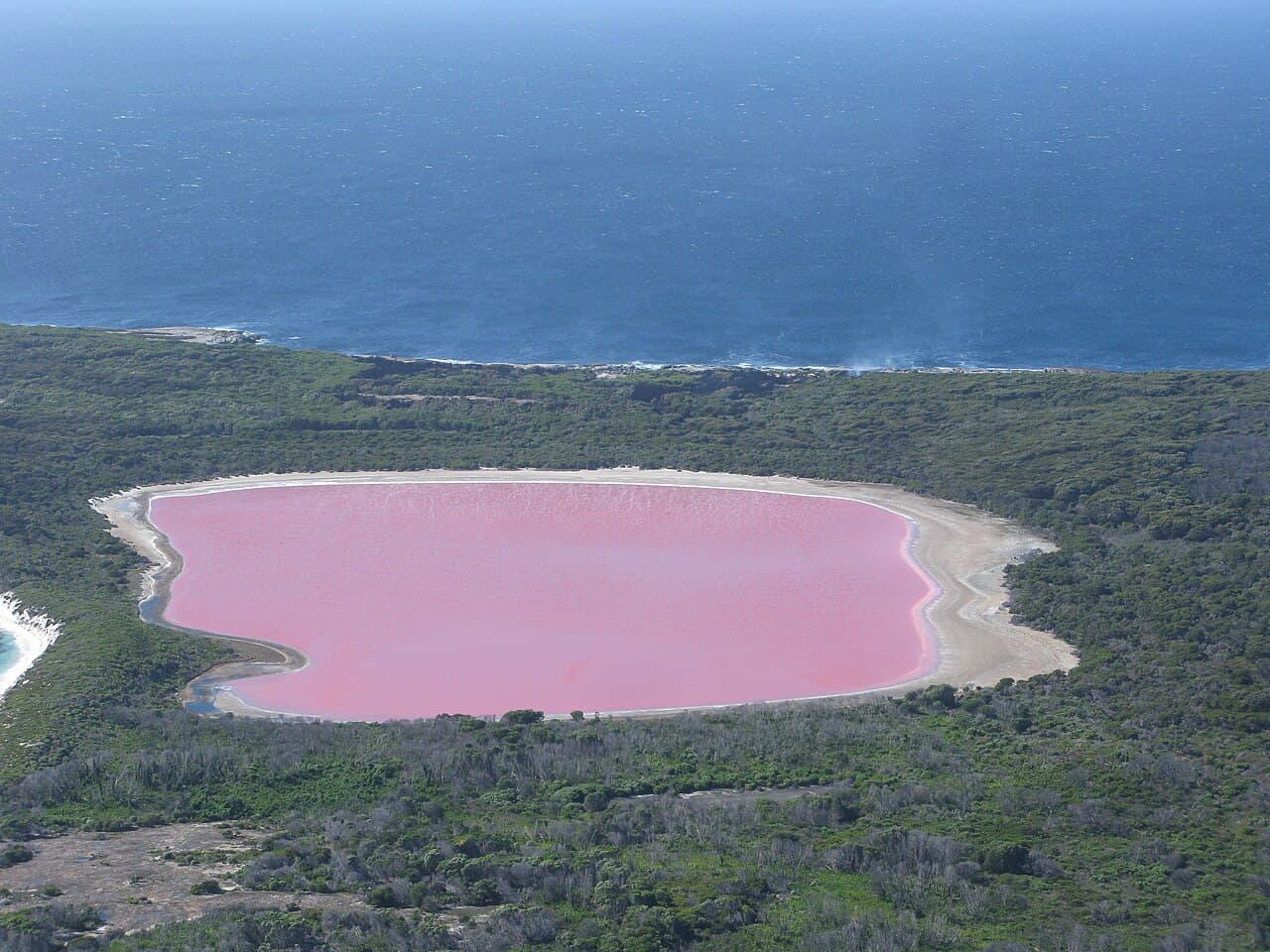
Lake Hillier became famous for water that looked bubblegum pink beside the blue ocean. But that color is not a permanent guarantee.
The Western Australian lake has changed in recent years, making its story more interesting—and more dynamic—than a single famous photograph suggests.
A pink lake on an island
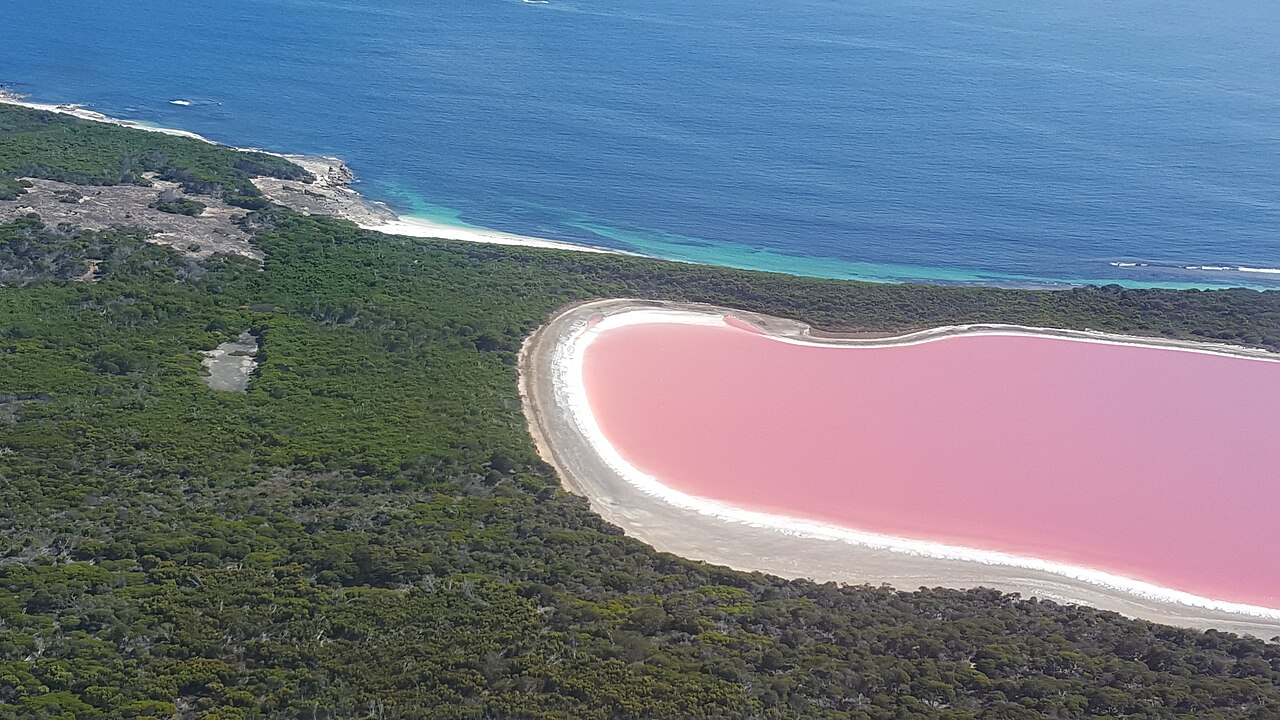
Lake Hillier lies on Middle Island in the Recherche Archipelago, off Western Australia's south coast.
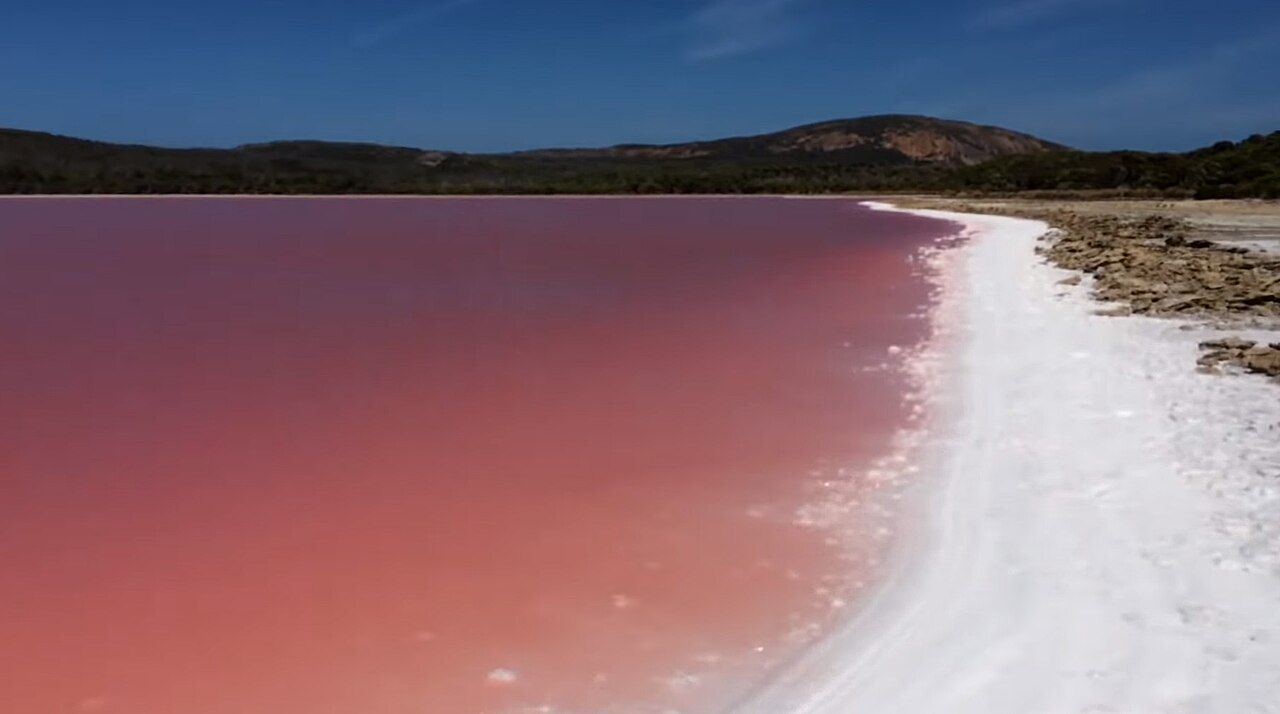
Historical aerial photographs show pink water bordered by vegetation and pale shorelines. The images in this article document that earlier appearance; they are not a live report of today's color.
Tourism Western Australia distinguishes Hillier from nearby Pink Lake, also called Lake Spencer. They are different lakes with different histories.
Tiny organisms, striking pigments
A 2022 microbiome study identified a rich community of salt-tolerant microorganisms in Lake Hillier, including many capable of producing pigments.
The researchers found evidence for contributions from bacteria, archaea, and algae. That makes “one kind of pink algae” an incomplete explanation.
A lake's visible color can emerge from an entire microbial community interacting with its chemical environment.
Why the famous view changed
Tourism Western Australia's guidance, revised in April 2026, says a major rainfall event in 2022 diluted the lake's salts and it lost its bright pink color.
It remains subject to natural fluctuation. The agency says a return of the vibrant hue cannot be given a predictable timetable.
That is an important distinction: understanding the mechanism does not mean scientists can promise a date for the color to return.
A changing lake is still remarkable
The loss of a familiar color can reveal how sensitive an ecosystem is to water balance and salinity.
Lake Hillier deserves attention beyond its most photogenic phase. Its microbes, salt, rain, and island setting tell a story about nature responding to change—and remind us that a beautiful photograph captures a moment, not a permanent condition.
Photo credits
Featured image: Aussie Oc; Wikimedia Commons source; CC BY-SA 4.0. Resized for web display.

Body image 1: PruneCron; Wikimedia Commons source; CC0. Resized for web display.

Body image 2: Yodaobione; Wikimedia Commons source; CC BY-SA 4.0. Resized for web display.
