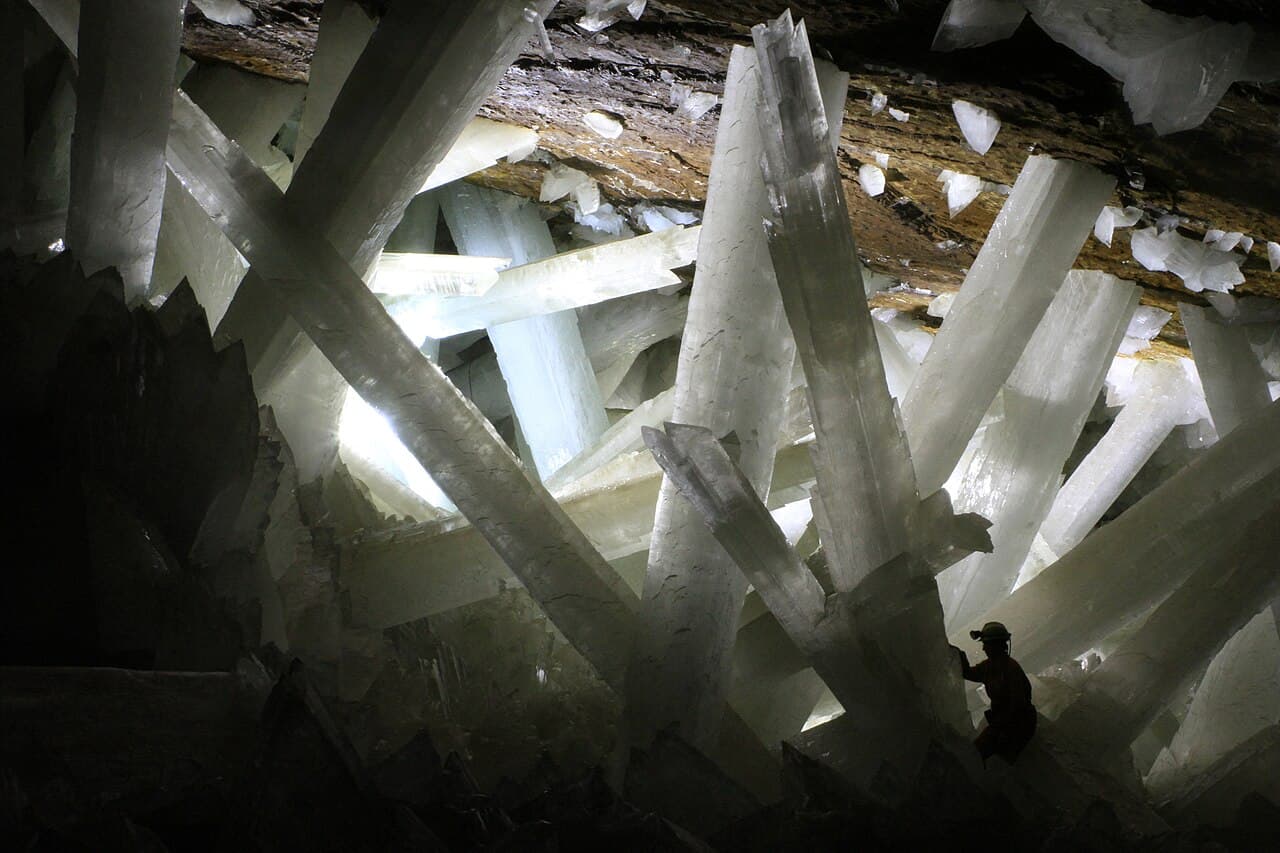
Inside Mexico's Naica mine, natural gypsum crystals grew into beams longer than a person—and some longer than a bus. Their size makes the Cave of the Crystals look almost impossible.
The explanation is patient chemistry. An unusual underground environment allowed crystals to grow slowly while conditions remained favorable.
What the giants are made of
The crystals are gypsum, a mineral containing calcium, sulfate, and water within its structure. Clear crystalline gypsum is often called selenite.
A scientific review of the Naica crystals describes examples exceeding eleven meters in length.
Those transparent beams are not glass sculptures. Their regular forms follow the way atoms and molecules arrange themselves during crystal growth.
Groundwater did the building
Mineral-rich water once filled the chamber. Under stable underground conditions, dissolved material could join growing crystal surfaces over long periods.
The remarkable scale depended on a combination of temperature, water chemistry, and time. It was not simply the result of minerals freezing suddenly into giant shapes.
Mine pumping exposed the cavern, allowing researchers to study a setting that had developed underwater.
A record inside the crystal
Research published in 2025 examined gypsum crystals from Naica and Spain's Pulpí geode as records of past groundwater.
The work used dating and chemical measurements to investigate the environments in which sampled crystals formed. Results from a sampled crystal should not be turned into one exact age for every giant beam in the cave.
A hidden place worth understanding
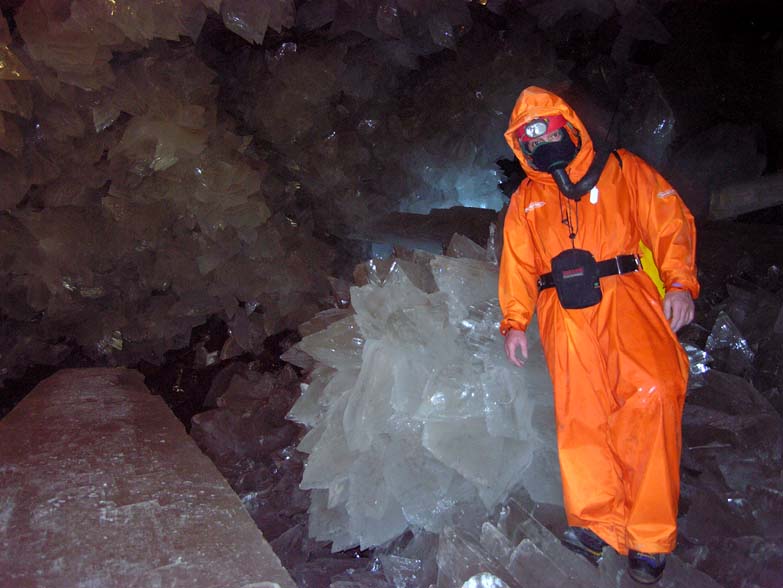
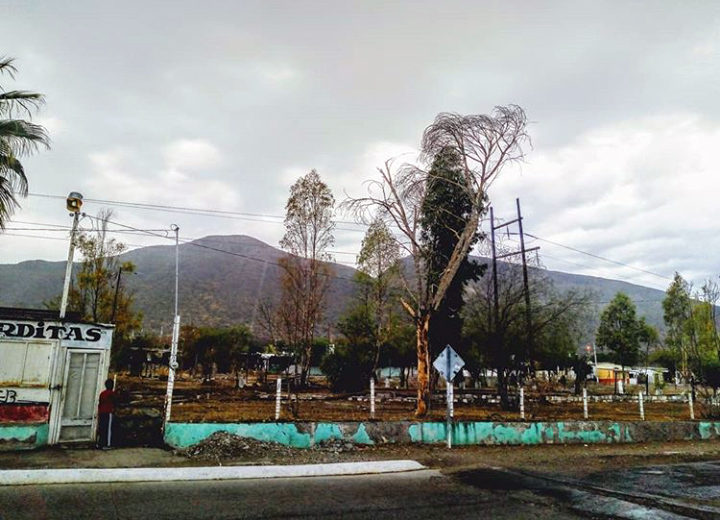
Naica is a mine environment with challenging underground conditions, rather than an ordinary walk-through show cave. The surrounding Sierra and human exploration are parts of the setting, as the accompanying photographs show.
Its crystals offer a quieter kind of spectacle: growth too slow to watch directly, producing structures large enough to dwarf us. Their beauty is a reminder that some of Earth's most extraordinary work happens out of sight.
Photo credits
Featured image: Alexander Van Driessche; Wikimedia Commons source; CC BY 3.0. Resized for web display.

Body image 1: Oliodisemini; Wikimedia Commons source; CC BY-SA 4.0. Resized for web display.

Body image 2: MikSed; Wikimedia Commons source; CC BY 4.0. Resized for web display.
