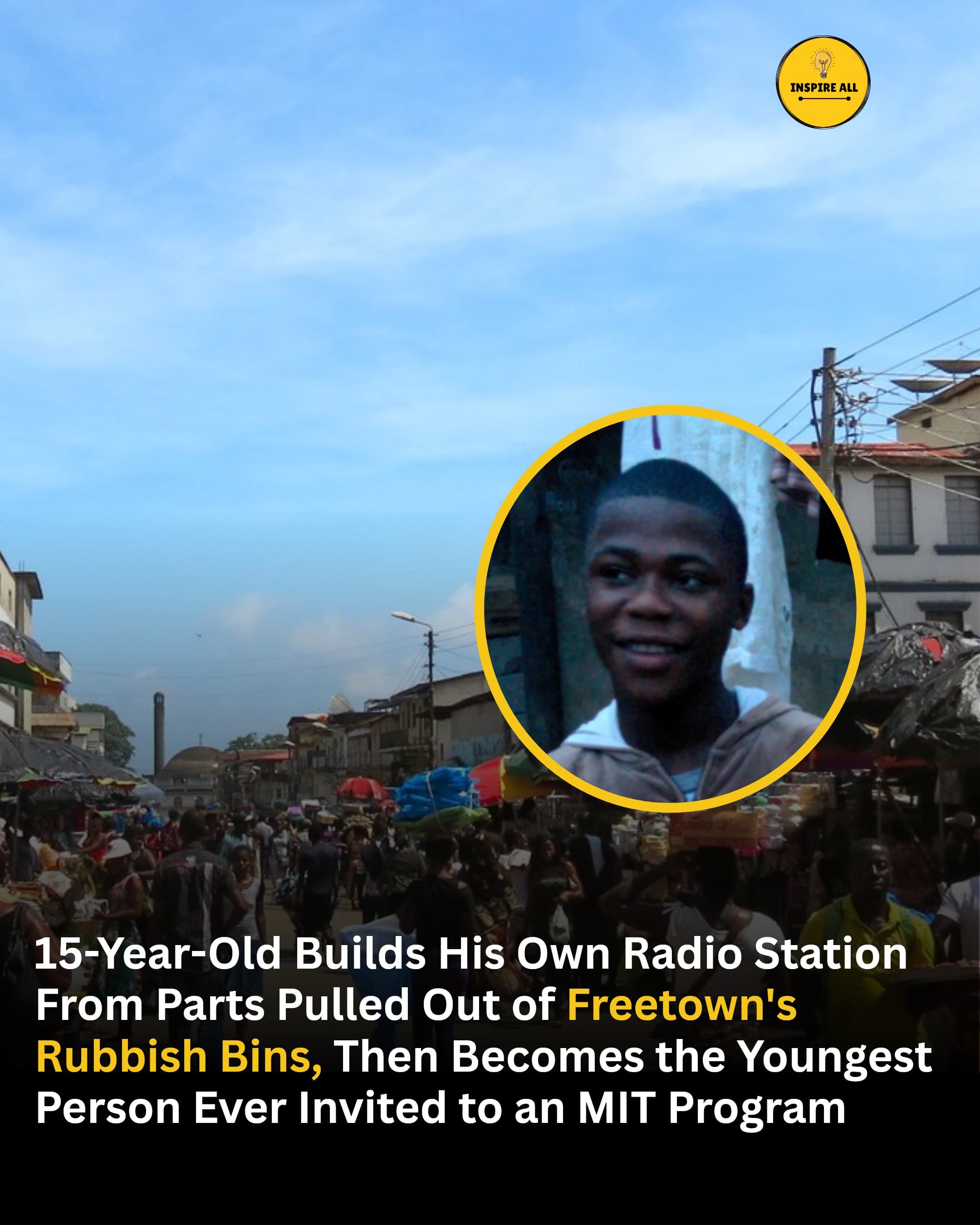
Broadcasting as DJ Focus, the Sierra Leonean teenager used discarded electronics to create something his neighbors could hear.
In 2012, fifteen-year-old Kelvin Doe attracted attention for building electronic devices from materials others had thrown away. His homemade FM transmitter carried local programming in Sierra Leone, and his work brought him to the MIT Media Lab that October.
A contemporaneous MIT News report records the project and the visit. It describes a teenager who had taught himself to make batteries and then assembled a transmitter from salvaged components.
A radio station with a neighborhood purpose
On air, Doe called himself DJ Focus. He involved schoolmates in gathering news for the station.
The important achievement was more than making an electronic object operate. The transmitter gave the project a public purpose: people nearby could hear programming produced within their own community.
A December 2012 account in Engineering.com also documented his homemade generator and a three-week visit through MIT’s Visiting Practitioner’s Program. These were early projects by a young maker, rather than commercially developed products.
The mentor who helped open a door
David Moinina Sengeh, then a doctoral student at MIT and originally from Sierra Leone, helped create Innovate Salone, a competition and mentoring program for students.
Doe’s transmitter was among the projects recognized. Sengeh subsequently arranged the U.S. trip, which included time as a resident practitioner at the Media Lab and a presentation at New York’s World Maker Faire.
The distinction matters: Doe visited MIT to exchange ideas and work among researchers. This was not enrollment in an MIT degree.
Learning began before the invitation
Doe’s story is often reduced to the surprise of a teenager reaching a famous institution. The work that earned the invitation had already begun at home.
His own experiments supplied the starting point. Mentorship, tools, and opportunities to meet other makers offered ways to develop it further.
The radio station makes that progression easy to understand. Discarded parts became a transmitter; the transmitter became a community project; and the project helped connect a young inventor with a wider circle of people who could support his learning.
Related: Shubham Banerjee’s LEGO Braille printer and Ann Makosinski’s hand-heat flashlight.