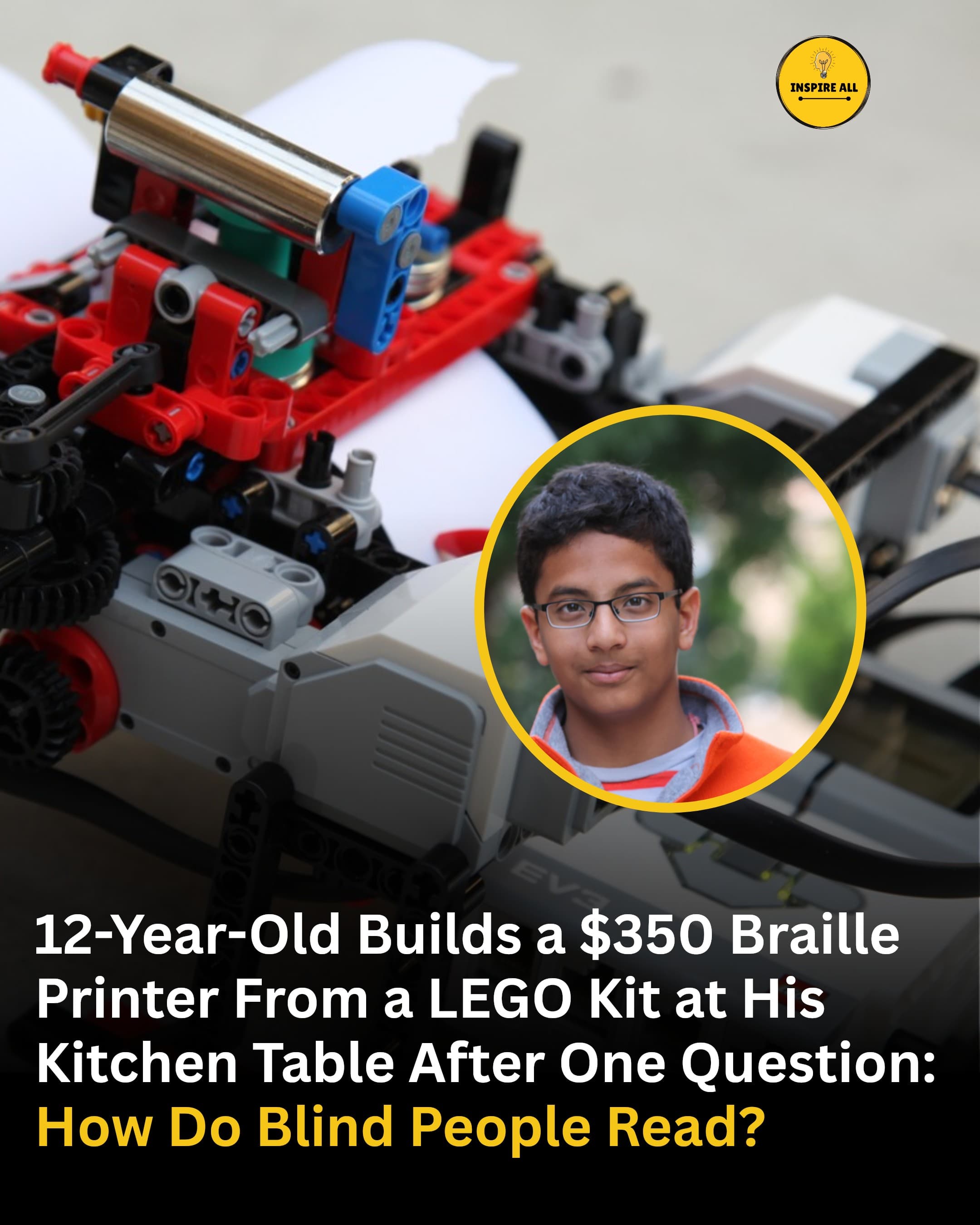
A charity flyer prompted a question, and a familiar robotics kit became a way to investigate the answer.
In 2014, seventh grader Shubham Banerjee described building a Braille printer with a LEGO Mindstorms kit and basic hardware-store materials.
He called it Braigo, combining Braille and LEGO.
In a February 22, 2014 NPR interview carried by Vermont Public, Banerjee explained that a donation flyer led him to ask his parents how blind people read.
Learning about Braille and the cost of embossers prompted him to experiment.
Starting with something he knew
Banerjee already enjoyed building with LEGO. A programmable robotics kit gave him motors and a structure he could rearrange while investigating how to emboss dots.
The interview identifies a $350 kit, rather than establishing that a finished, commercially supported printer could be sold at that price.
That distinction matters. The cost of a student prototype is different from the cost of producing, distributing and maintaining a reliable product.
From one version to another
A Wharton Global Youth interview describes several versions of the early design and later work toward Braigo 2.0.
It adds a useful follow-up to the first news story: an initial demonstration was a starting point for redesign, rather than the end of development.
Intel’s September 2014 fact sheet also records Banerjee demonstrating Braigo.
These dated records document the project’s progression. They do not establish its current retail availability.
What the question opened up
Braigo’s appeal comes from connecting curiosity with practical experimentation.
Banerjee did not begin by knowing how to manufacture a Braille embosser. He began with a question about reading and used tools he understood to explore part of the answer.
The result also highlights the importance of testing accessibility designs with users. A machine must produce dots that are readable and useful, not simply complete a motion on command.
His early work is a concrete example of a student moving from looking something up to building something that could be examined and improved.
Historical account based on NPR, Wharton Global Youth and Intel. Featured graphic supplied by Inspire All.
Related reading: Momofuku Ando’s instant-noodle experiments and Michael Faraday’s route from bookbinding into science.