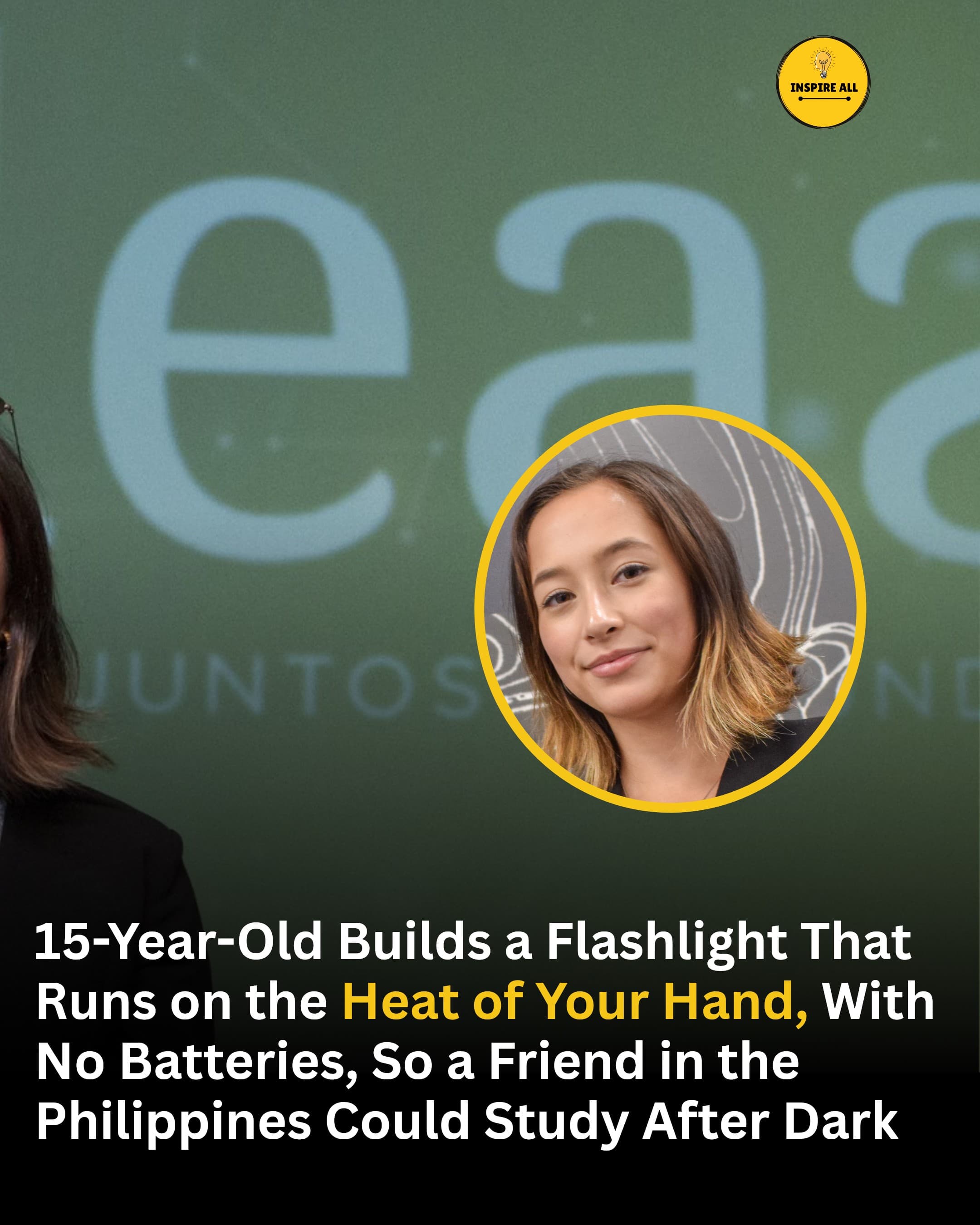
A teenager’s flashlight experiment explored whether a small temperature difference could provide enough energy for an LED.
Ann Makosinski’s Hollow Flashlight earned recognition at the 2013 Google Science Fair for generating electricity without a conventional battery.
Google Canada’s winner announcement describes thermoelectric tiles using the temperature difference between the palm of a hand and ambient air.
That difference is central. The project was not a claim that a warm hand could provide unlimited power in any surroundings.
A friend’s difficulty studying
In a March 2014 Smithsonian interview-based report, Makosinski’s motivation included a friend in the Philippines who lacked electricity and had difficulty studying after dark.
The report describes her earlier experiments with energy-harvesting materials.
A familiar need gave the research a purpose: investigate another way to provide a small light.
Why make the body hollow?
The prototype placed thermoelectric components between a warmer outer surface and cooler air inside a hollow tube.
A difference in temperature across a thermoelectric device can generate electrical energy. Electronics were also needed to provide a usable supply for the light.
The hollow shape was therefore part of the mechanism, rather than simply a choice of appearance.
It helped make the two temperature conditions possible within a handheld object.
Recognition is not a universal performance guarantee
Makosinski won the 15–16 age category at the Google Science Fair. The result recognized an inventive student project.
The sources do not establish that the flashlight replaced conventional lighting at scale, nor that it delivered the same brightness in every climate.
A warmer environment can change the temperature difference available, which is why the operating conditions belong in an explanation of the design.
The appeal of the story remains practical. Makosinski looked at heat that ordinarily escapes into the surroundings and asked whether a small amount could be put to use.
Her prototype turned that question into something she could hold, measure and improve.
Based on Google’s 2013 announcement and Smithsonian reporting. Featured graphic supplied by Inspire All.
Related reading: Momofuku Ando’s instant-noodle experiments and Michael Faraday’s route from bookbinding into science.