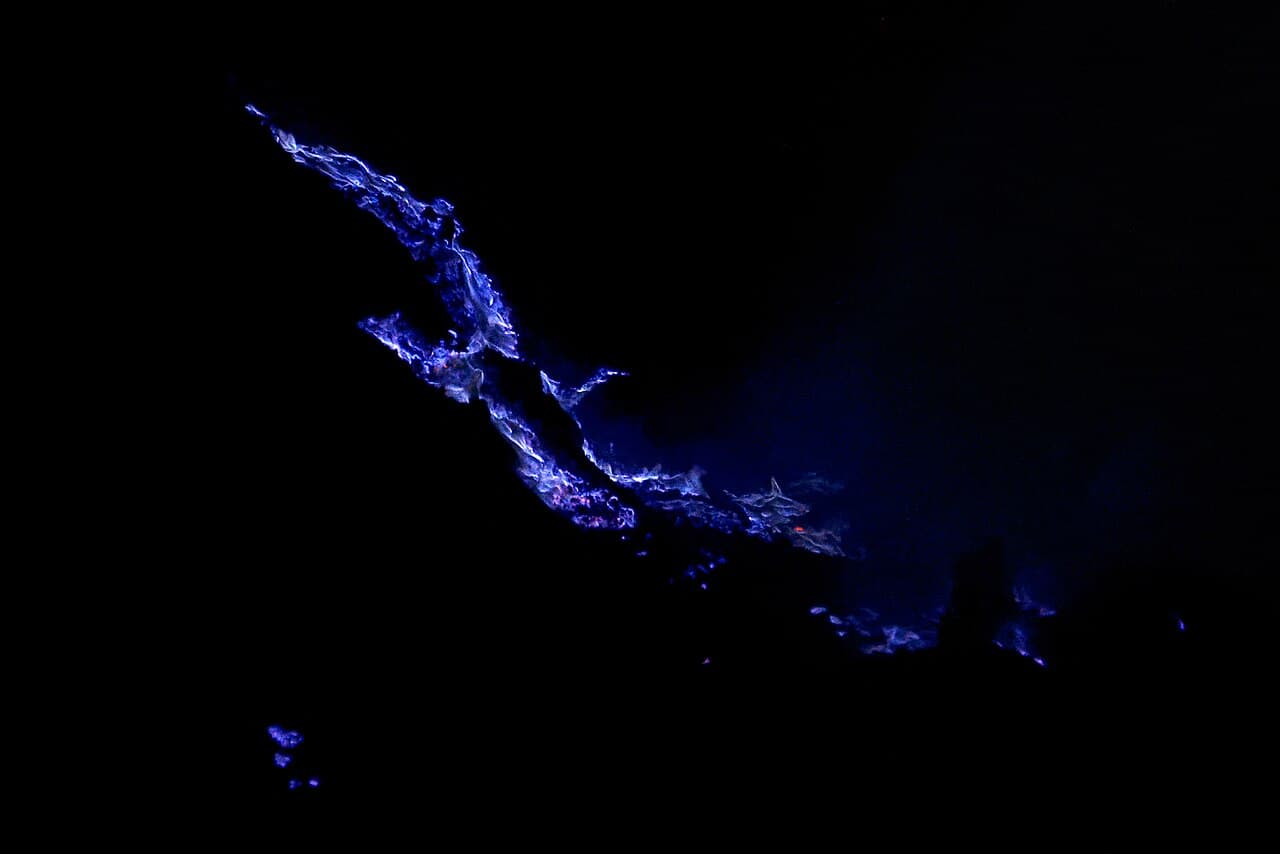
At Kawah Ijen, flames can glow electric blue against the darkness. The color does not come from blue lava flowing down the volcano.
Sulfur gases ignite as they meet oxygen, producing the blue fire that has made this Indonesian crater famous.
Two blues, two explanations
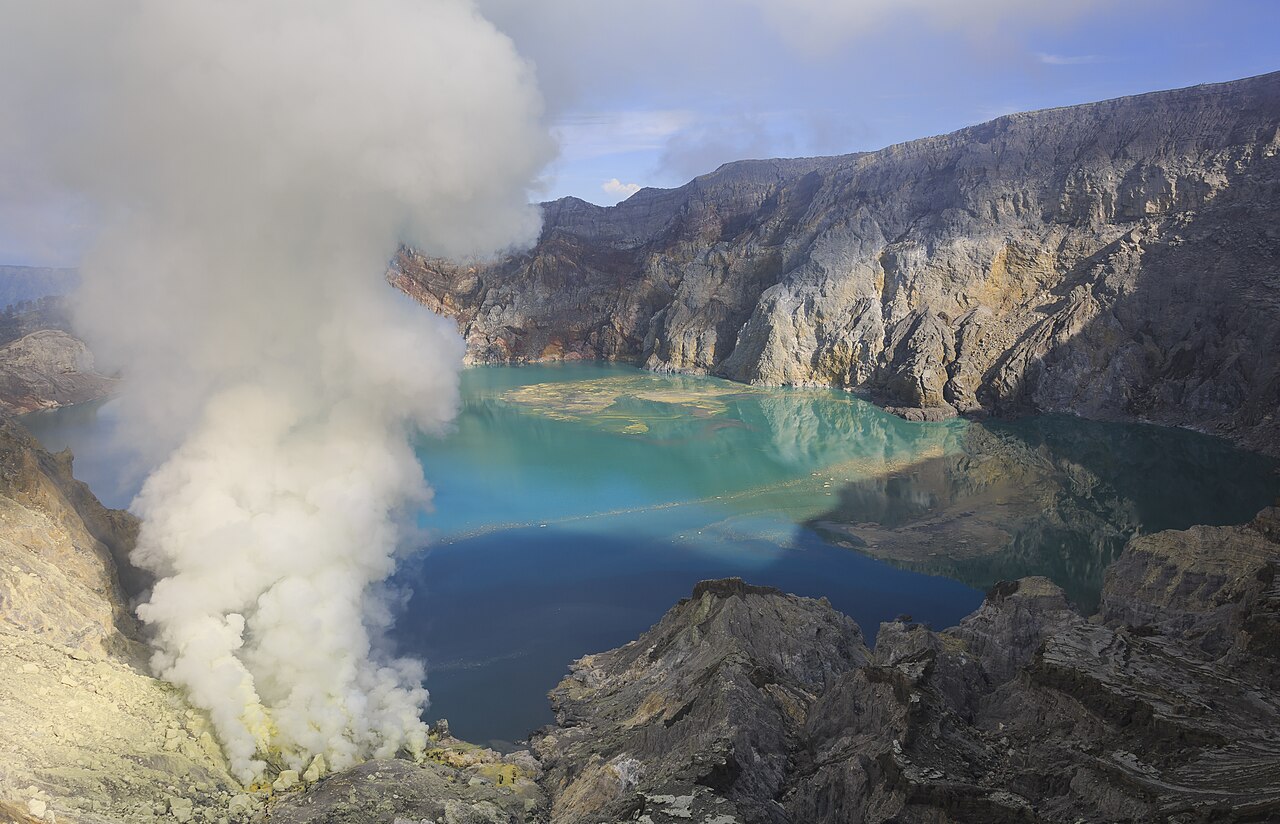
Kawah Ijen lies in East Java. It contains a striking turquoise crater lake as well as sulfur-rich vents.
The European Space Agency describes both the lake and the blue flames.
Their colors have different causes. The visible flame is combustion; the lake is a mineral-rich body of extremely acidic water. A blue area in a daytime photograph should not automatically be identified as fire.
Why darkness matters
Blue flames are easier to see against a dark background. Night photographs can therefore reveal a spectacle that looks much less prominent in daylight.
Long exposures can make the glow appear stronger or more extensive than a brief glance would suggest. That does not make the flames imaginary, but it helps explain differences between photographs.
The underlying process is volcanic gas chemistry, rather than a new kind of molten rock.
A working volcanic landscape
The Smithsonian's Global Volcanism Program describes Ijen's acidic lake and sulfur deposits.
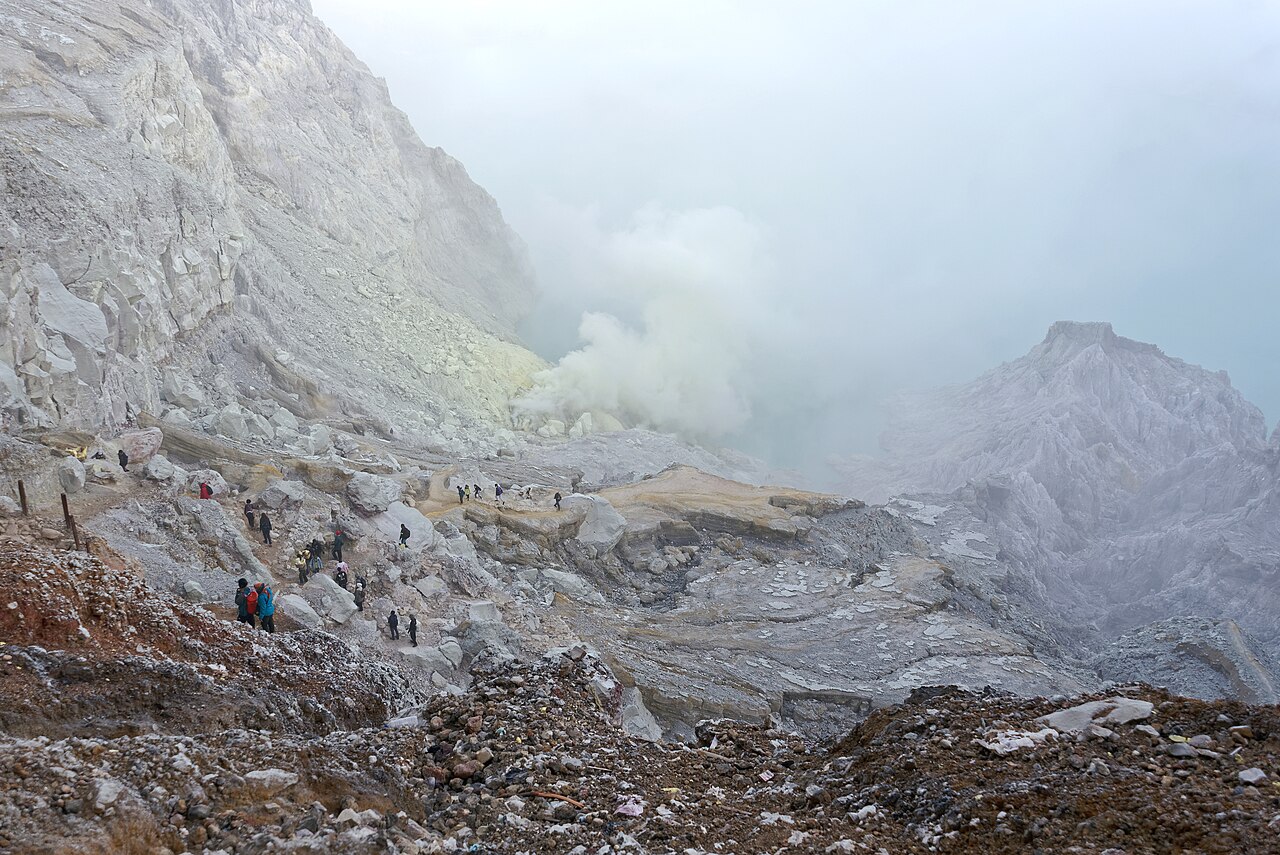
The crater has also supported labor-intensive sulfur mining. People carrying heavy loads are part of its history, not background details to a scenic light display.
Recognizing that human work adds context to images of the vents and crater floor.
Beauty does not describe conditions
Ijen is an active volcanic environment. Gas, volcanic activity, and access conditions require official monitoring and local decisions.
A striking night image does not establish that a route is currently open or suitable to enter.
The blue flames are remarkable enough without a misleading lava story. They show how a familiar process—gas burning in air—can become extraordinary when Earth's heat brings sulfur to the surface.
Photo credits
Featured image: Jakub Hałun; Wikimedia Commons source; CC BY-SA 4.0. Resized for web display.

Body image 1: CEphoto, Uwe Aranas; Wikimedia Commons source; CC BY-SA 3.0. Resized for web display.

Body image 2: Jakub Hałun; Wikimedia Commons source; CC BY-SA 4.0. Resized for web display.
