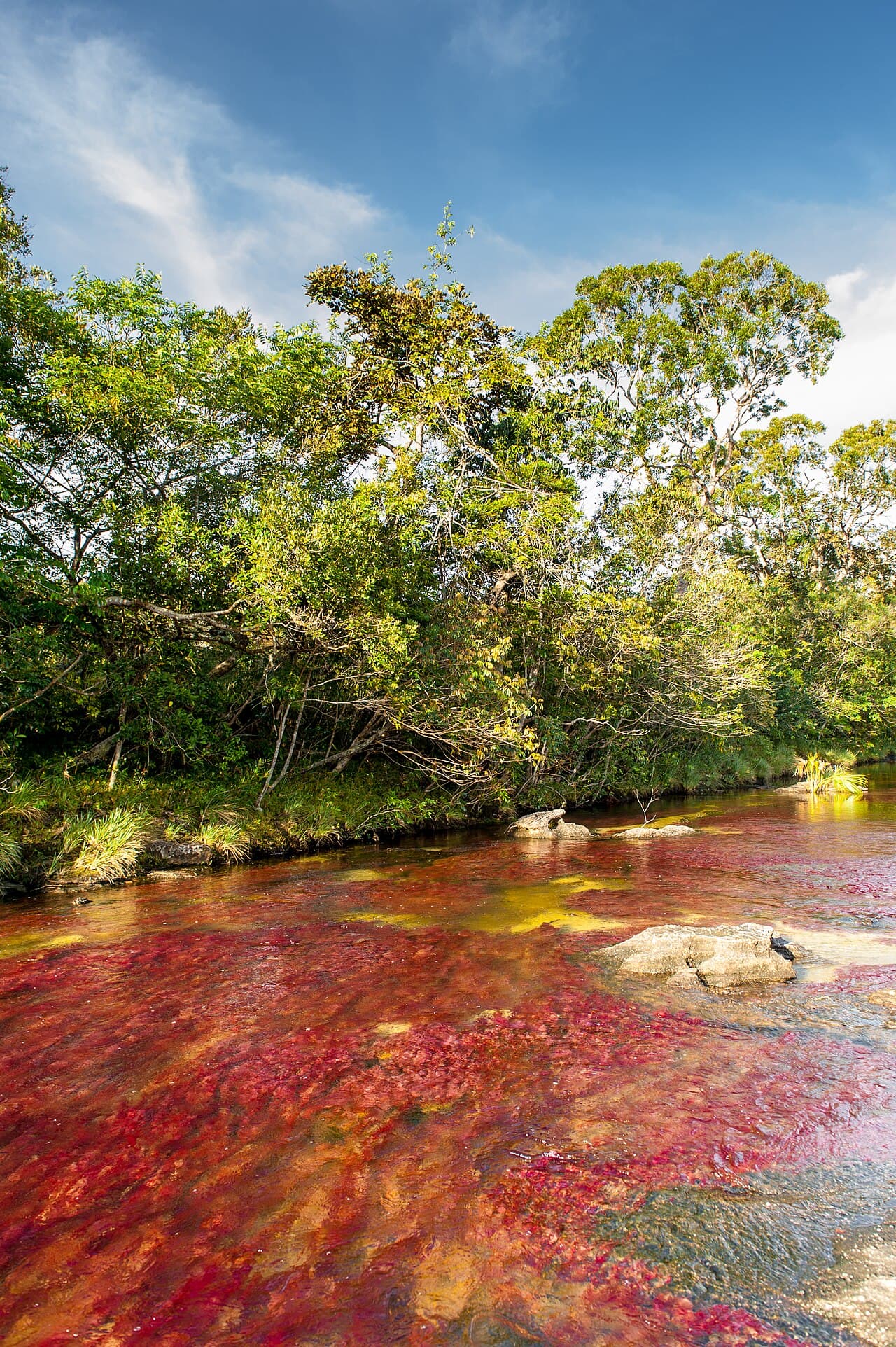
The red flowing beneath Caño Cristales is not dye. Much of its famous color comes from aquatic plants growing on the riverbed, visible through clear water.
This Colombian river combines living color with rock, light, and changing water levels. Its appearance is a seasonal event rather than a permanent rainbow.
Meet the plant behind the red
Caño Cristales lies in the La Macarena area of Colombia's Meta department, within the Sierra de la Macarena protected landscape.
Colombia's national parks service identifies the aquatic plant commonly called Macarenia, also referred to as Rhyncholacis clavigera.
Its growth creates some of the river's most striking red patches. It is a plant, rather than the red algae often mentioned in simplified descriptions.
Water and light complete the scene
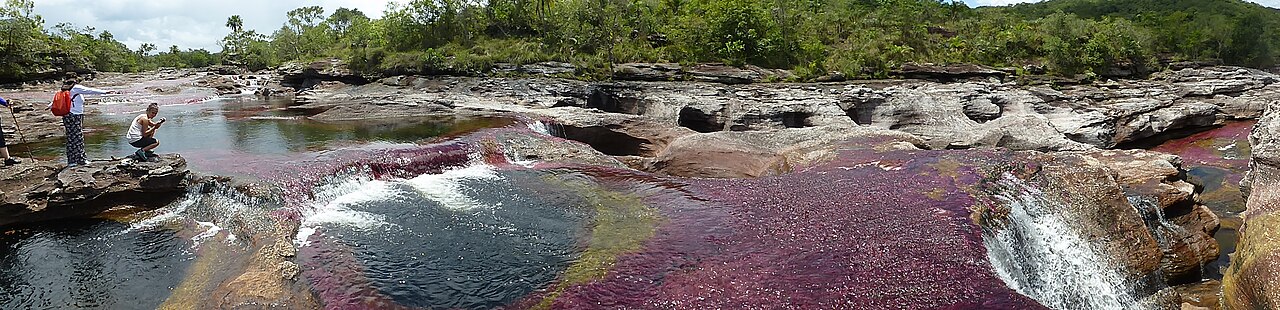
The plants need suitable conditions. Changing water depth affects the light reaching them, while flow and seasonal growth alter what visitors can see.
The riverbed, reflected surroundings, and clear water also contribute to the range of apparent colors. Not every shade in a photograph comes from the same source.
A view of brilliant red vegetation captures a particular stage in a living cycle.
A colorful habitat needs care
The parks service's account of La Macarena explains why visitors must avoid disturbing areas where the plant grows.
Swimming is limited to authorized places. The agency also restricts products such as sunscreen and insect repellent in sensitive river areas because they can affect the aquatic habitat.
Current park instructions should guide a visit, rather than a generic promise of unrestricted swimming.
The color is worth protecting
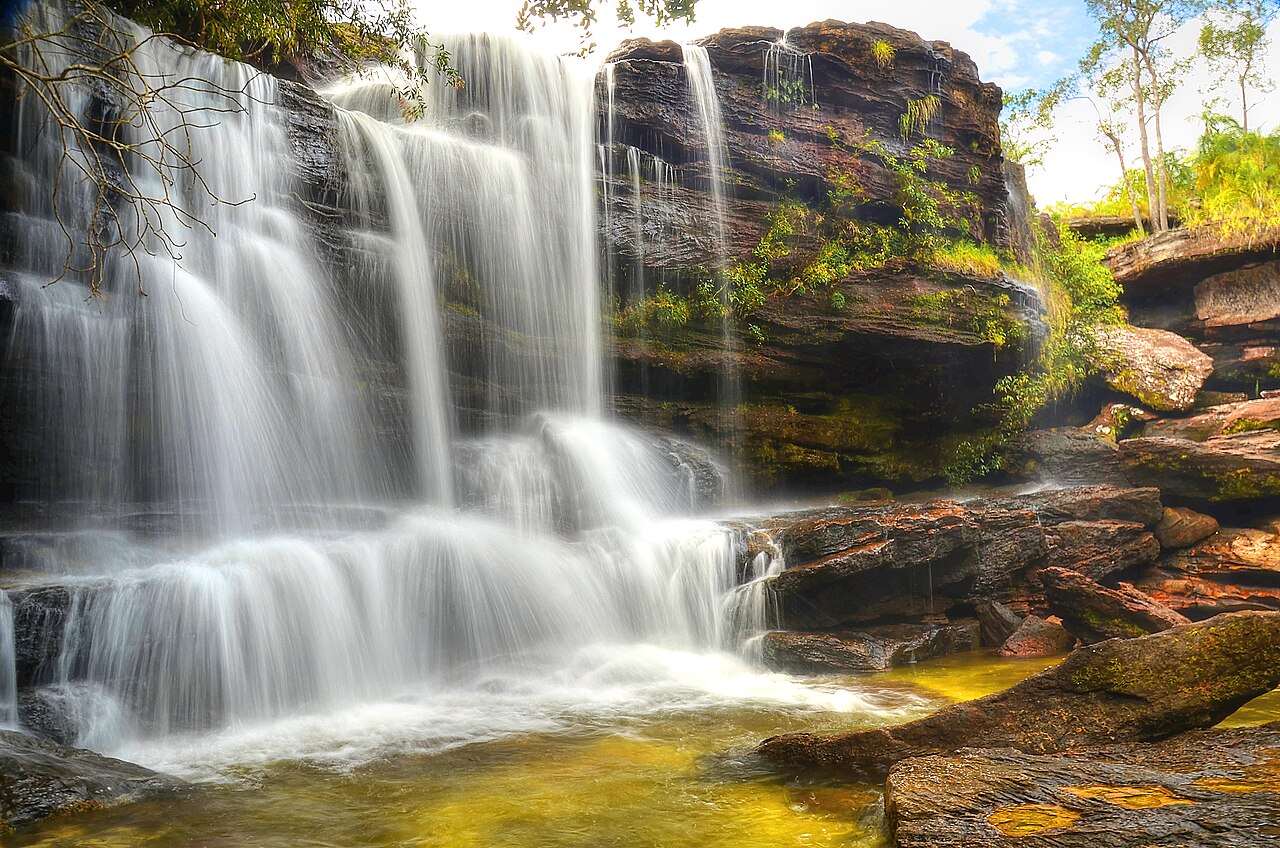
The river belongs to a wider landscape where Andean, Amazonian, and Orinoco-region influences meet. Its appeal reaches beyond one colorful channel.
Caño Cristales is extraordinary because its beauty is alive. Caring for the plants and their water allows the seasonal display to remain part of the river's future.
Photo credits
Featured image: Astromario; Wikimedia Commons source; CC BY-SA 3.0. Resized for web display.

Body image 1: Xatly2; Wikimedia Commons source; CC BY-SA 4.0. Resized for web display.

Body image 2: Gicaman; Wikimedia Commons source; CC BY-SA 4.0. Resized for web display.
