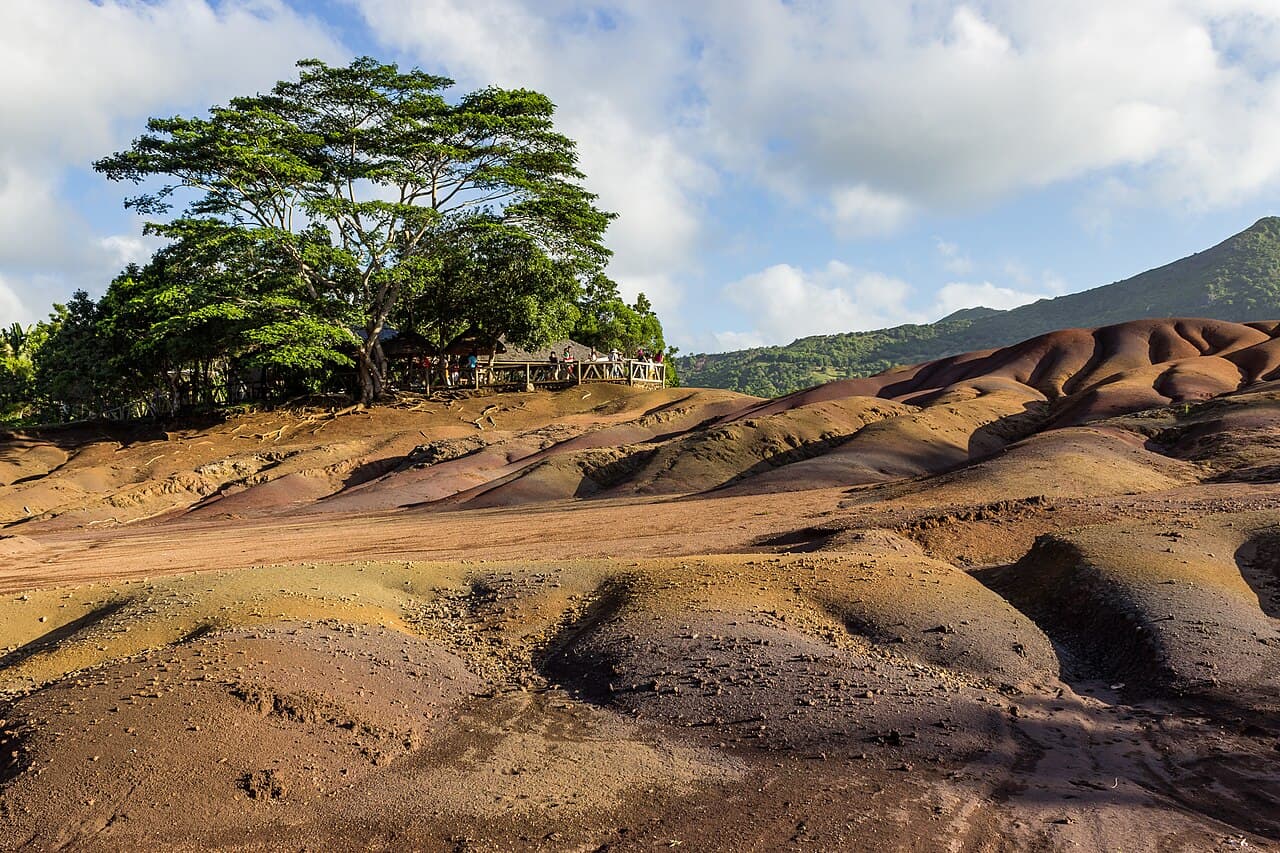
At Chamarel, bare ground folds into bands of red, brown, gray, and purple. The scene looks like a small landscape made from different-colored powders.
Its real story begins with basalt. Weathering transformed volcanic rock into the colored earth that makes this part of Mauritius famous.
Color produced by change
Chamarel's Seven Coloured Earth lies in southwestern Mauritius. The exposed mounds stand in striking contrast to the surrounding vegetation.
A geological study summarized by the U.S. Environmental Protection Agency explains that weathering of basalt produced secondary iron oxides and hydroxides.
Those compounds help create the varied tones. The surface is not simply a fresh layer of multicolored volcanic ash left by one spectacular eruption.
A landscape shaped by erosion
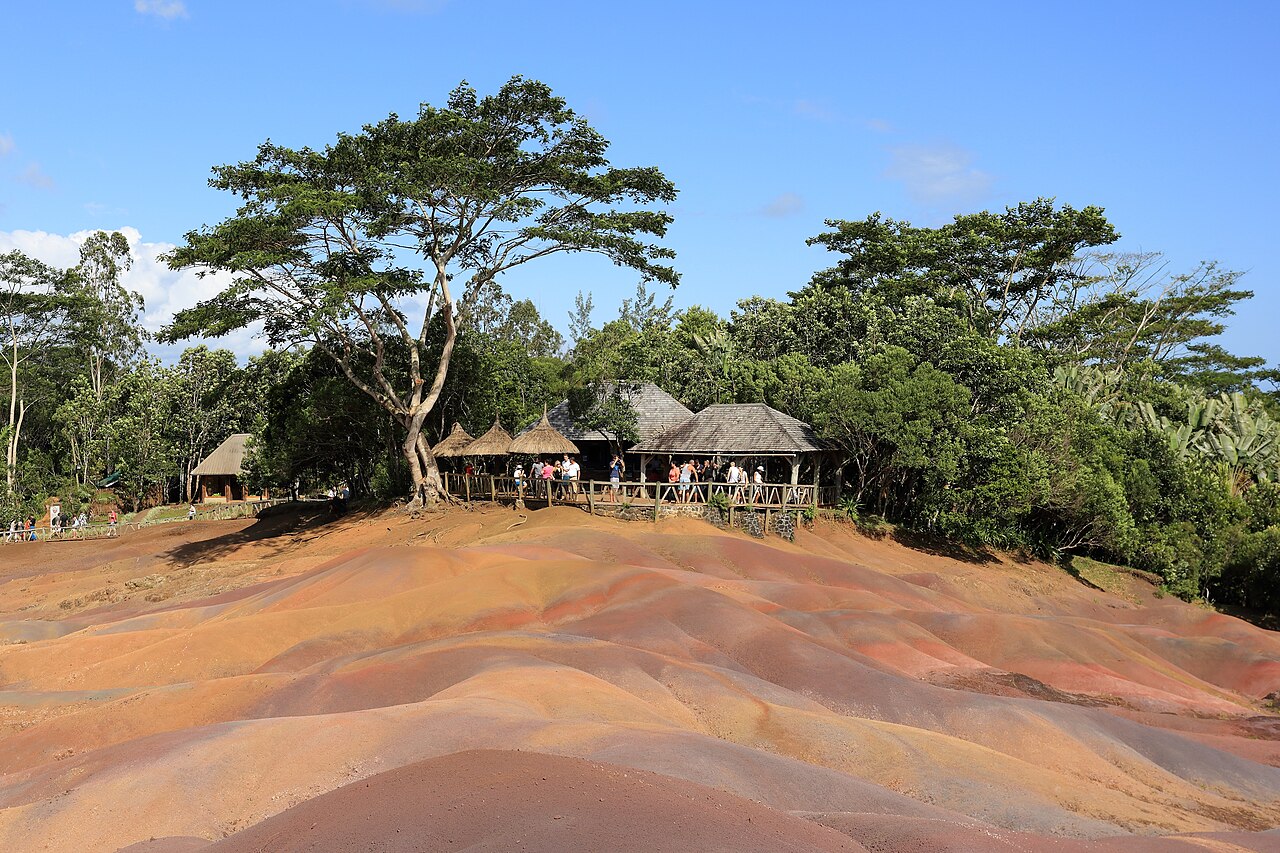
Water has cut small channels, known as rills, through the exposed material. Their curves and ridges help give the ground its folded appearance.
The same study identifies vegetation clearance and sheet erosion as important parts of that surface history. Human influence belongs in the explanation alongside natural weathering.
Calling the mounds “dunes” may help describe their appearance, but it can wrongly suggest a miniature sandy desert.
Light changes what we notice
The site's geological interpretation introduces the long weathering history behind the attraction.
The colors can appear stronger or softer as sunlight and moisture change. Photographs record those conditions, and editing can exaggerate them further.
The rock-and-soil story remains remarkable without expecting every view to match the brightest image online.
Leave the pattern in place
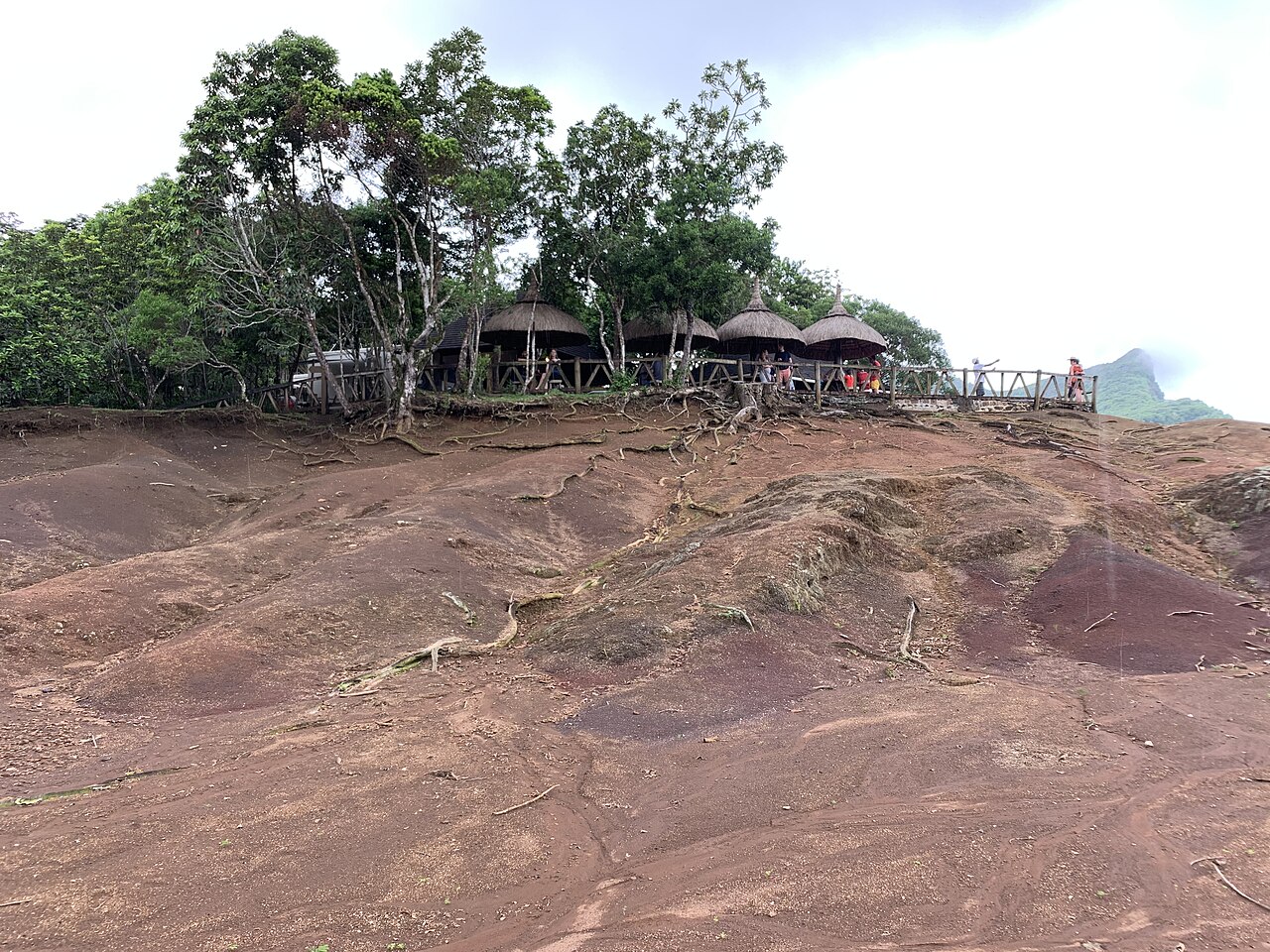
Designated viewing areas allow people to appreciate the colored ground without walking across it. Removing material would damage the very surface that makes the place interesting.
Chamarel rewards a closer look at an everyday process. Rock breaks down almost everywhere, but here that slow transformation has become visible as a remarkable palette beneath our feet.
Photo credits
Featured image: CEphoto, Uwe Aranas; Wikimedia Commons source; CC BY-SA 3.0. Resized for web display.

Body image 1: Martin Falbisoner; Wikimedia Commons source; CC BY-SA 4.0. Resized for web display.

Body image 2: Benoît Prieur; Wikimedia Commons source; CC0. Resized for web display.
