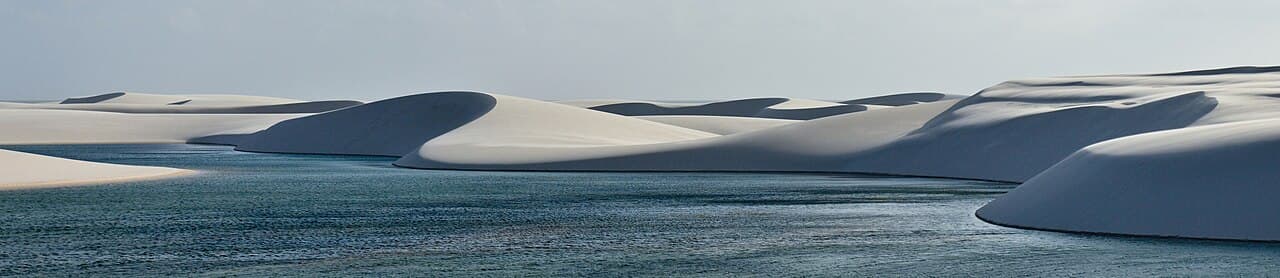
White dunes and blue-green lagoons stretch side by side in Lençóis Maranhenses. The scene looks like a desert dotted with improbable pools.
But this Brazilian landscape receives a rainy season. Water is central to its identity, not a rare accident in an otherwise rainless world.
Rain creates the lagoons
Lençóis Maranhenses National Park lies on the coast of Maranhão in northeastern Brazil.
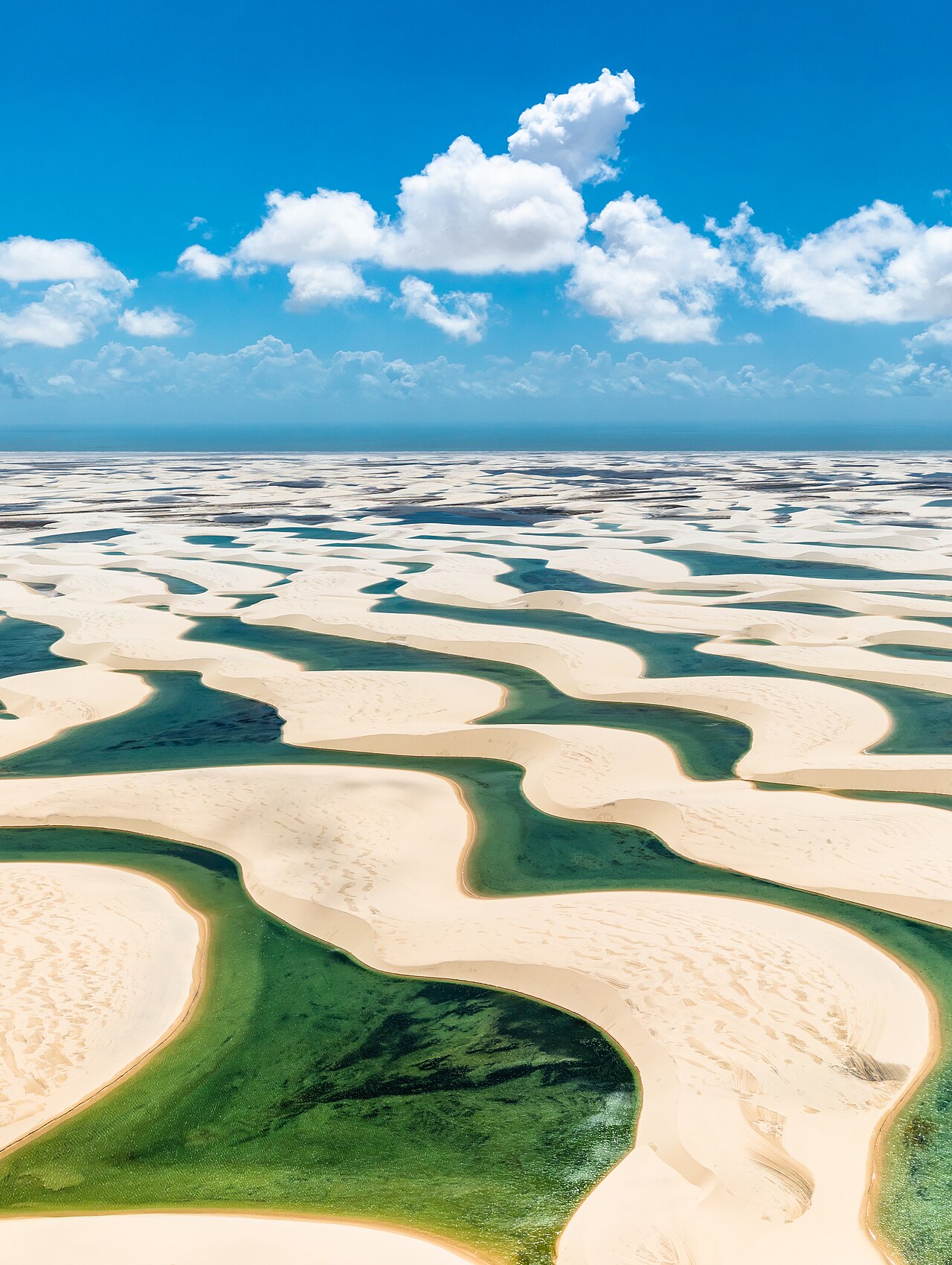
UNESCO describes a semi-humid climate in which seasonal rain fills depressions between dunes. These temporary lagoons are fed by rainwater.
An underlying layer helps limit drainage, allowing water to remain between the sand ridges. The resulting pools vary in size and shape.
The same place changes with the season
Water levels rise during the wet part of the year and decline as drier conditions return. Some pools shrink or disappear.
NASA Earth Observatory's 2026 account uses satellite views to show the dune-and-lagoon landscape.
A photograph of full lagoons records one phase. It should not become a promise that every depression will hold water throughout the year.
Wind keeps working on the sand
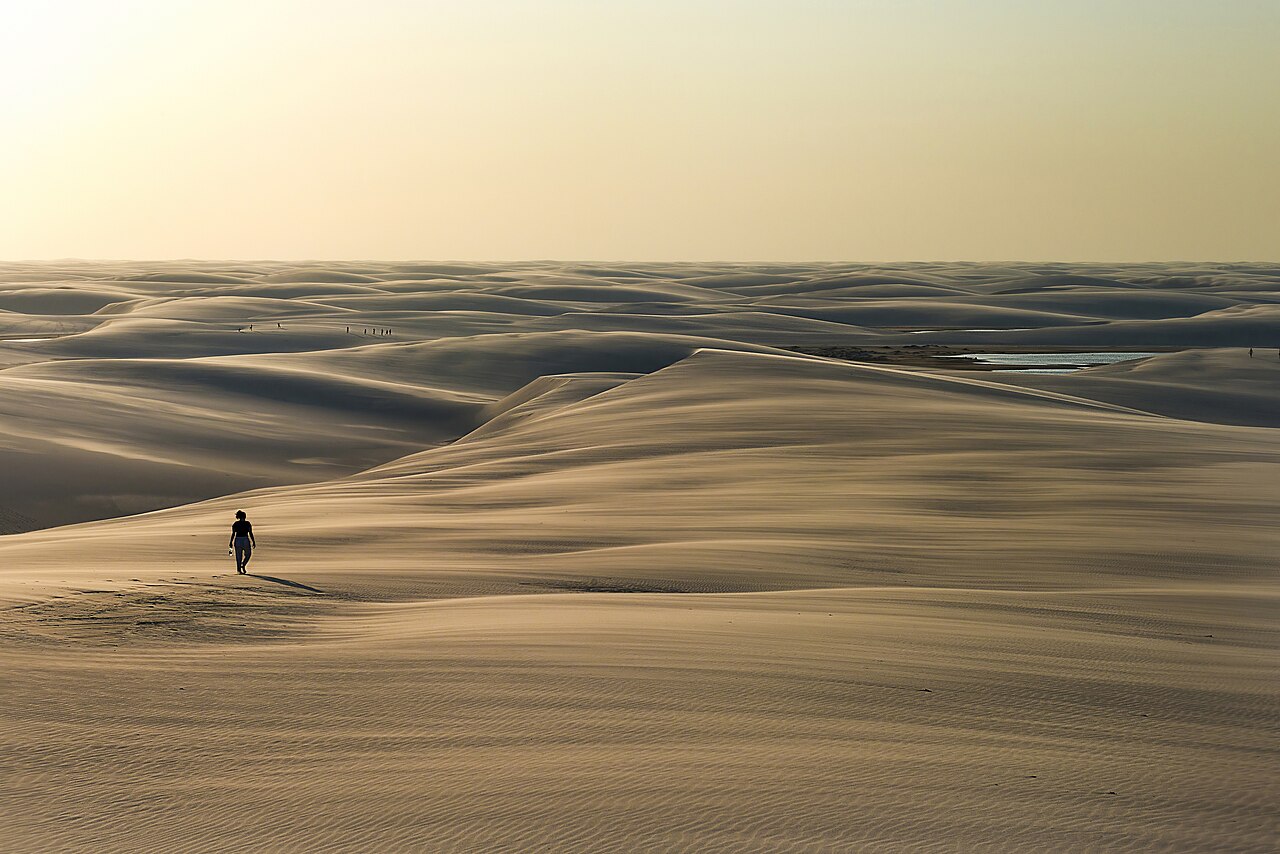
The dunes are part of a coastal system involving sand supply, wind, and water. Their sweeping shapes reflect movement and deposition over time.
That creates a powerful contrast: sand ridges are shaped by wind, while rainwater gathers in the hollows between them.
The park's wildlife and vegetation are also adapted to this changing environment. Bare-looking dunes do not mean an empty ecosystem.
Protect the seasonal pattern
Lençóis Maranhenses became a World Heritage Site in 2024. Its value includes the functioning landscape, not only the most photogenic lagoons.
Protecting it means caring for the water cycle, coastal processes, and habitats together.
Its beauty is especially surprising because it challenges a simple assumption. A broad field of sand can belong to a rainy landscape—and the rain can turn the spaces between dunes into a remarkable freshwater world.
Photo credits
Featured image: Heris Luiz Cordeiro Rocha; Wikimedia Commons source; CC BY-SA 3.0. Resized for web display.

Body image 1: Julius Dadalti; Wikimedia Commons source; CC BY-SA 4.0. Resized for web display.

Body image 2: Joao lara mesquita; Wikimedia Commons source; CC BY-SA 4.0. Resized for web display.
