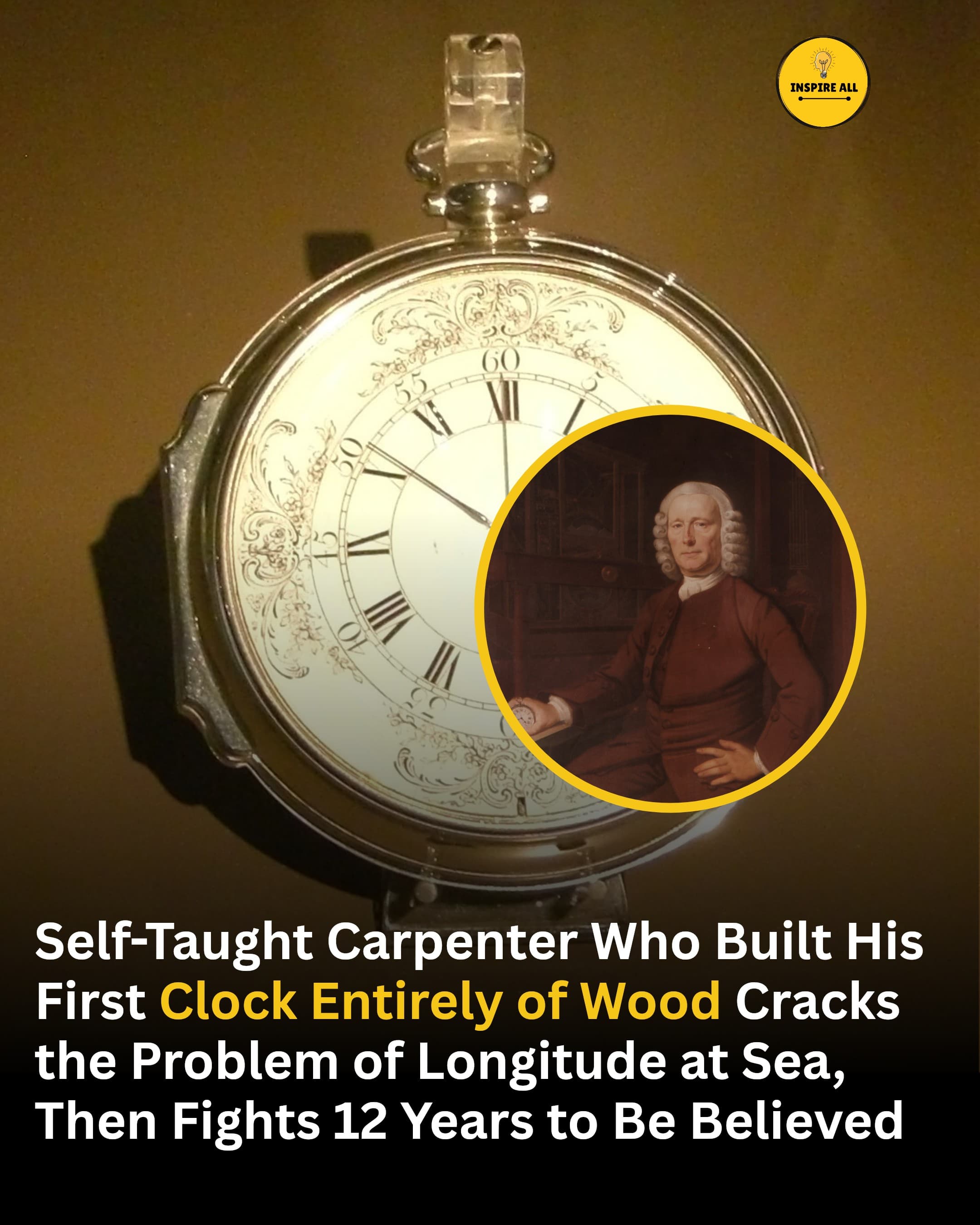
John Harrison brought a carpenter’s practical background to a difficult navigational challenge: keeping dependable time aboard a moving ship.
John Harrison was a carpenter who taught himself clockmaking. His marine timekeepers became central to the search for a way to determine longitude at sea.
The Science Museum Group’s biographical record traces the sequence from his earliest surviving clock in 1713 to H1 in 1735 and the later H4.
That chronology is a useful correction to the impression of a single sudden invention. The work extended across decades and several different mechanisms.
Why reliable time mattered
Longitude describes east-west position. Comparing local time with time at a known reference location provides a way to calculate it.
The challenge was maintaining that reference time while a ship moved through changing conditions.
Royal Museums Greenwich’s history explains how Harrison pursued the problem through successive timekeepers. H4, which resembled a large pocket watch, marked a departure from his earlier larger machines.
A successful voyage did not end the argument
Harrison’s son William took H4 on a voyage to Jamaica in 1761. Further assessment followed, including a Barbados trial.
The museum describes disputes over whether tests were sufficient, the disclosure of the mechanism and payments. In 1765, the Board accepted that the timekeeper had met the most stringent performance limits of the 1714 Act.
The historical record is more complicated than a story in which experts simply refused to believe an outsider. It includes competing methods, verification requirements and prolonged disagreements.
Remembering the maker and the process
Westminster Abbey’s account of Harrison’s memorial records his earlier trade as a carpenter and commemorates his contribution to longitude.
His achievement brought together craftsmanship and a demanding measurement problem.
A watch could be impressive on a workbench and still need to demonstrate dependable performance on a voyage. That difference explains why trials are so central to the story.
Harrison’s timekeepers changed what accurate portable time could mean for navigation. The years behind them reveal how much work can lie between a promising mechanism and evidence that others can rely on.
This historical profile draws on Royal Museums Greenwich, the Science Museum Group and Westminster Abbey. Featured graphic supplied by Inspire All.
Related reading: Himaja’s voice-controlled Braille printer and Gargi Agrawalla’s portable alert prototype.