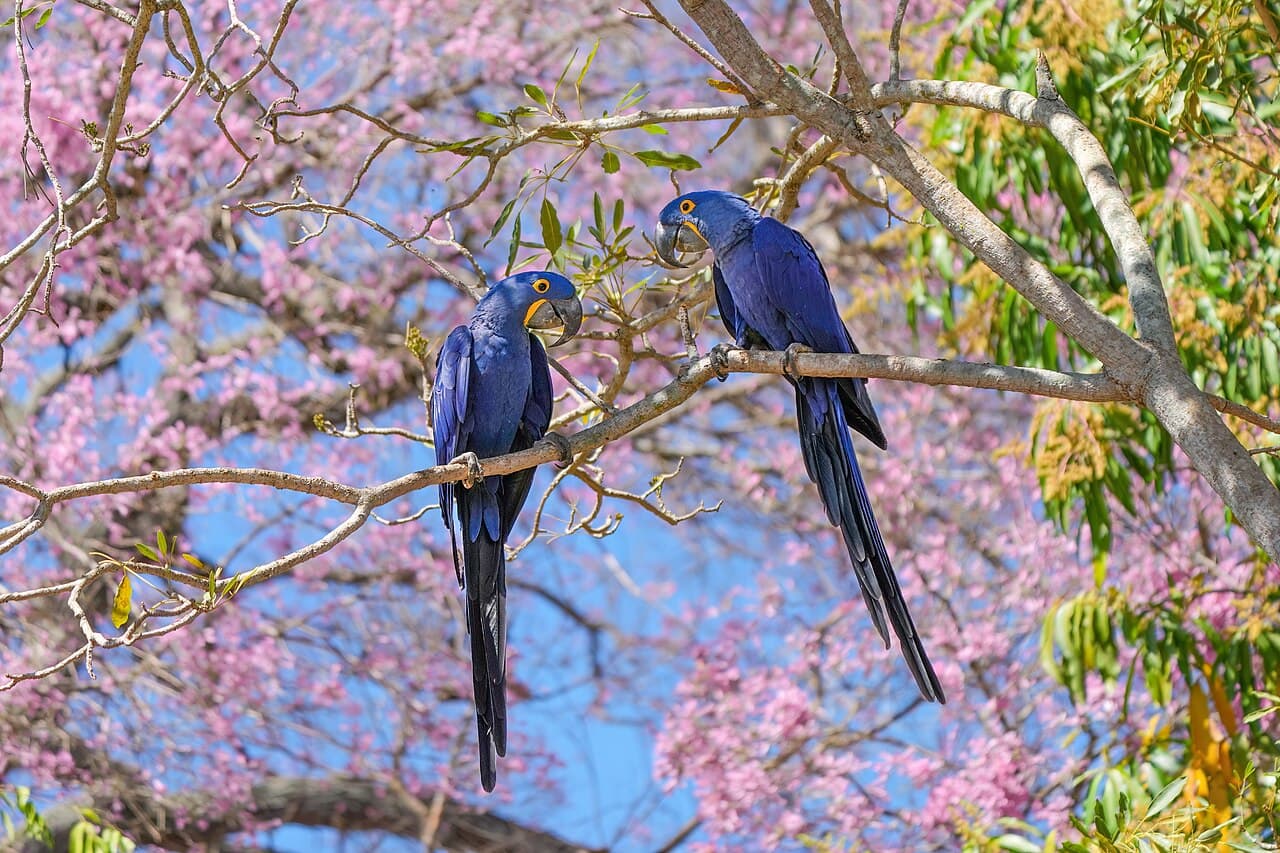
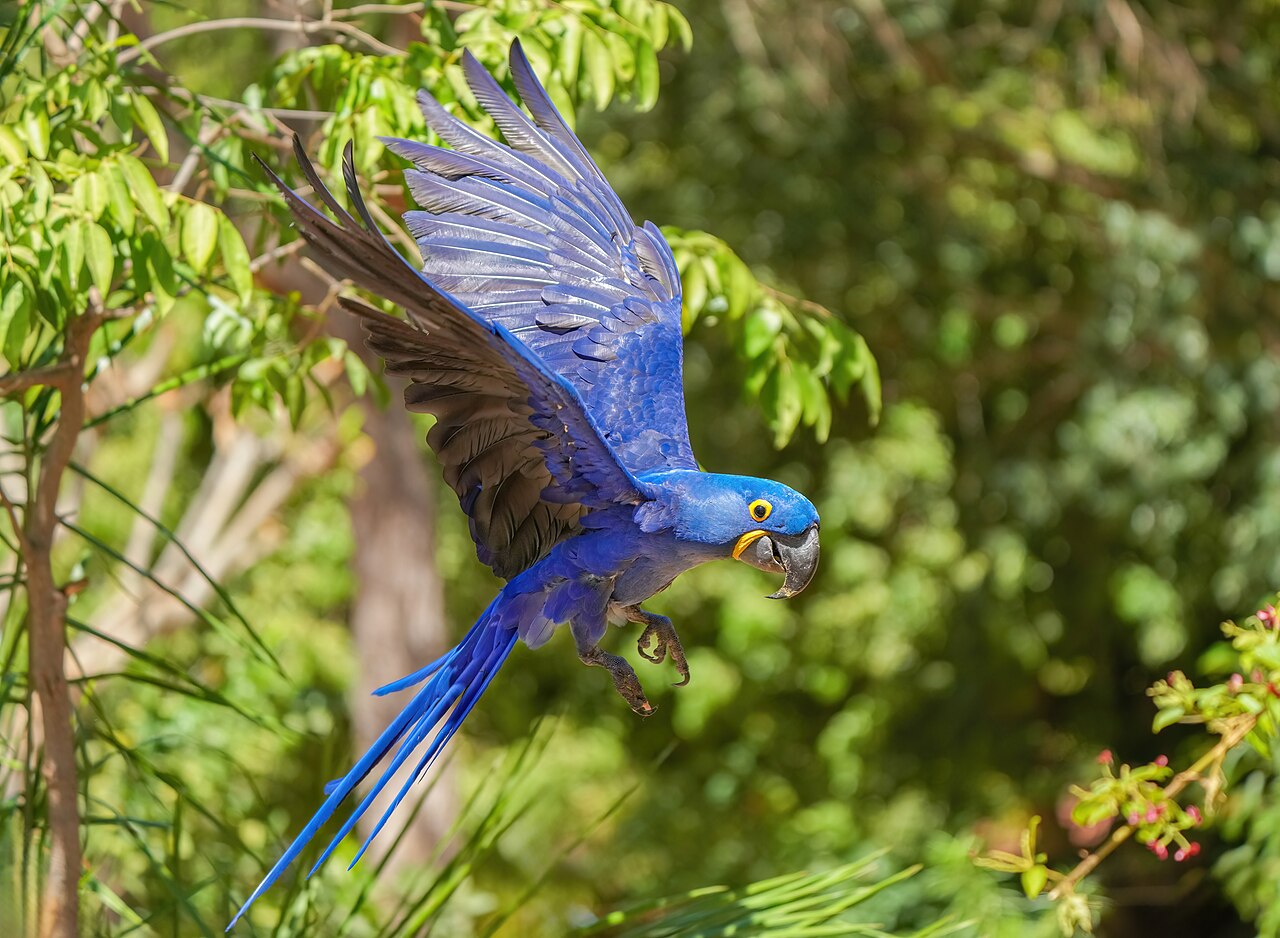
A hyacinth macaw can measure about a meter from beak to tail. That makes this blue giant the longest living parrot species, with much of its length flowing into a remarkable tail.
Length is different from weight: New Zealand's kākāpō is the heaviest living parrot. The hyacinth macaw's record is about its long body and tail.
Blue feathers, yellow details
The plumage is deep blue, set off by bare yellow skin around the eyes and near the lower bill. A large, dark beak dominates the face.
San Diego Zoo Wildlife Alliance describes the species' roughly 100-centimeter length and distinguishes it from the heavier kākāpō. The scientific name is Anodorhynchus hyacinthinus.
Both adult sexes share the blue-and-yellow appearance. The result is a bird recognizable at a distance, even before the face comes into focus.
A life tied to palms
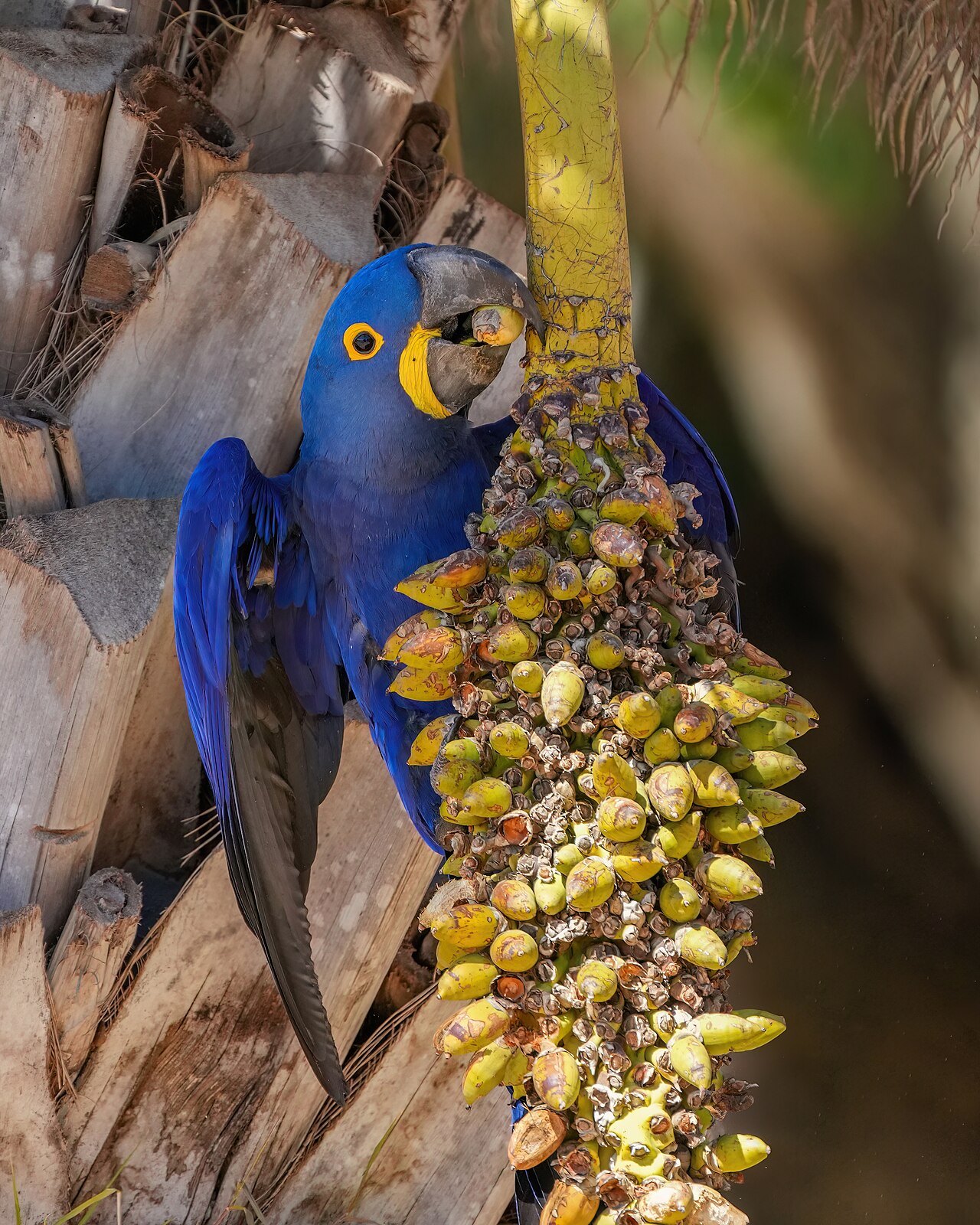
The World Parrot Trust describes a strong dependence on the nuts of several palm species. Its powerful bill helps it open these tough foods.
Hyacinth macaws occur in separated populations in central South America, principally Brazil, with their range extending into eastern Bolivia and northwestern Paraguay. Palm-rich landscapes and suitable nesting places are central to their lives.
The bird is a reminder that habitat is specific. A landscape can contain trees yet still lack the right foods or nesting opportunities for a particular species.
A social bird with a serious need for space
Pairs, family groups, and small flocks move through their surroundings, often calling loudly. Different feeding and nesting needs connect them with different parts of the landscape.
In the Pantanal, nest cavities in suitable trees are especially important. Growing a replacement tree takes far longer than cutting down an old one.
Keeping a blue giant in the wild
The World Parrot Trust lists the hyacinth macaw as Vulnerable. Its account identifies past heavy trapping and the loss of nest sites among the threats.
Conservation needs to protect both birds and the places they use. Admiring that extraordinary blue is a good beginning; understanding its dependence on palms and old trees gives the wonder a deeper meaning.
Photo credits
Featured image: 007 Hyacinth macaw couple under Pink Ipê tree in Encontro das Águas State Park Photo by Giles Laurent.jpg — Giles Laurent, CC BY-SA 4.0.

Body image 1: 017 Hyacinth macaw flying in Encontro das Águas State Park Photo by Giles Laurent.jpg — Giles Laurent, CC BY-SA 4.0.

Body image 2: 107 Hyacinth macaw eating in Encontro das Águas State Park Photo by Giles Laurent.jpg — Giles Laurent, CC BY-SA 4.0.

Photographs resized to up to 1,280 pixels wide for web display.