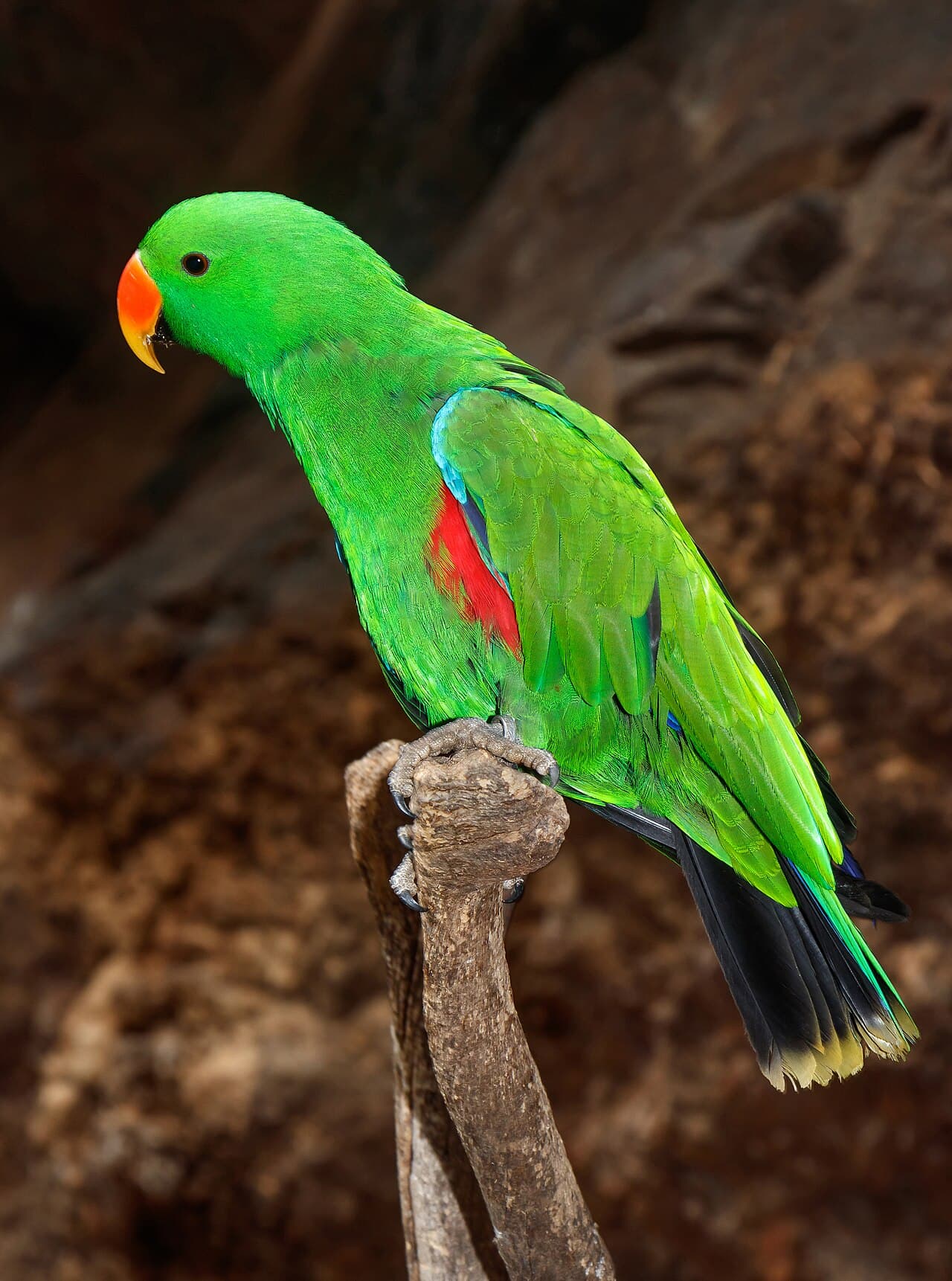
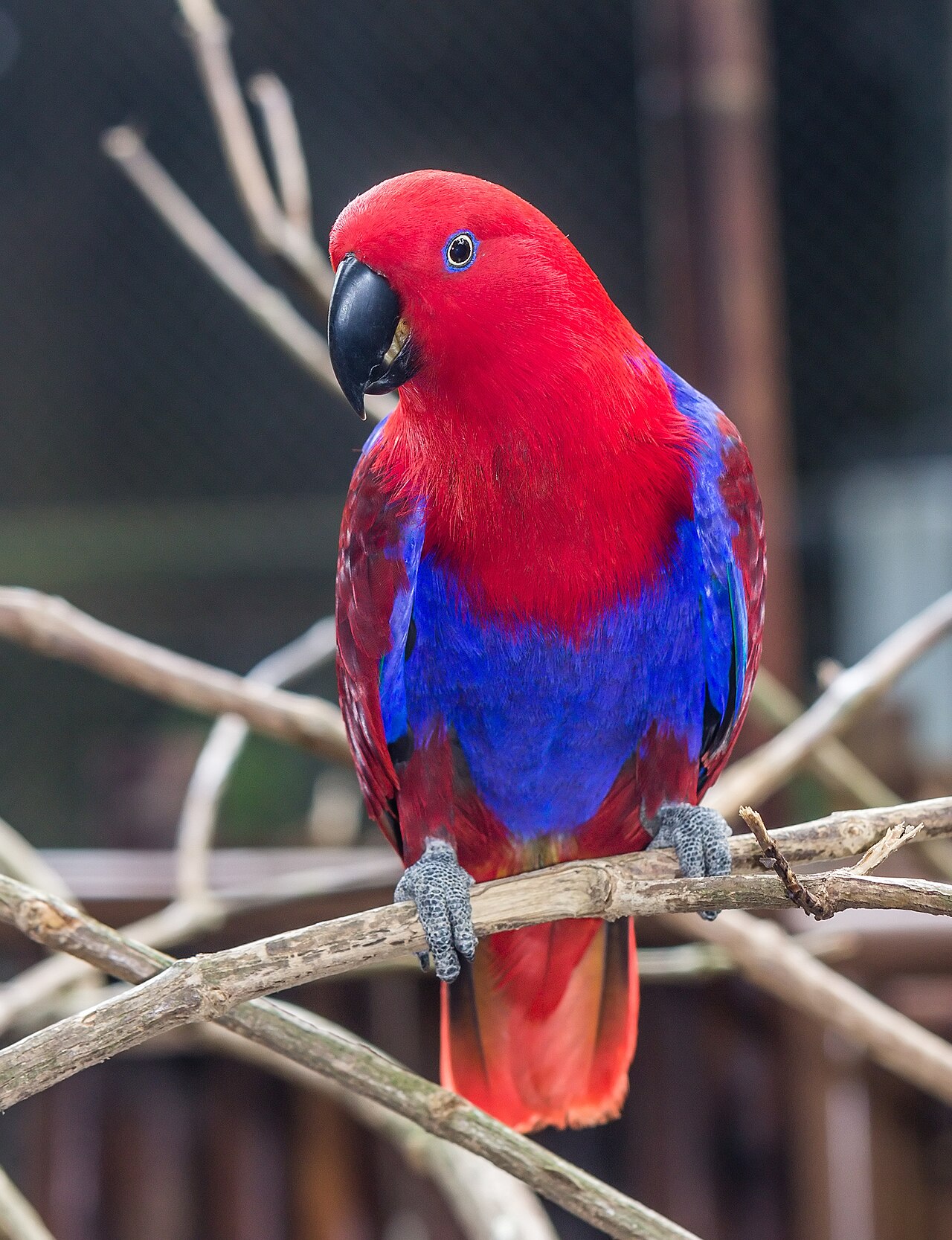
A green male and a red female eclectus parrot can look so different that a newcomer might place them in separate species. Their contrasting colors are one of the parrot world's most striking examples of males and females looking unlike each other.
There is another surprise behind the familiar name: modern bird lists recognize several living eclectus species. “Eclectus parrot” is often used broadly for the group.
Two very different wardrobes
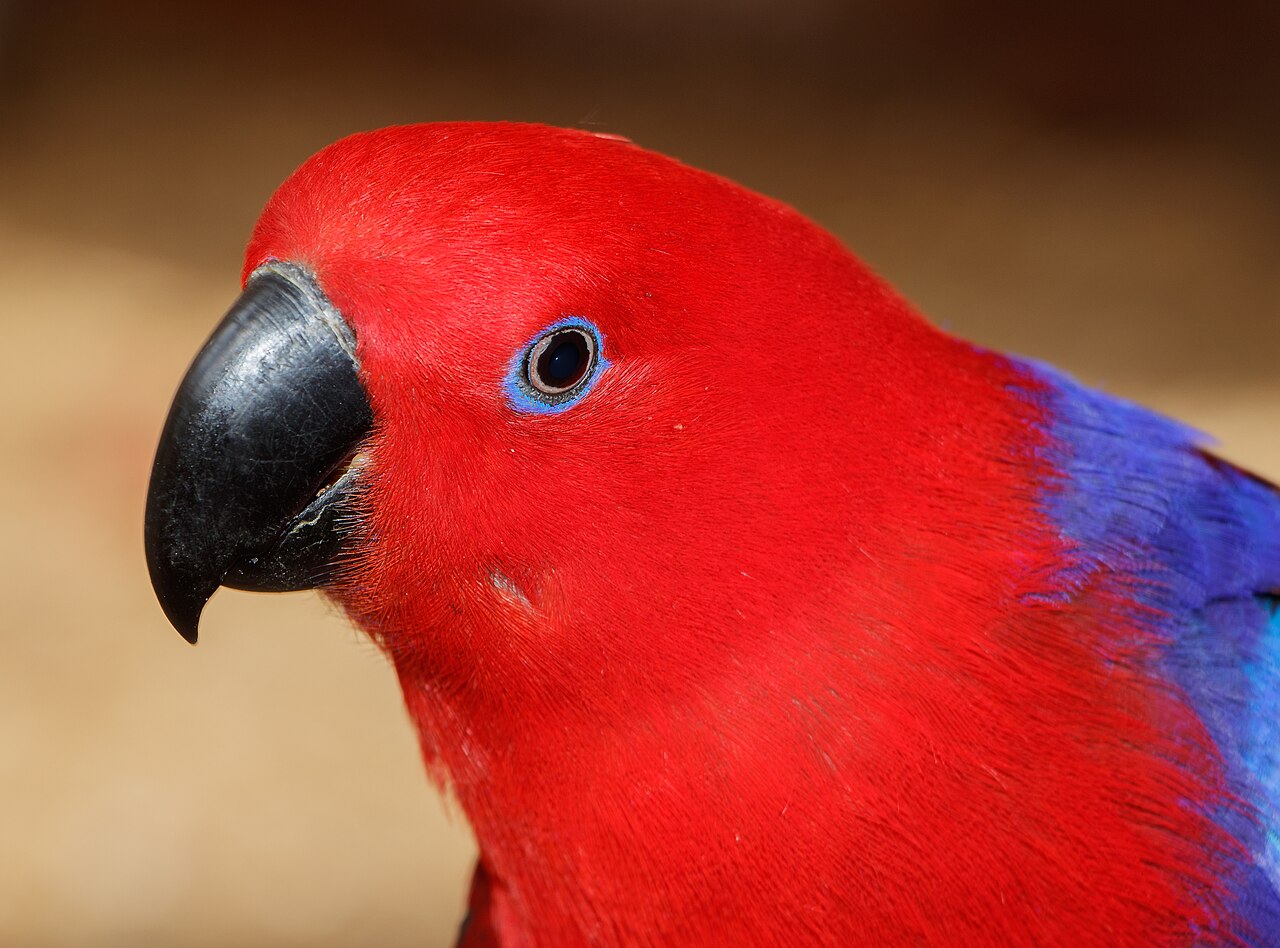
Males are mainly green, often with blue and red visible in the wings or along the sides. Females are mainly red, with blue or purple areas in many populations.
The Australian Museum's account describes this strong sexual dimorphism, the term for differences in appearance between males and females.
Its account uses the older broad scientific name Eclectus roratus. That makes it useful to read the description together with more recent taxonomy.
One familiar name, several species
The IOC World Bird List records the recognition of Moluccan, Papuan, Sumba, and Tanimbar eclectus as separate species. Differences in female plumage, size, and genetic evidence contributed to the split.
Under that treatment, Eclectus roratus refers to the Moluccan eclectus. Papuan eclectus, Eclectus polychloros, includes the Australian population.
This article introduces the group. Its zoo photographs are labelled as eclectus parrots without assuming an exact modern species from older captive-bird records.
Food and shelter in the treetops
Eclectus parrots feed on plant foods such as fruit, seeds, nuts, blossoms, and leaf buds. The World Parrot Trust's Moluccan eclectus account describes treetop feeding and nesting in tree cavities.
A tall tree can provide both a feeding place and, if it develops a suitable hollow, a nest site. These are features that cannot be replaced instantly when forest is cleared.
Look past the first surprise
Conservation details differ among eclectus species and populations, so one status should not be applied to every bird in the group.
The colors remain an extraordinary introduction. Looking more closely leads from green and red feathers to islands, forests, nesting trees, and the careful science of telling species apart.
Photo credits
Featured image: Eclectus roratus - Maroparque 01.jpg — H. Zell, CC BY-SA 3.0.

Body image 1: Eclectus roratus - Maroparque 03.jpg — H. Zell, CC BY-SA 3.0.

Body image 2: Eclectus parrot (Eclectus roratus) female, Gembira Loka Zoo, Yogyakarta, 2015-03-15 01.jpg — Crisco 1492, CC BY-SA 4.0.

Photographs resized to up to 1,280 pixels wide for web display.