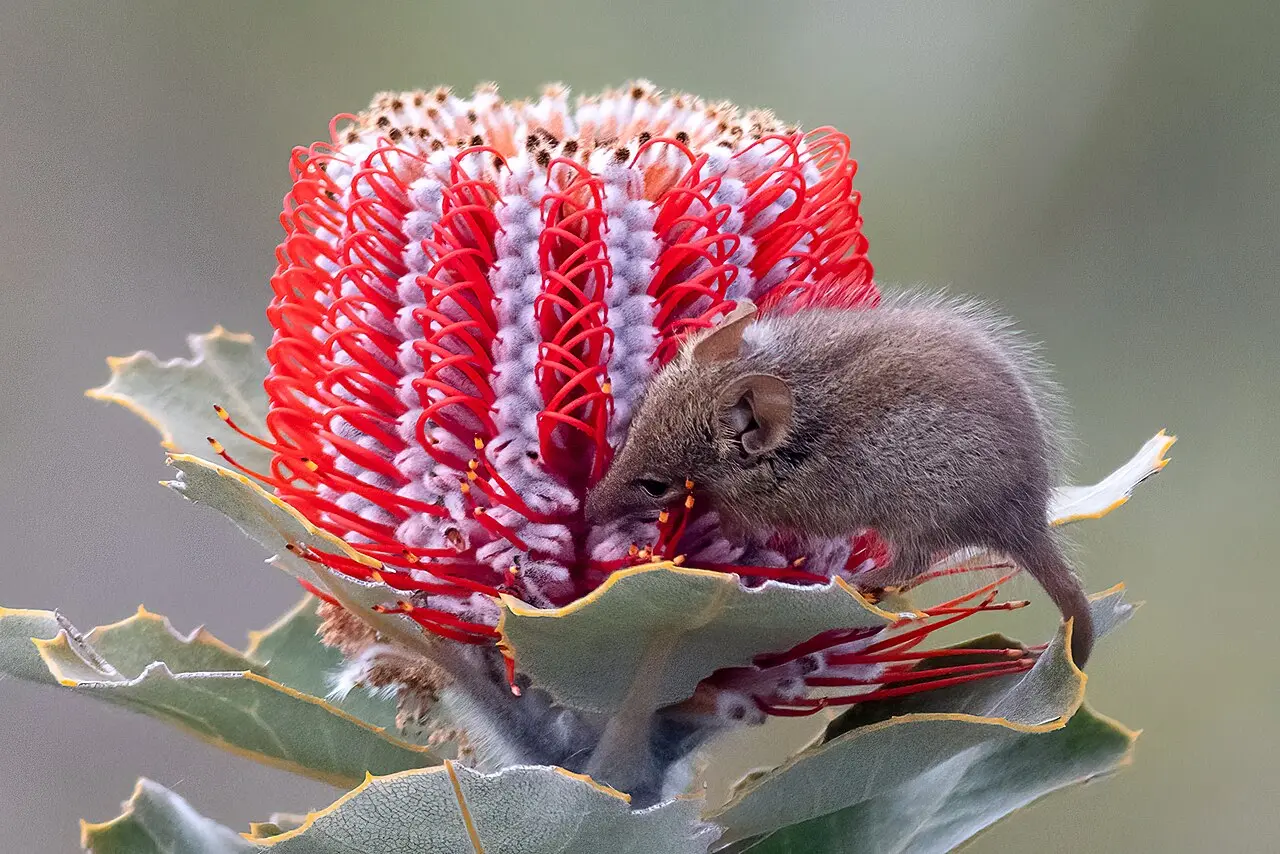
A honey possum makes its living from flowers. Nectar and pollen supply its food, giving this tiny marsupial a lifestyle more easily associated with birds or insects.
Tarsipes rostratus, also called the Noolbenger, occurs in south-west Western Australia. The Western Australian Museum identifies this region as its only natural home.
A flower visitor with fur
Bush Heritage Australia describes a tongue that moves rapidly in and out of the mouth to collect nectar and pollen.
Banksias, bottlebrushes, heath plants, grass trees, and kangaroo paws are among its food sources. For the possum, a patch of flowering bushland is a place to find the next meal.
Why many kinds of flowers matter
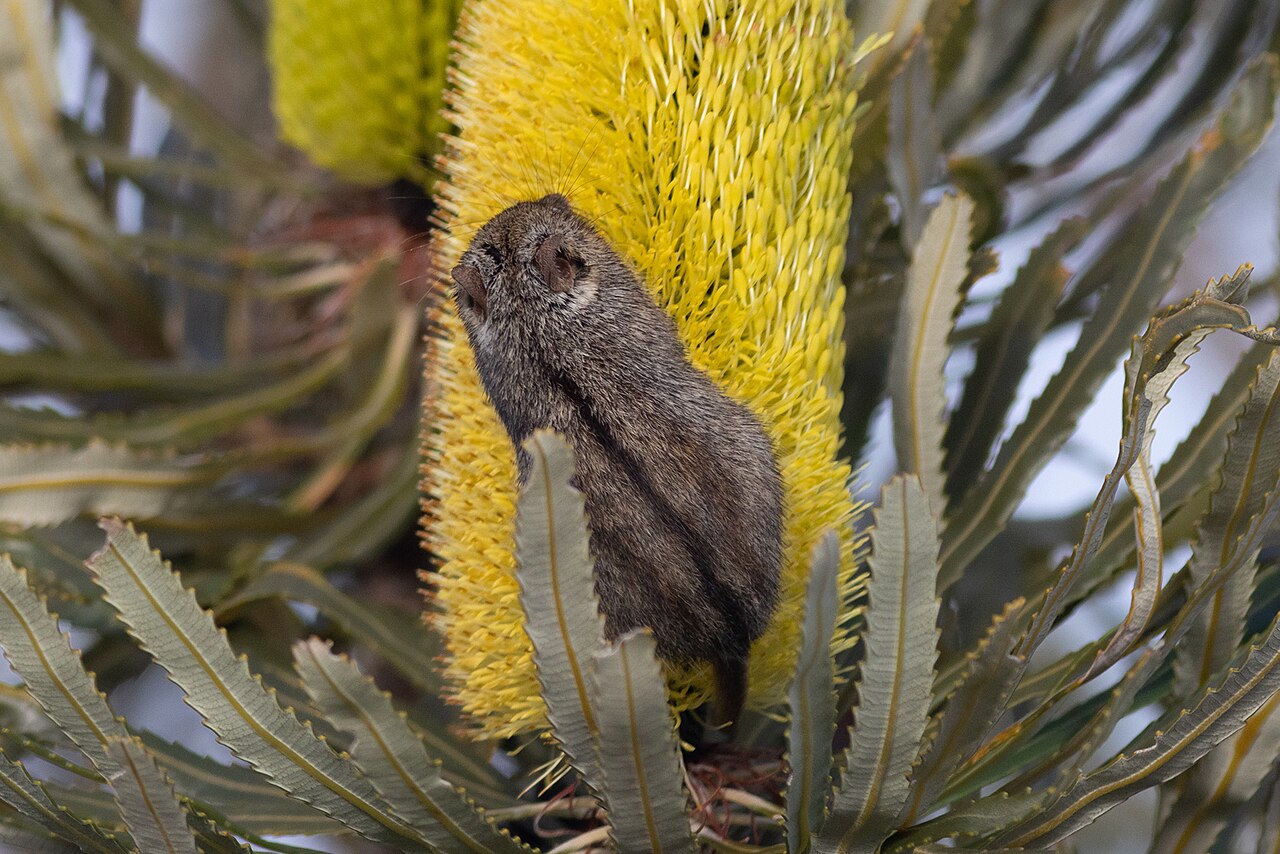
A honey possum needs more than one plant flowering once a year. Different plants must provide food across the seasons.
That makes plant diversity essential. A landscape can remain green while losing the sequence of flowers on which a specialized feeder depends.
Small animal, close connection
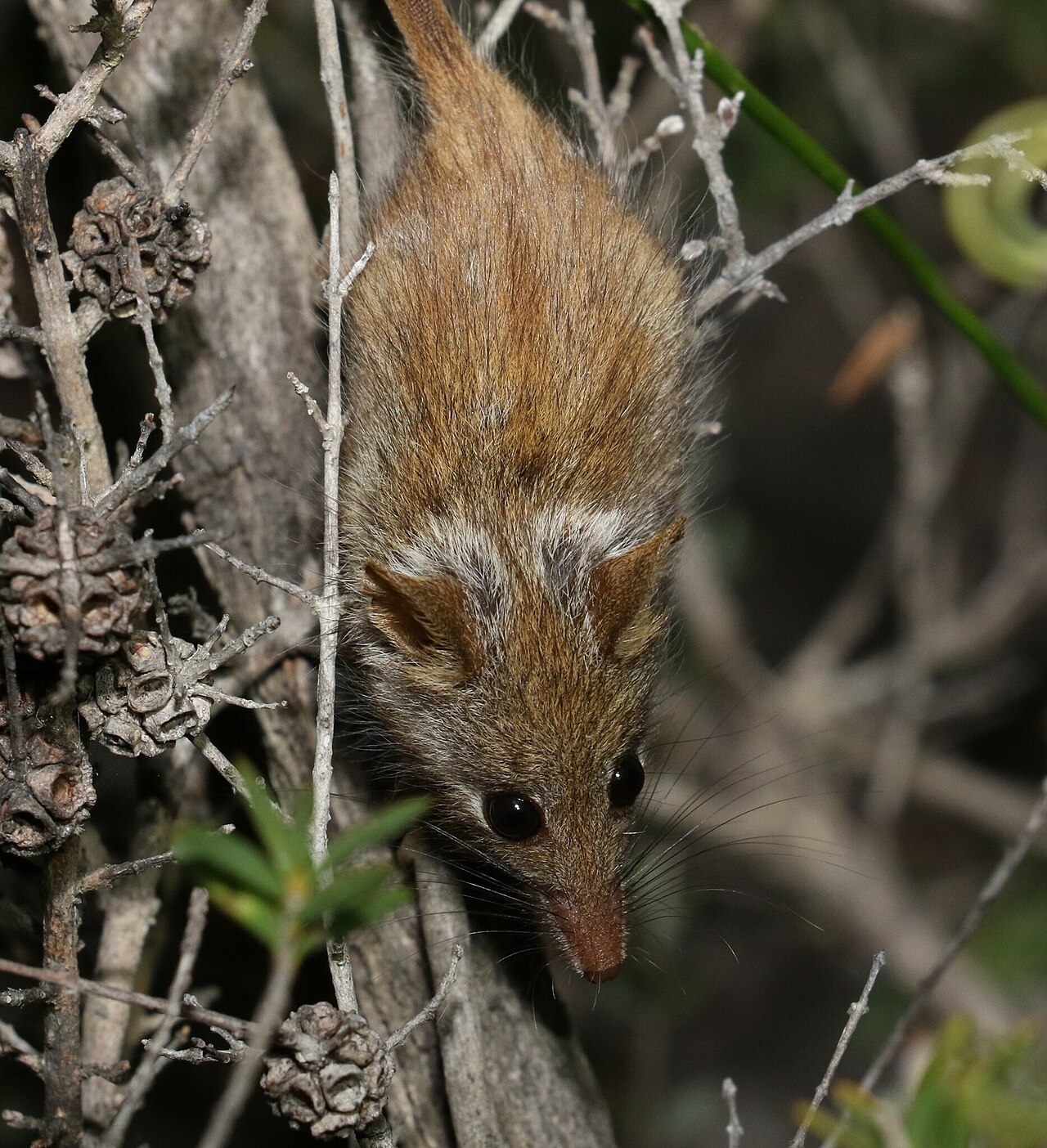
Habitat loss, unsuitable fire patterns, plant disease, and introduced predators threaten honey possums. Unlike a bird, a possum cannot simply fly far away when local flowers disappear.
Protecting and restoring diverse native vegetation helps keep that food supply available.
The honey possum brings a wonderful change of perspective: flowers are more than color in the landscape. For one tiny mammal, they are a living calendar of meals, linked together through the year.
Photo credits
Featured image: Tarsipes rostratus 257088220.jpg — Kym Nicolson; CC BY 4.0.

Body image 1: Tarsipes rostratus 255482825.jpg — Kym Nicolson; CC BY 4.0.

Body image 2: Tarsipes rostratus 330413961.jpg — Greg Tasney; CC BY-SA 4.0.

Photographs resized for web display where available. Captive animals and contextual habitat photographs are identified in their captions.