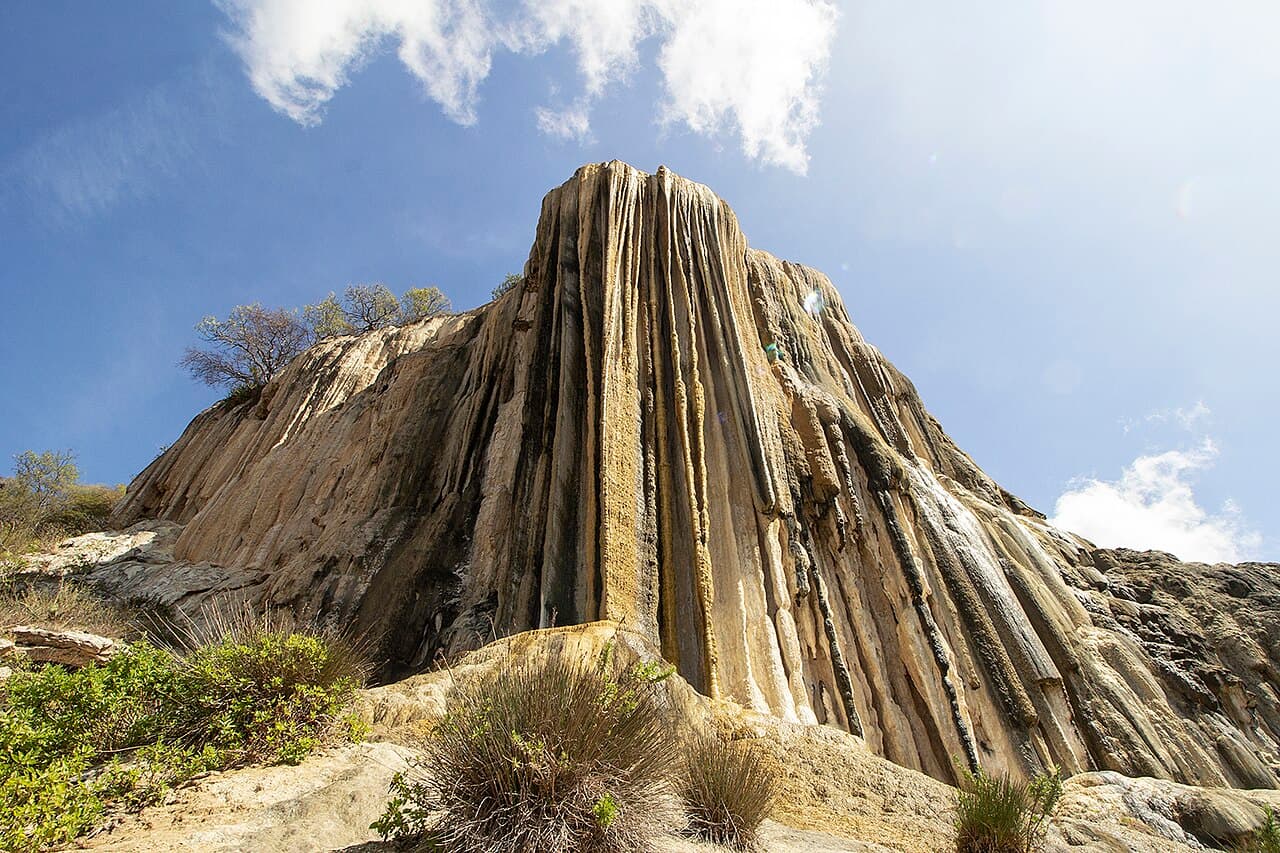
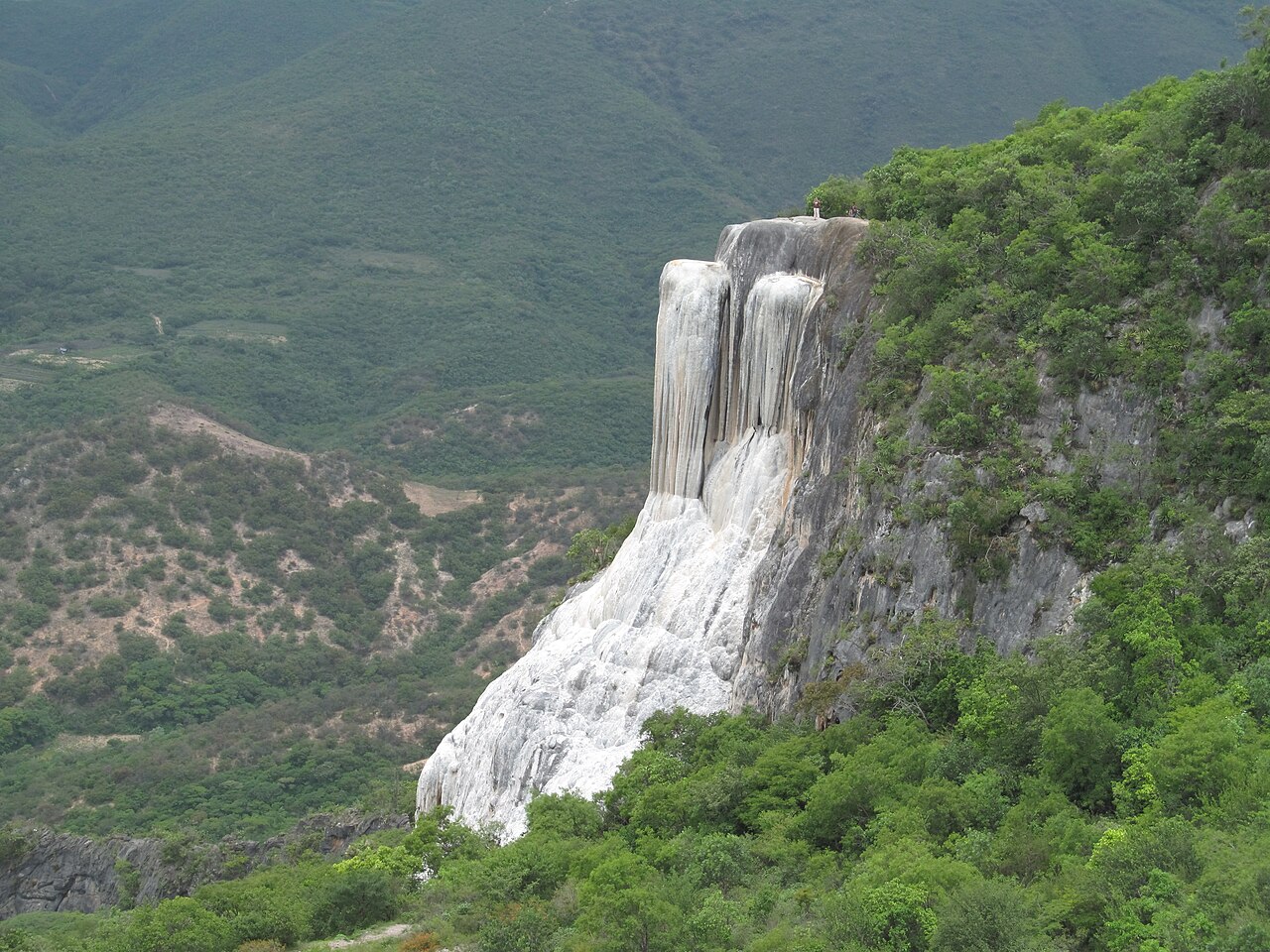
From across the valley, Hierve el Agua looks like a waterfall caught in mid-flow. Pale stone pours over a cliff in long, rippled shapes.
There is no frozen curtain of falling water. The formations grew as mineral-rich spring water left deposits behind.
Water carrying tomorrow's stone
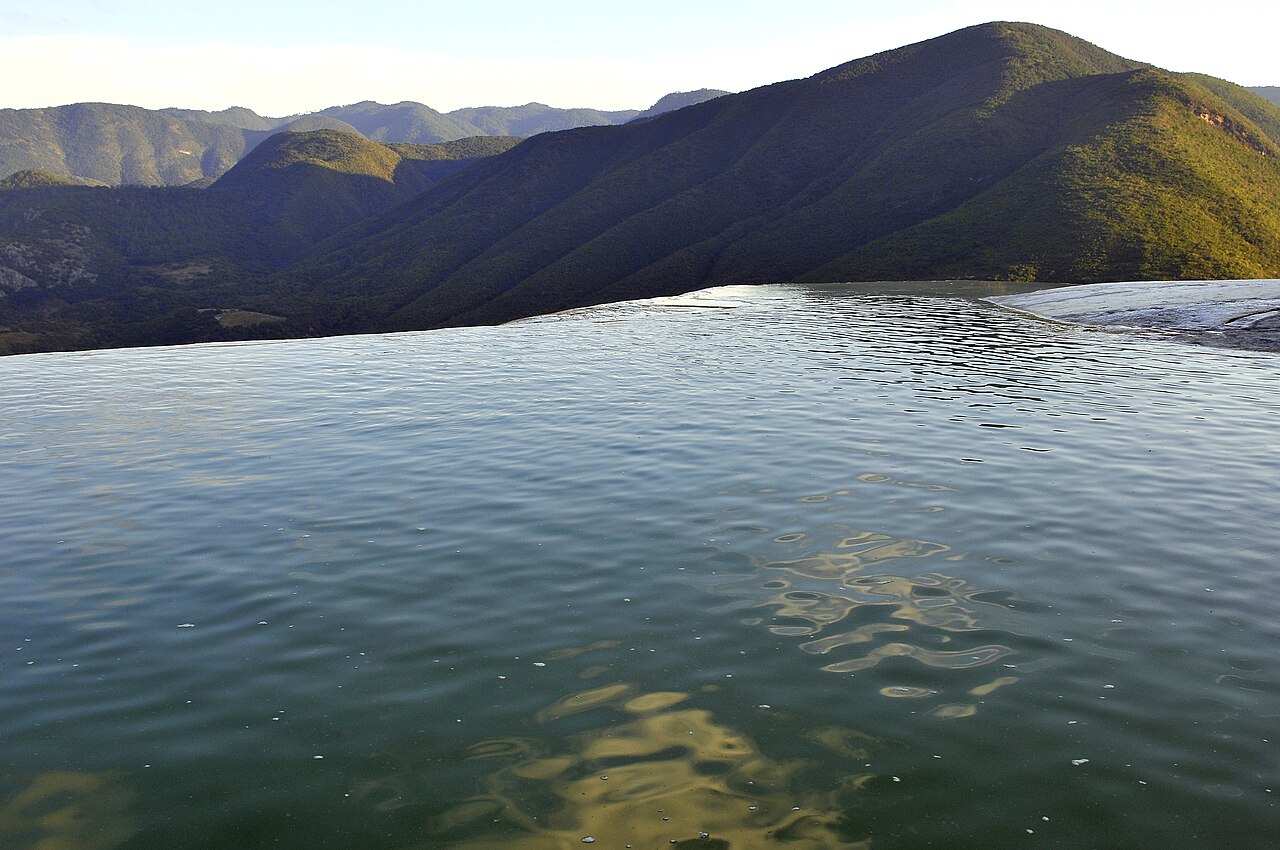
Hierve el Agua lies near Roaguía in Oaxaca, Mexico. Its springs and terraces sit within a mountain landscape.
A study published through the National Autonomous University of Mexico describes calcium-rich water depositing layers of travertine across the ground and cliffs.
Travertine is a form of carbonate rock that can accumulate around springs. Small additions over long periods can build surprisingly large structures.
A waterfall shape without a falling river
The cliff-face deposits follow routes where water moved and spread. That history helps explain the flowing appearance.
Calling the formations “petrified waterfalls” is visually useful, but it should not suggest that an entire liquid waterfall suddenly turned solid.
The more remarkable process is gradual: flowing water repeatedly leaves material that becomes part of the landscape.
A place with a human history
Oaxaca's official tourism information notes the site's connections to the ancient Zapotec world.
Research also examines past water use and modifications around the springs. The landscape has cultural and archaeological dimensions alongside its mineral beauty.
Modern pools and visitor facilities should not all be assumed to be untouched natural basins.
Look at what the water leaves behind
Respect for the site means caring for the mineral surfaces, water sources, and local community's decisions about access.
Hierve el Agua offers a different way to picture a spring. Water is not only wearing rock away here; it is also building it.
Its apparent frozen motion is the visible result of repeated, ordinary drops doing something extraordinary over time.
Photo credits
Featured image: Holamanueldiaz2; Wikimedia Commons source; CC BY-SA 4.0. Resized for web display.

Body image 1: LBM1948; Wikimedia Commons source; CC BY-SA 4.0. Resized for web display.

Body image 2: Adrián Cerón; Wikimedia Commons source; CC BY-SA 3.0. Resized for web display.
