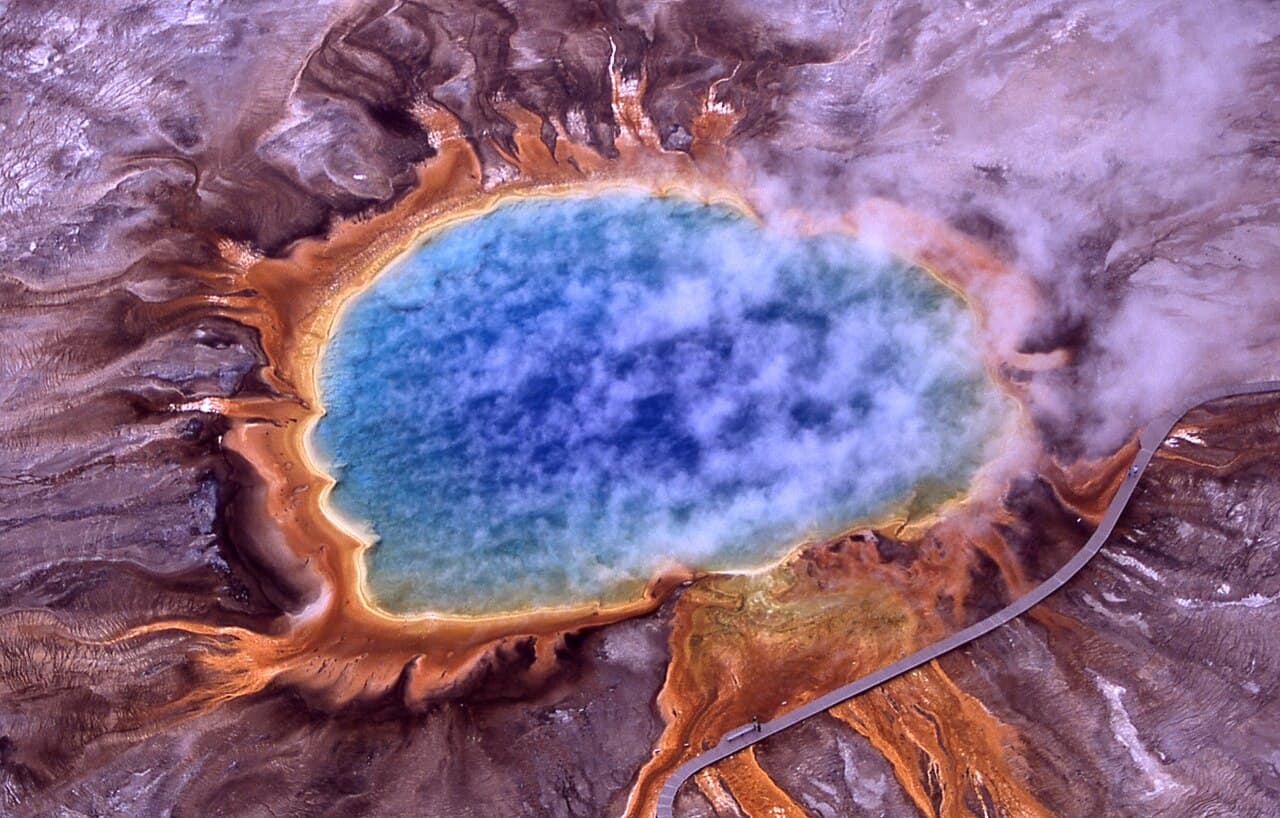
The orange and yellow bands around Grand Prismatic Spring are more than stains on the ground. Much of that color comes from communities of microorganisms living where hot water flows.
Yellowstone's famous spring is a meeting of deep heat, clear water, and life adapted to conditions that would overwhelm many other organisms.
A spring powered from below
Grand Prismatic lies in Yellowstone's Midway Geyser Basin. Groundwater is heated underground and rises through the hydrothermal system.
The National Park Service describes the deep pool and the colorful microbial mats around it.
A hot spring differs from a geyser: it does not need to build up pressure and erupt on a repeating schedule to bring heated water to the surface.
Life follows the temperature
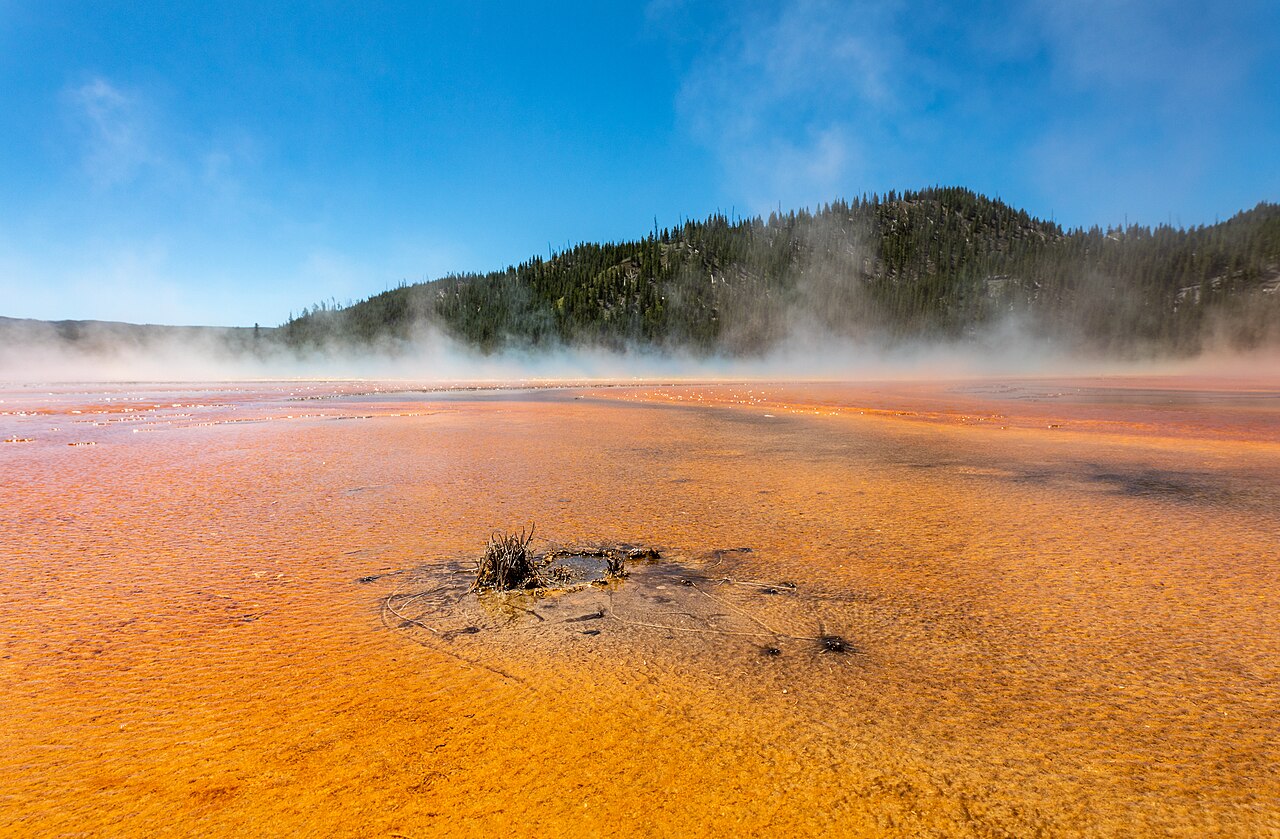
Conditions change as water moves away from the hottest areas. Different microorganisms thrive within different ranges of temperature and chemistry.
The National Park Service's guide to life in extreme heat explains how these organisms build vivid communities.
They are called thermophiles, meaning heat-loving organisms. The colors reflect communities and pigments, not a simple paint chart in which every band represents one species.
The blue center has another story
The deep blue pool and the orange outer mats do not owe their appearance to exactly the same process. Light interacting with water contributes to the central blue, while microbial pigments are especially important around the edges.
Montana State University's microbial guide introduces the diversity behind Yellowstone's living colors.
A beautiful surface over extreme heat
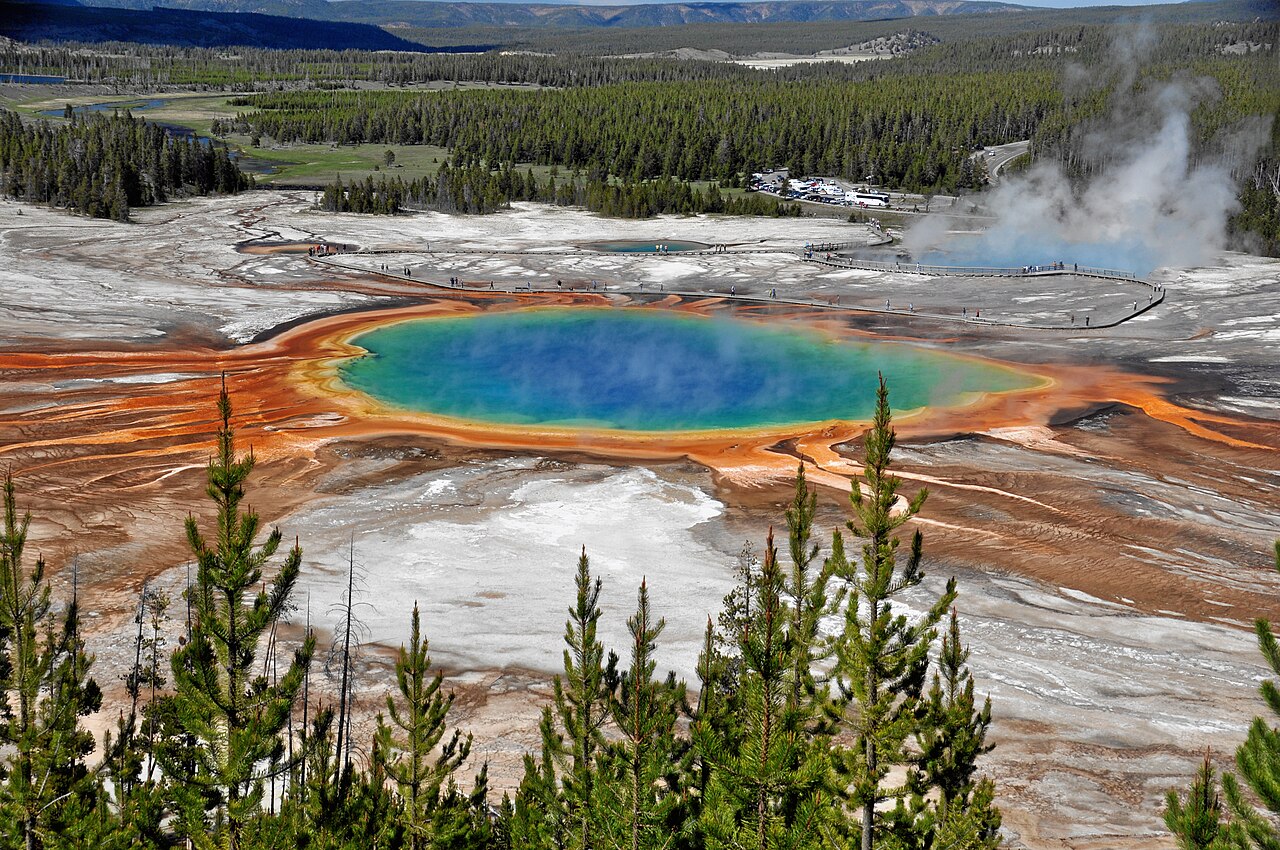
The thermal landscape is fragile, and hot water can lie beneath thin crusts. Designated boardwalks and official rules protect both visitors and the spring.
Grand Prismatic invites us to expand our idea of habitat. A place that looks inhospitable at first glance can be richly alive—at a scale too small to see, yet colorful enough to transform an entire landscape.
Photo credits
Featured image: Jim Peaco, National Park Service; Wikimedia Commons source; Public domain. Resized for web display.

Body image 1: Dietmar Rabich; Wikimedia Commons source; CC BY-SA 4.0. Resized for web display.

Body image 2: James St. John from Newark, Ohio; Wikimedia Commons source; CC BY 2.0. Resized for web display.
