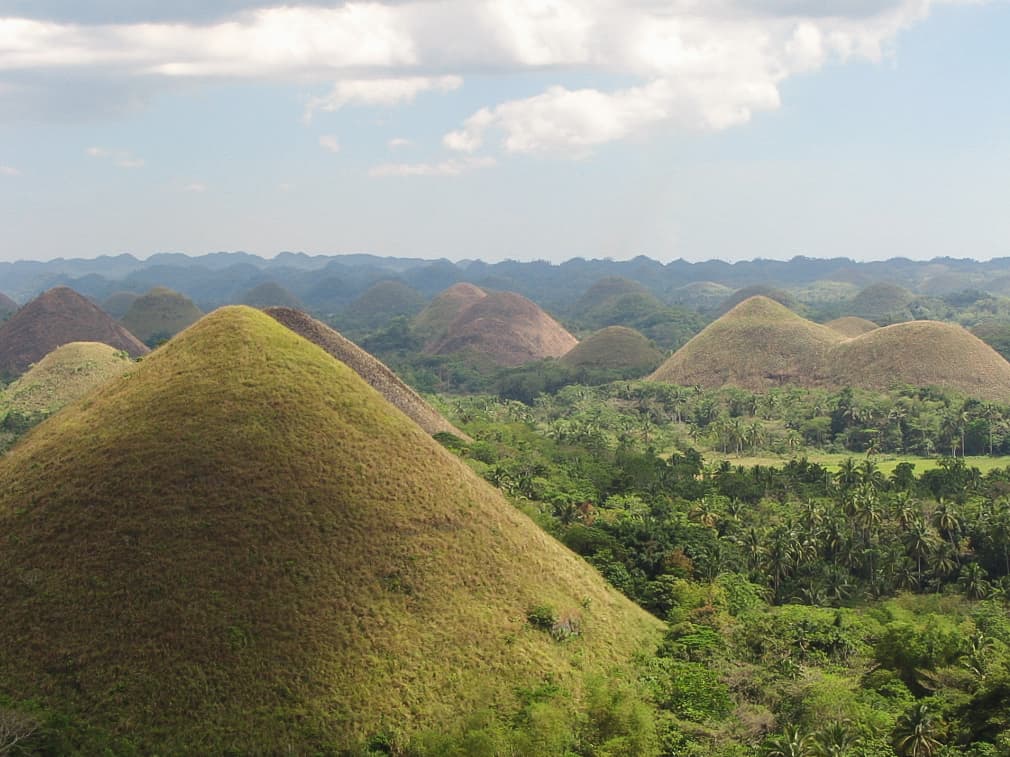
Bohol's Chocolate Hills are green for part of the year. Their familiar brown appearance develops when the grass cover dries, giving the rounded slopes a chocolate-like color.
The name describes a seasonal outfit, not the material inside the hills.
Rounded hills with a limestone core
The Chocolate Hills lie on the Philippine island of Bohol. Many rounded and cone-shaped hills rise above the land between them.
The Philippine World Heritage tentative-list submission describes the landforms and their dry-season color change.
Their underlying rock is limestone, part of a landscape shaped by geological uplift, weathering, and erosion. They are not heaps built from loose cocoa-colored soil.
How water helps shape a hill
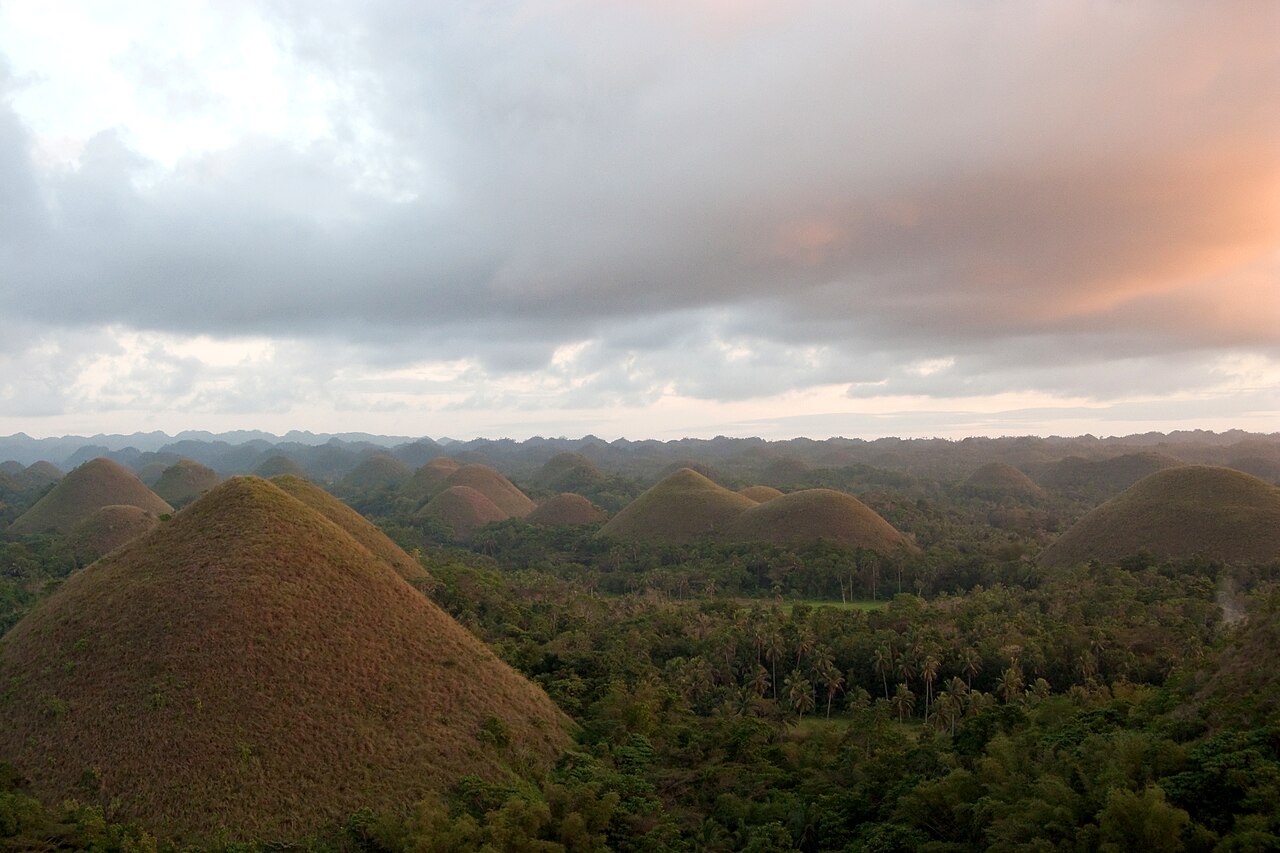
Limestone dissolves slowly in water that contains weak natural acids. Over long periods, this process and other erosion can separate a landscape into hills, hollows, and underground routes.
Geologists call such terrain karst. The rounded forms at Bohol show one expression of that broader water-and-rock relationship.
A group of similarly shaped hills can look deliberately arranged, even though natural processes produced the pattern.
Brown is only one part of the cycle
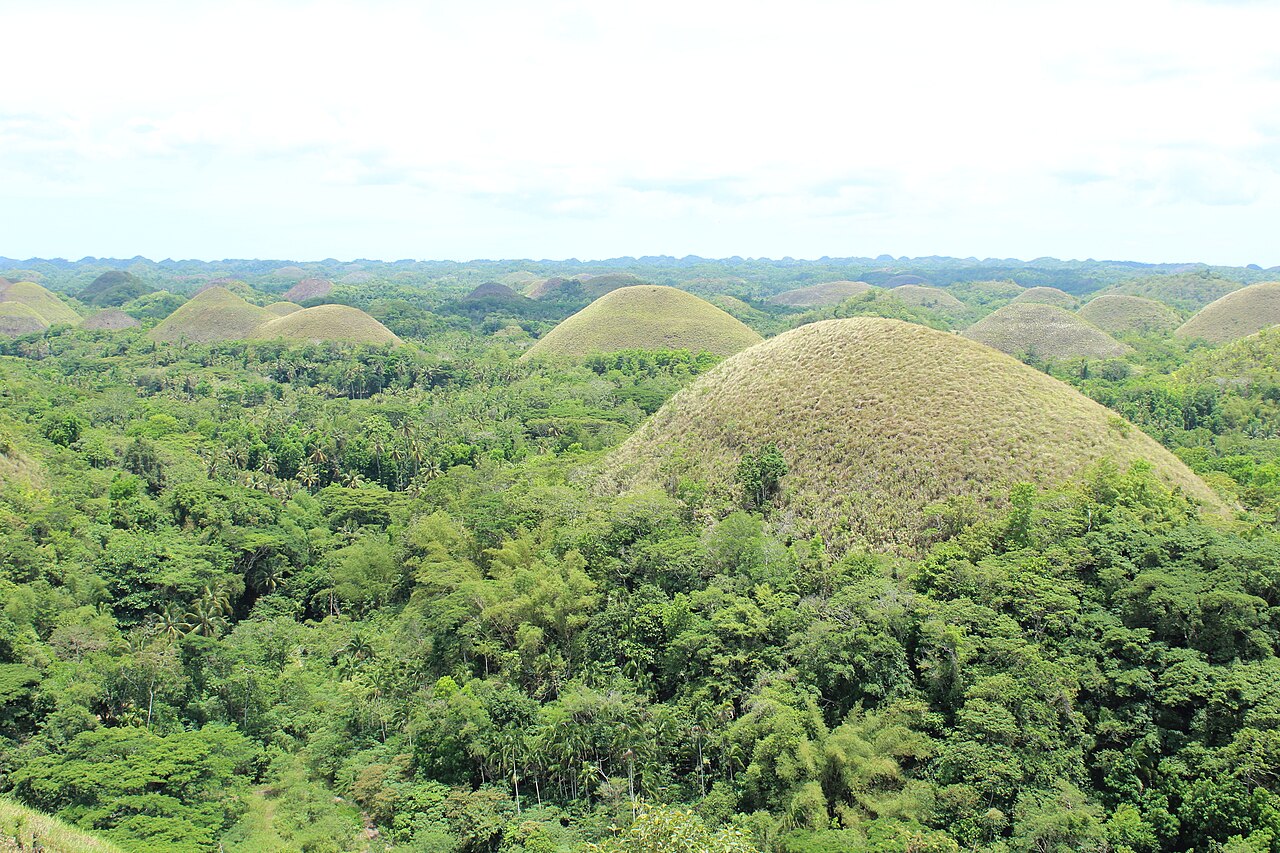
The grass responds to moisture conditions. Wetter periods can make the landscape look much greener than the famous dry-season photographs.
The Bohol Island UNESCO Global Geopark profile places the hills within a wider geological and cultural setting.
The geopark designation should not be confused with the separate World Heritage nomination process. They recognize related values through different programs.
Protect more than a viewpoint
The land between the hills is also part of a lived landscape. Conservation must consider both geological features and local communities.
The Chocolate Hills are remarkable in green as well as brown. Their changing appearance makes a simple truth visible: a landform can keep its shape while the living cover completely changes the scene.
Photo credits
Featured image: Ramir Borja derivative work: MrPanyGoff; Wikimedia Commons source; CC BY-SA 3.0. Resized for web display.

Body image 1: Vyacheslav Argenberg; Wikimedia Commons source; CC BY 4.0. Resized for web display.

Body image 2: Wolfgang Hägele; Wikimedia Commons source; CC BY-SA 4.0. Resized for web display.
