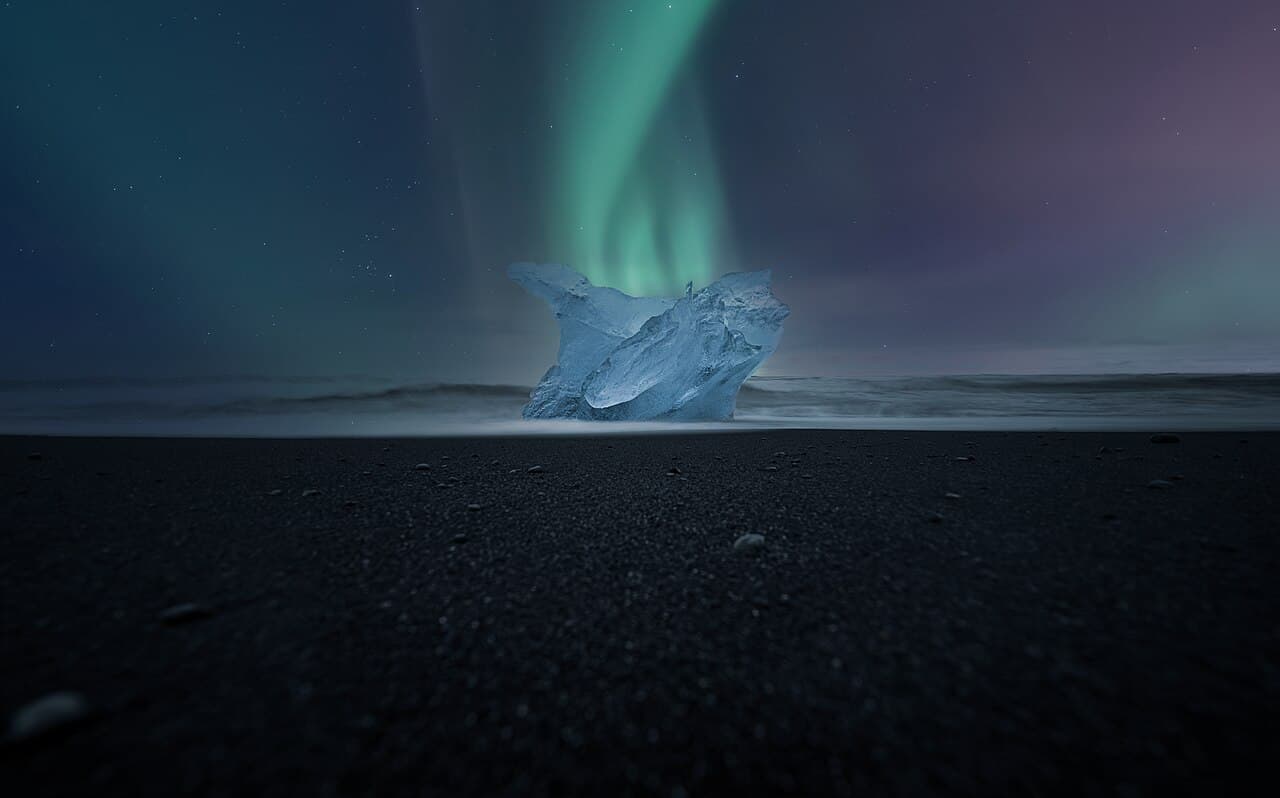
Clear and blue pieces of glacier ice can glitter on Iceland's black sand like enormous gemstones. Diamond Beach takes its nickname from that contrast, not from precious stones hidden along the shore.
Each icy shape has already made a journey before a wave leaves it on the beach.
From glacier to lagoon
Near Jökulsárlón, ice breaks from the glacier and floats in the lagoon. Some pieces travel toward the sea through the connecting channel.
The South Iceland tourism authority describes the relationship between the lagoon, glacier, and nearby black beach.
Ice that reaches the ocean can be carried back onto the shore. There, it becomes the temporary sculpture seen in photographs.
Why the ice looks different
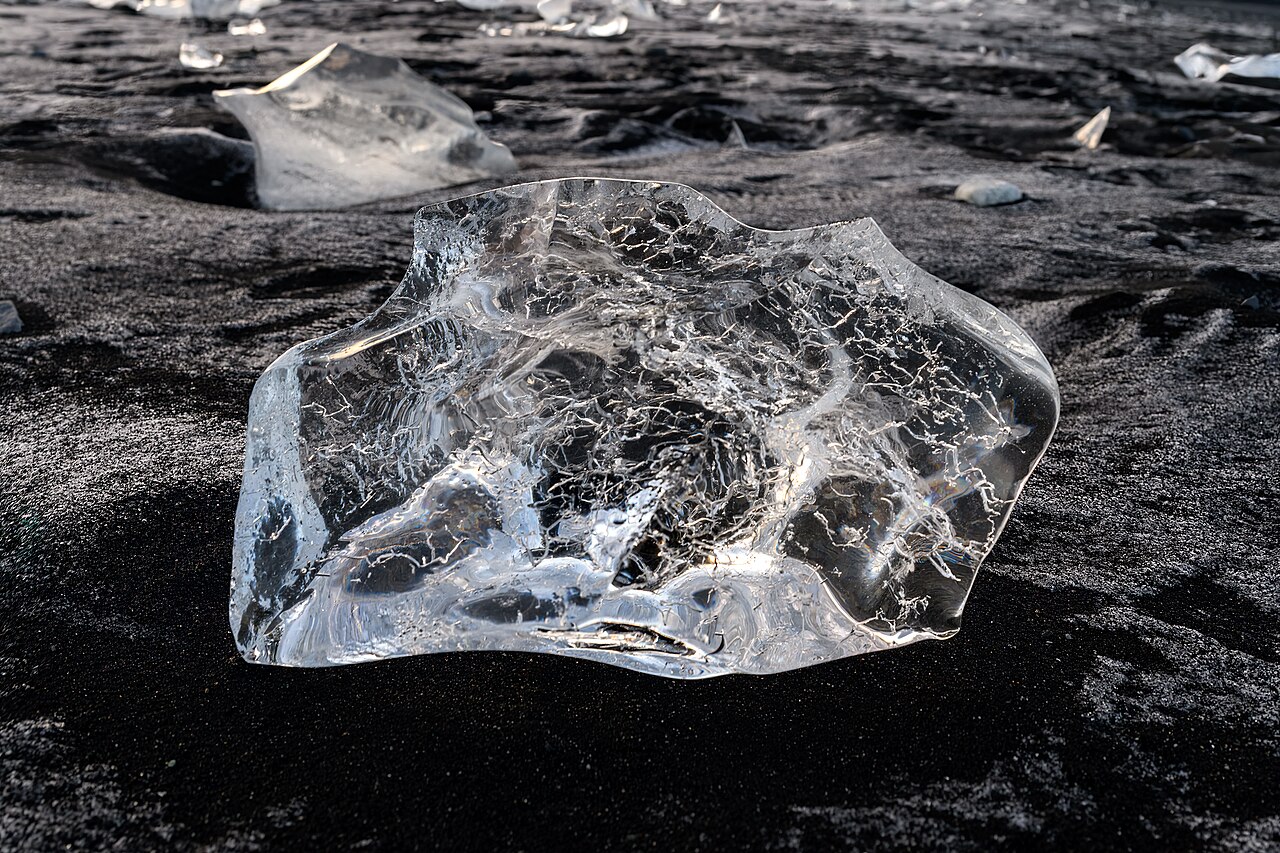
Pieces vary in clarity, color, trapped bubbles, and shape. Melting and waves round some edges and carve others.
A close photograph may reveal fine lines of air bubbles preserved from the ice's earlier life. Sunlight passing through those structures creates a different effect from light reflecting off an opaque surface.
The sand provides a dark backdrop that makes pale ice especially striking.
The display is never fixed
Visit Iceland describes a coastline continually changed by waves, storms, and moving material.
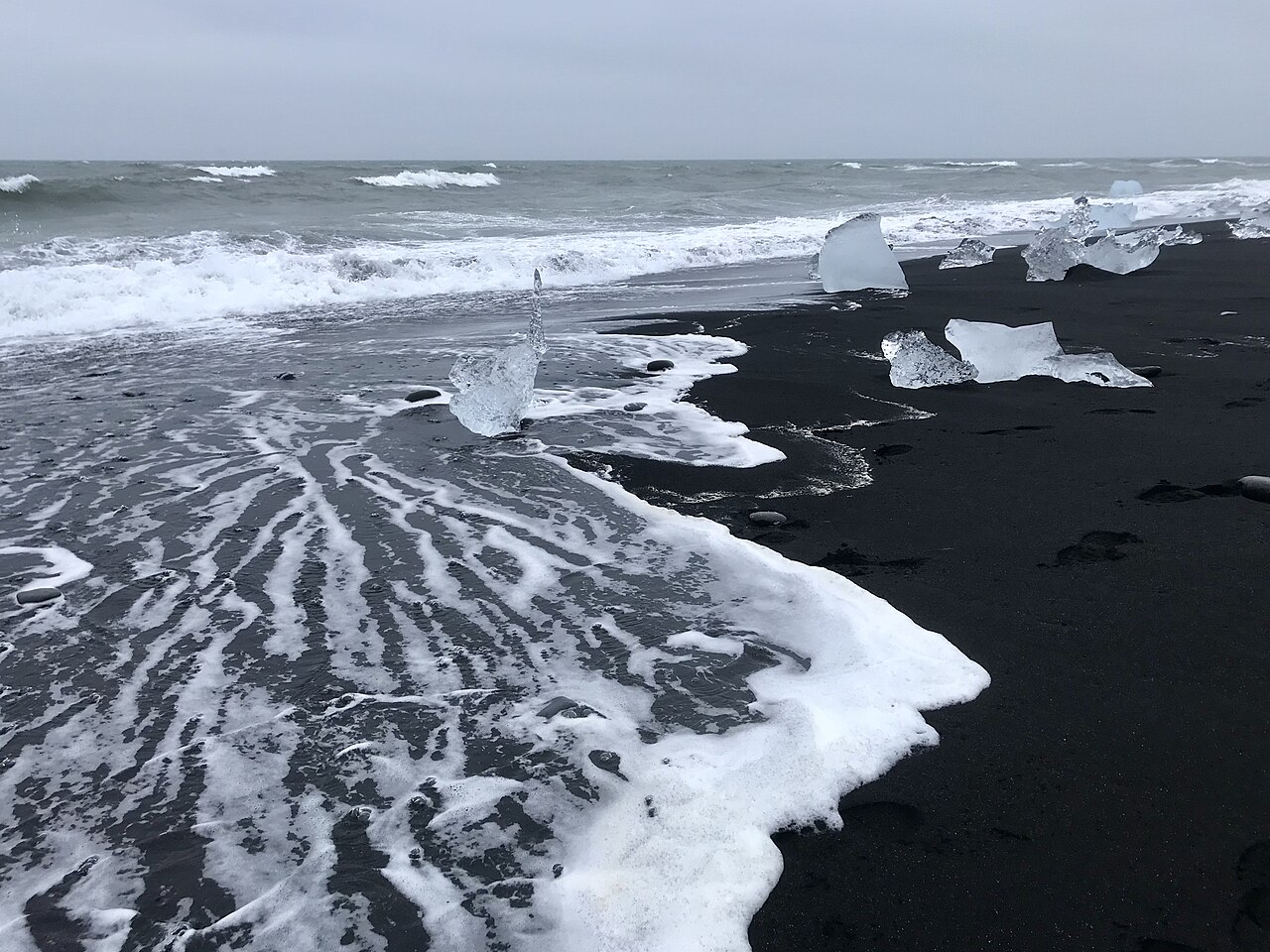
The amount of ice on Diamond Beach varies. A crowded field of sparkling blocks in one photograph is not a guarantee of the same scene on another day.
The glacier, lagoon, channel, tide, and surf are all parts of the system.
Watch the sea as well as the ice
The shoreline is an active coastal environment. Posted guidance and local conditions matter, and ice beside the surf should not be treated as a stable platform to climb.
Diamond Beach rewards appreciation of temporary beauty. The shapes will melt or move, but their brief stay on black sand reveals a much longer journey—from snow and glacier to lagoon and ocean.
Photo credits
Featured image: Richard Banton; Wikimedia Commons source; CC BY 2.0. Resized for web display.

Body image 1: Eric Kilby; Wikimedia Commons source; CC BY-SA 2.0. Resized for web display.

Body image 2: Saifunny; Wikimedia Commons source; CC BY-SA 4.0. Resized for web display.
