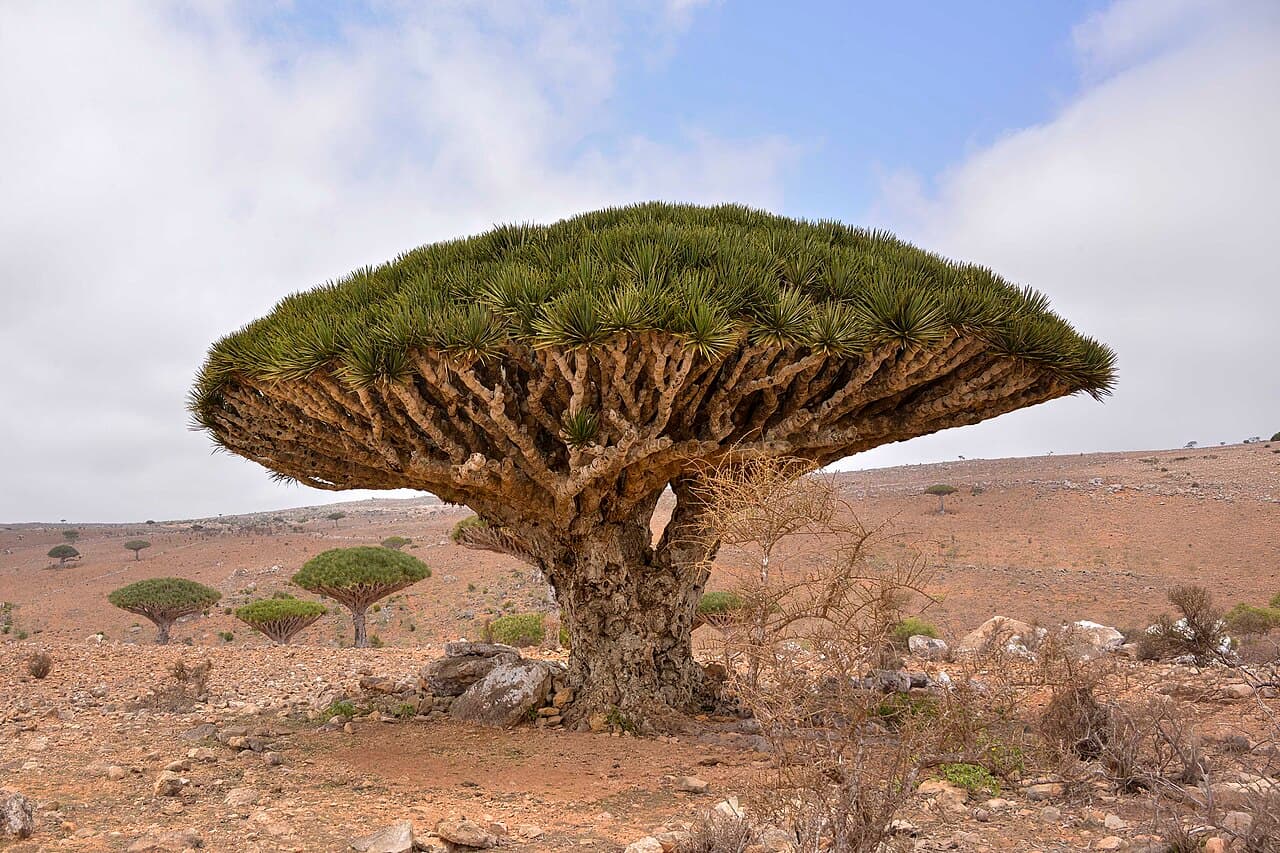
A dragon blood tree forest can look healthy while holding a hidden problem: too few young trees. The famous umbrella crowns may survive for years, but a forest's future depends on what is growing beneath them.
On Socotra, researchers are studying that next generation.
A canopy that changes the ground below
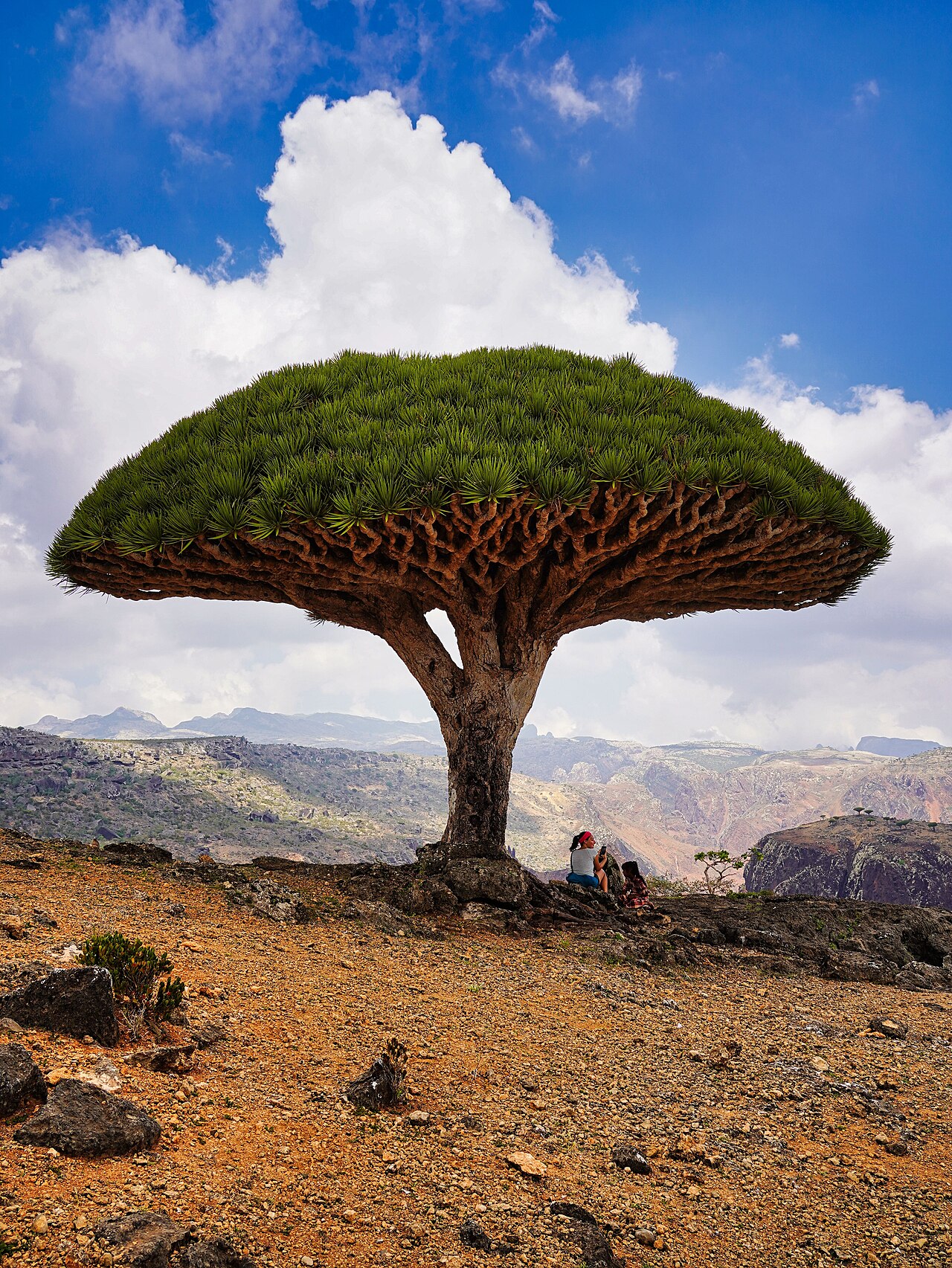
The dragon blood tree, Dracaena cinnabari, is native to Socotra. Mature trees create shaded spaces beneath their broad crowns.
Research on the species' growth explains how this shade can reduce solar exposure and evaporation around the trunk. Other plants can benefit from the sheltered conditions.
A tree is therefore more than an individual silhouette. It influences the small habitat around it.
Why seedlings matter
A woodland needs successful germination, seedling survival, and growth into larger trees. A landscape full of mature crowns can conceal gaps in that sequence.
Dragon blood tree seedlings are vulnerable to browsing. Grazing pressure can prevent young plants from reaching the stages needed to replace older trees.
The result is a slow problem: a forest can remain visually impressive while its age structure becomes increasingly unbalanced.
What an enclosure can reveal
A five-year field study on Socotra's Firmihin Plateau compared woody vegetation inside and outside a protective enclosure.
The research found strong effects of grazing on vegetation. It also showed that protected microhabitats and suitable moisture conditions matter for dragon blood tree germination.
A fence alone is not a universal solution. The useful lesson is that several conditions must line up for regeneration to succeed.
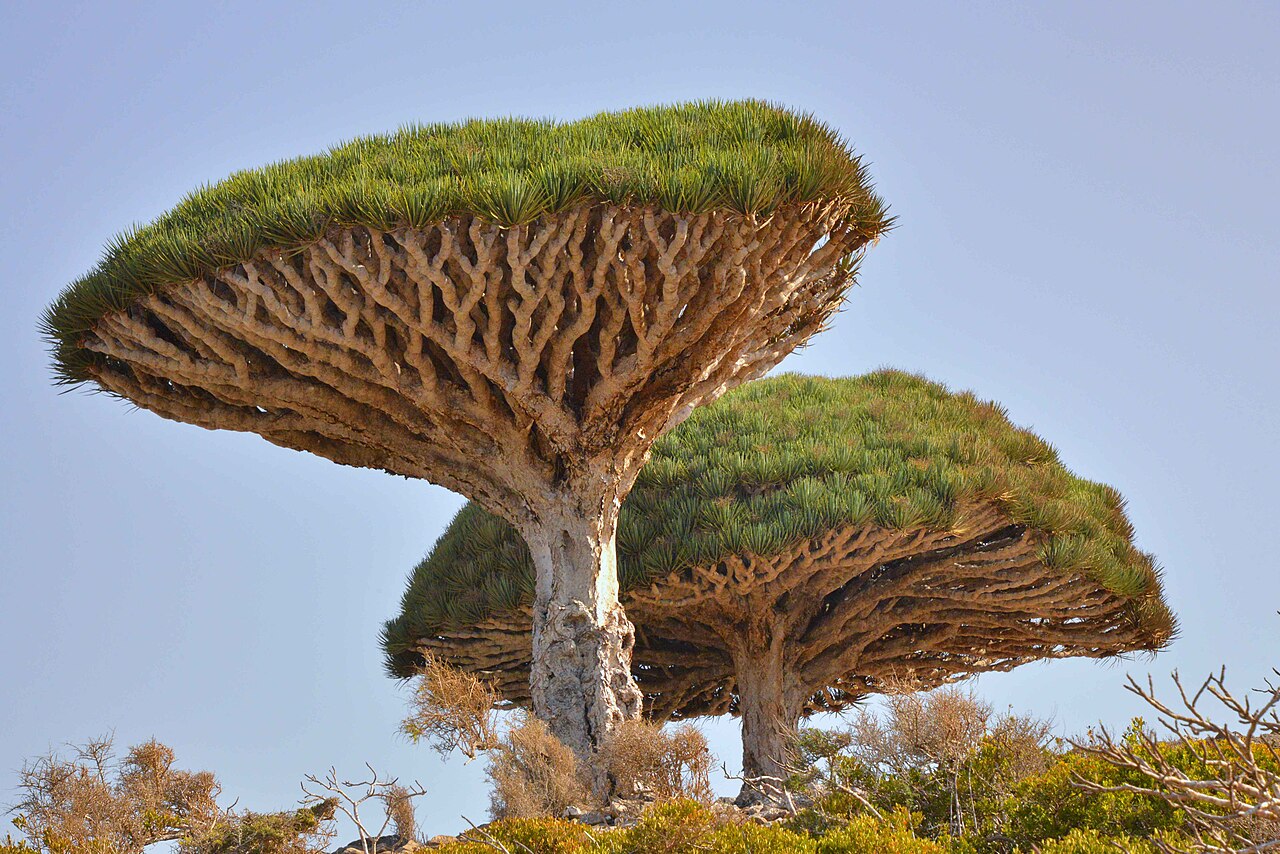
Protect the forest beneath the famous crowns
Nurseries, protected young plants, local knowledge, and long-term habitat care all belong in the conversation. Keeping a forest alive involves more than preserving its oldest-looking trees.
Socotra's umbrella crowns are extraordinary, but a small seedling can be just as important. The future of this remarkable forest may begin in a patch of shade most photographs barely show.
Photo credits
Featured image: Rod Waddington; Wikimedia Commons source; CC BY-SA 4.0. Resized for web display.

Body image 1: Alex38; Wikimedia Commons source; CC BY 4.0. Resized for web display.

Body image 2: Rod Waddington from Kergunyah, Australia; Wikimedia Commons source; CC BY-SA 2.0. Resized for web display.
