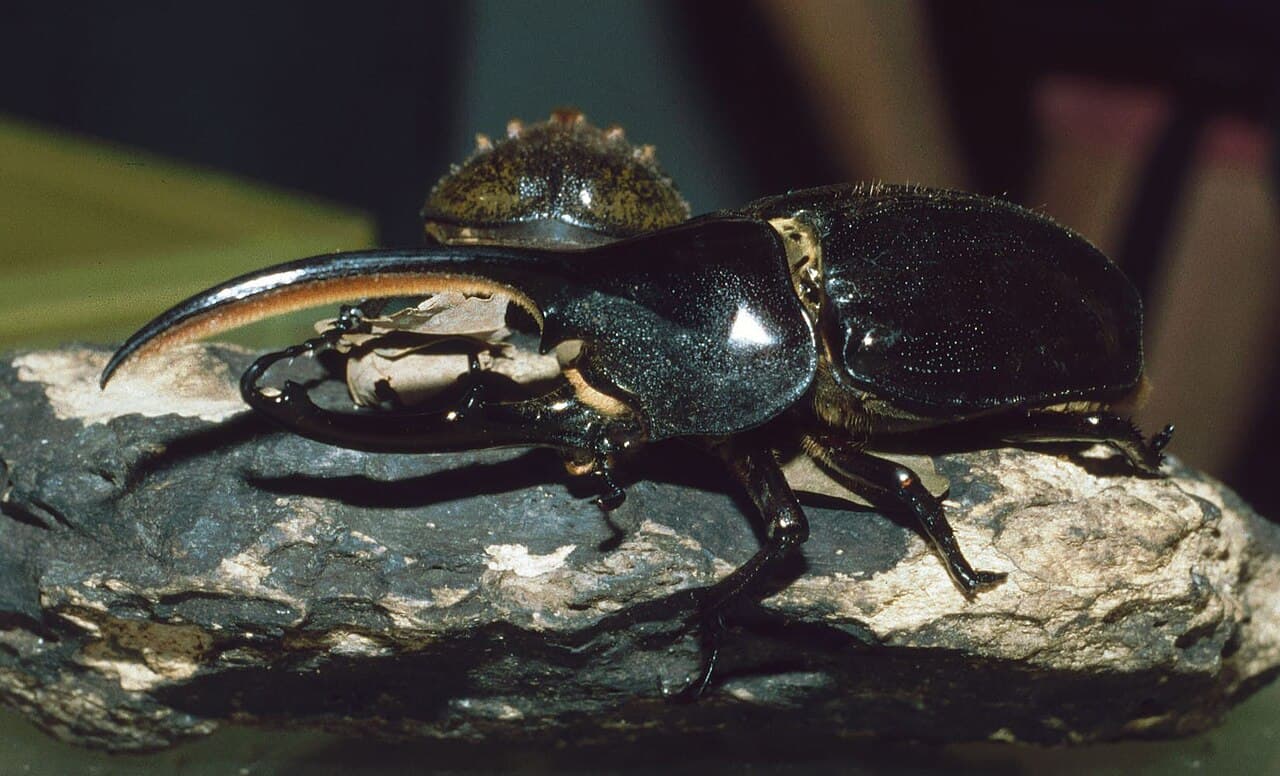
A male Hercules beetle carries two long horns that work together like a grasping tool. One projects from the head and another from the thorax above it.
The result is one of the most dramatic silhouettes in the insect world.
The horns tell only part of the story
The Hercules beetle, Dynastes hercules, belongs to the rhinoceros beetles. Males use their horns in contests with other males.
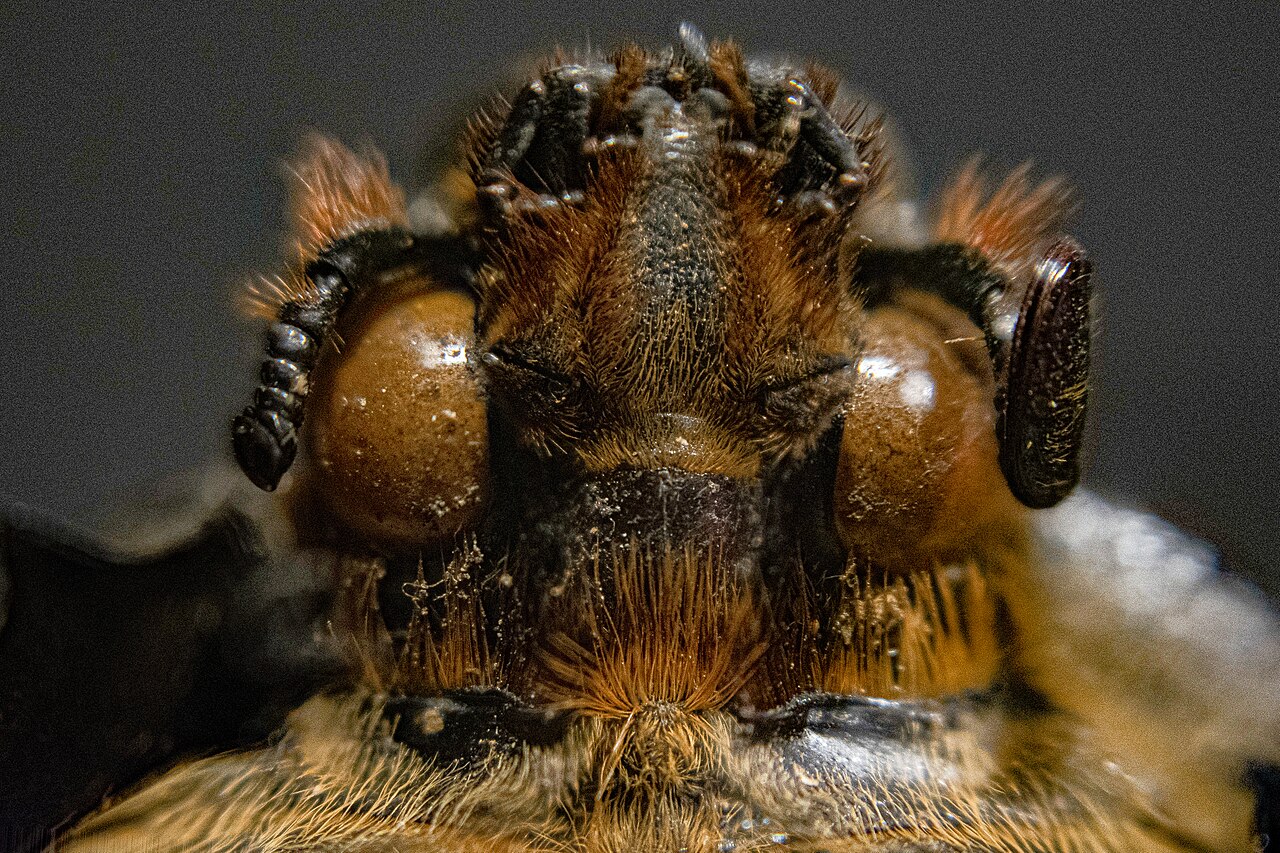
Females lack the same long horns, so a female portrait can look surprisingly different. Comparing the sexes helps explain why a single spectacular male is not a complete picture of the species.
Animal Diversity Web describes its appearance and behavior.
A giant that begins in decaying wood
The larva is a large grub that develops in rotting wood. After pupation, the adult emerges with legs, wings, and a very different body.
Adults feed on fruit, while their earlier life depends on the resources within dead wood. A fallen tree can therefore be part of an insect's future, rather than merely a piece of forest debris.
The Natural History Museum includes Hercules beetles among the world's largest beetles.
Measuring a remarkable insect
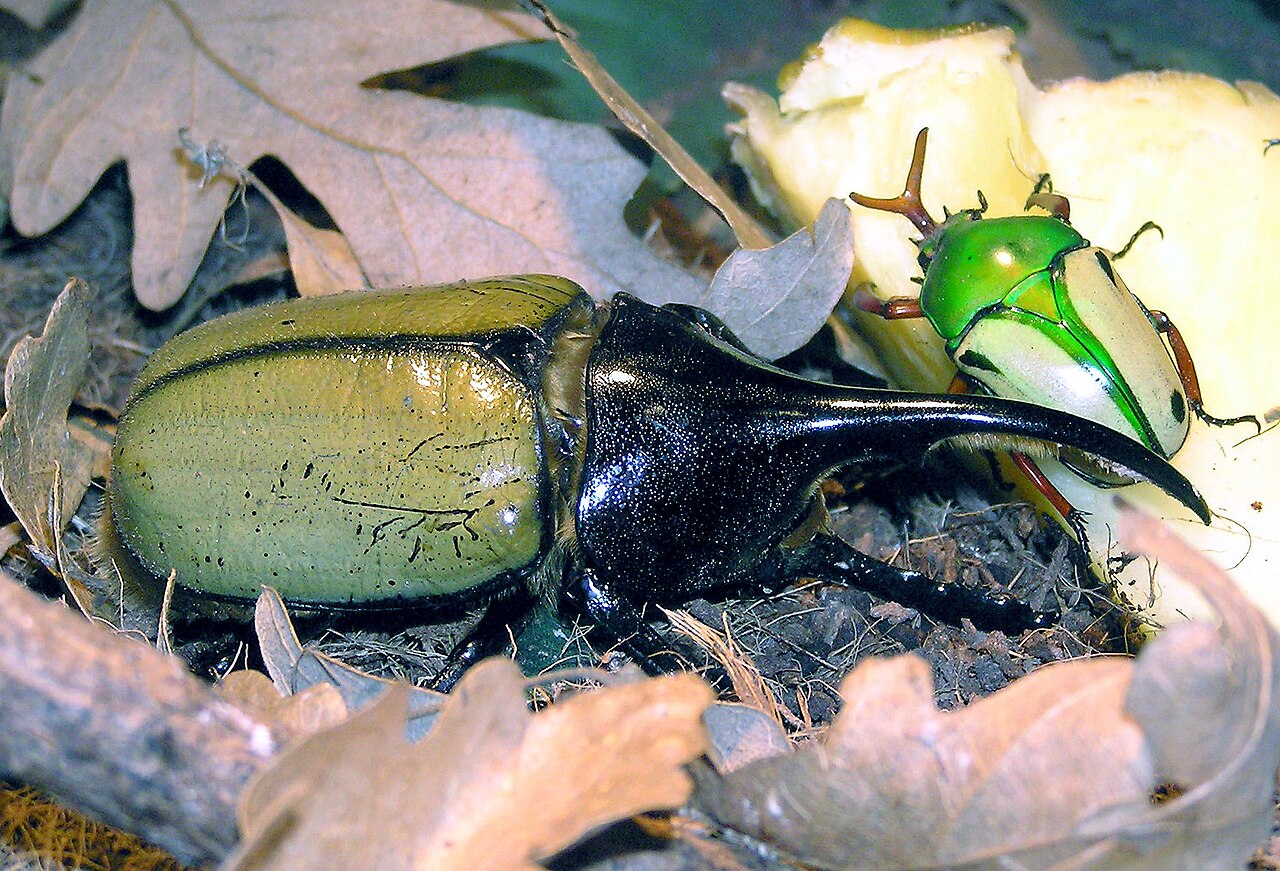
Length comparisons should make clear whether the horns are included. A male's impressive total length is not the same measurement as the body alone.
The horns attract attention, but the hidden larval stage connects this beetle with the forest around it.
A Hercules beetle is a striking reminder that an extraordinary adult can begin in a place we easily overlook: the interior of slowly decaying wood.
Photo credits
Featured image: Dynastes hercules.jpg — Franz Xaver; CC BY-SA 3.0.

Body image 1: Retrato de escarabajo hécules hembra.jpg — Brandon Antonio Segura Torres & Priscilla Vieto Bonilla; CC BY-SA 4.0.

Body image 2: Hercules.beetle.arp.jpg — Adrian Pingstone; Public domain.

Photographs resized for web display where available. Existing crops are identified in the linked source files.