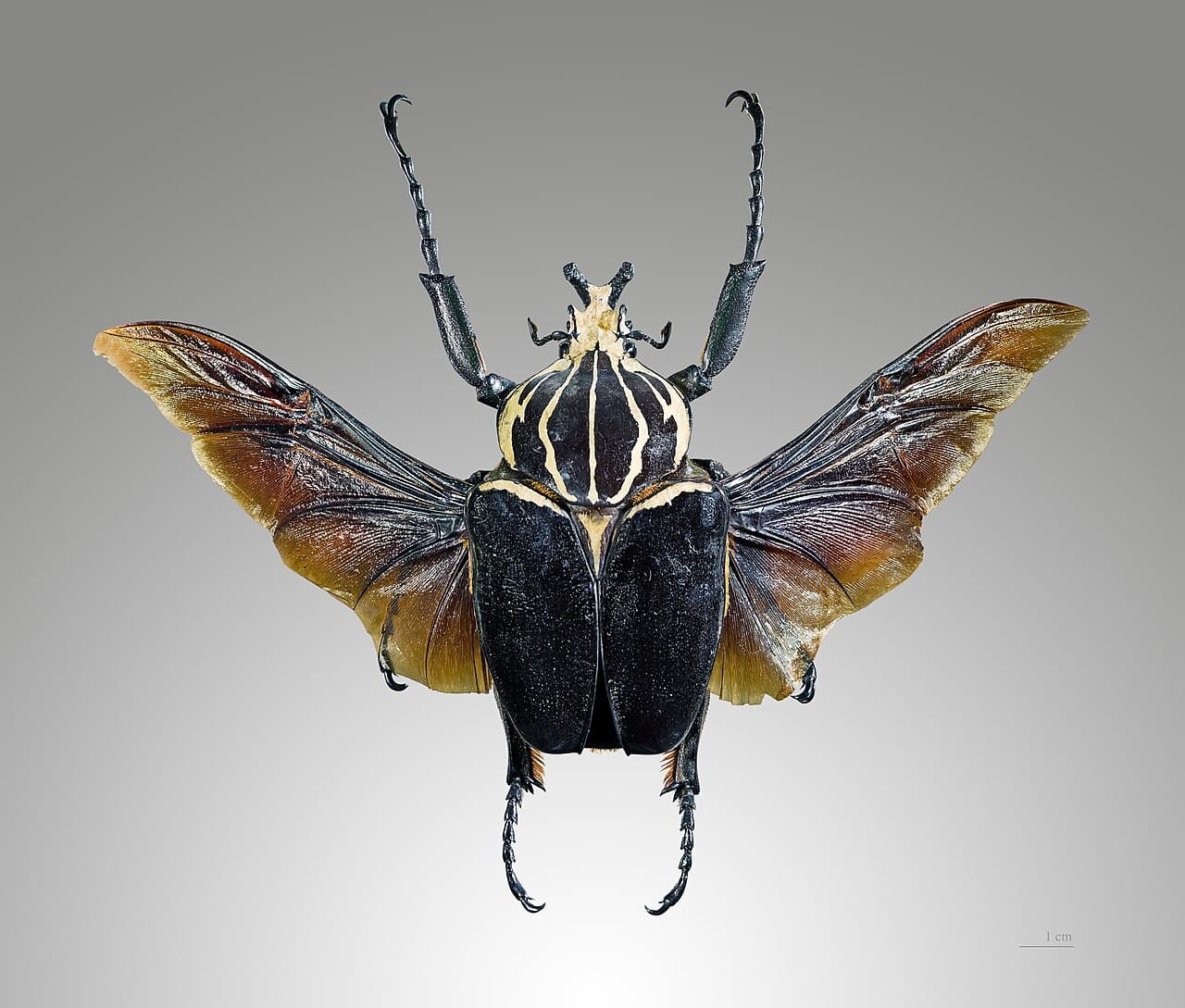
A Goliath beetle's bulky body hides a pair of large flight wings beneath patterned wing cases. An insect that seems built like a small armored vehicle can still take to the air.
Its size is impressive, but it also raises a useful question: are we looking at an adult or a larva?
A group of African giants
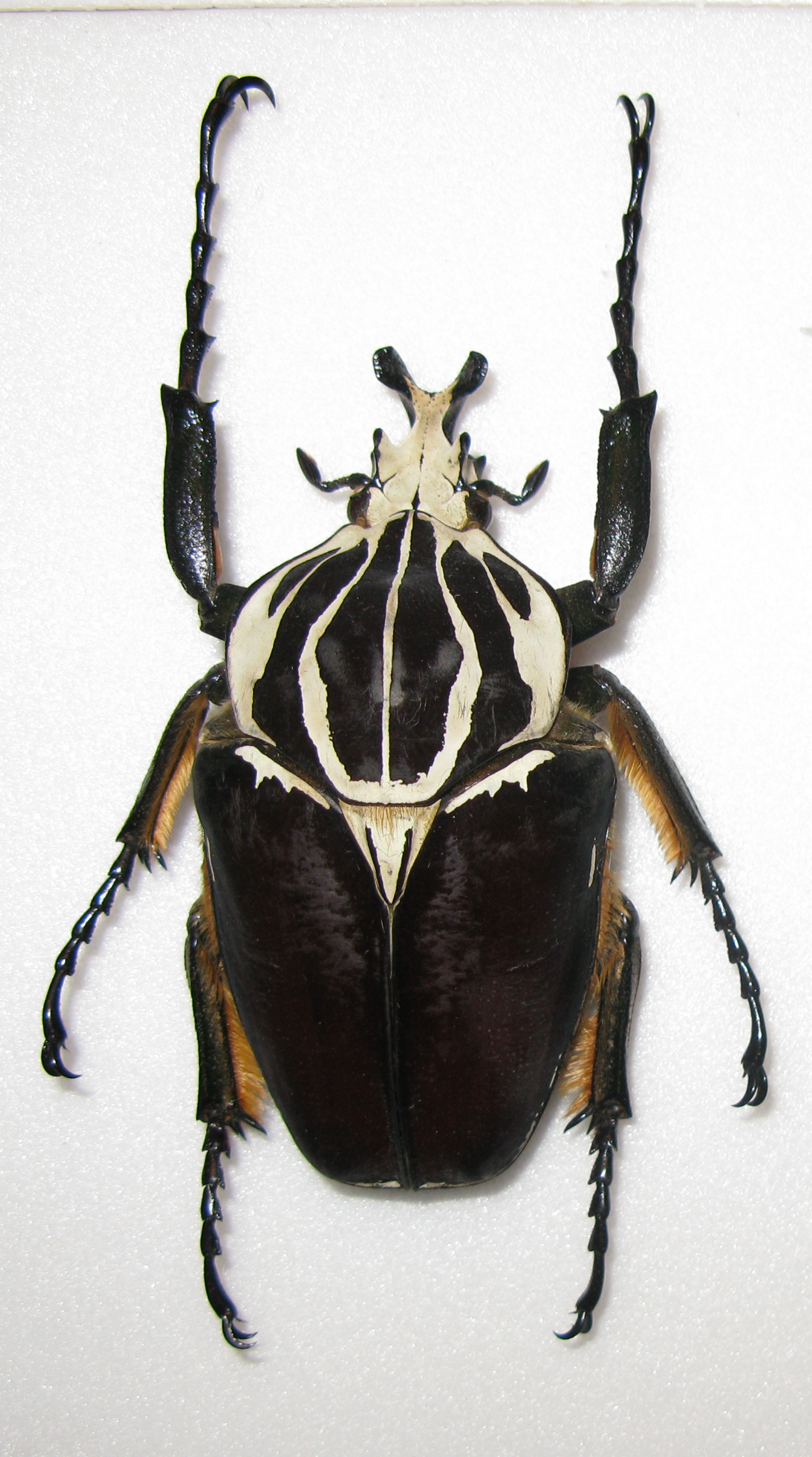
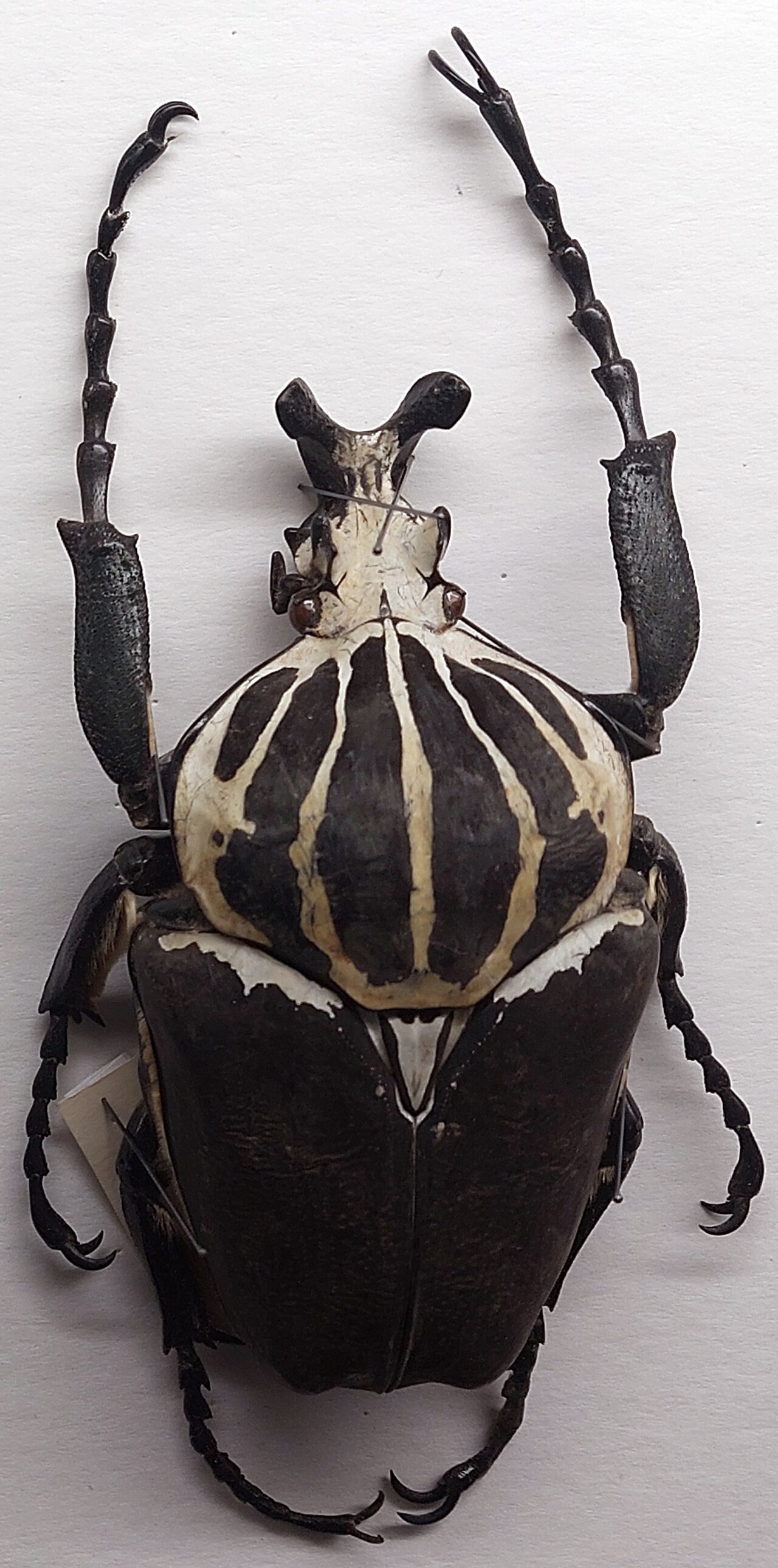
Goliath beetles belong to the genus Goliathus. The photographs here feature Goliathus goliatus, one member of the group.
Adults have striking markings and strong bodies. Males carry a forked head horn used in contests.
The University of Cambridge Museum of Zoology describes their wings, feeding, and large, grub-like larvae.
An adult is not a giant grub
Adults feed on resources such as plant sap and fruit. Their immature stage has a very different shape and way of life.
Claims about the “heaviest insect” need care because records may compare different life stages or different species. A huge larva and a winged adult are not interchangeable measurements.
The photographs show prepared specimens. The spread-wing view makes structures normally hidden beneath the wing cases easier to see.
A forest story behind the size
Research published through the Zoological Society of London discusses habitat loss and unsustainable collection affecting some West African Goliath beetles.
Those findings should not be treated as an identical assessment of every species in the genus.
Goliath beetles deserve attention beyond a weight record. Their patterns, flight, and changing life stages make them extraordinary members of the forests that support them.
Photo credits
Featured image: Goliathus goliatus vol.jpg — Didier Descouens; CC BY-SA 4.0.

Body image 1: Goliathus goliatus.JPG — Anaxibia; CC BY-SA 3.0.

Body image 2: Goliathus goliatus Drury.jpg — Ctac; CC BY 4.0.

Photographs resized for web display where available. Existing crops are identified in the linked source files.