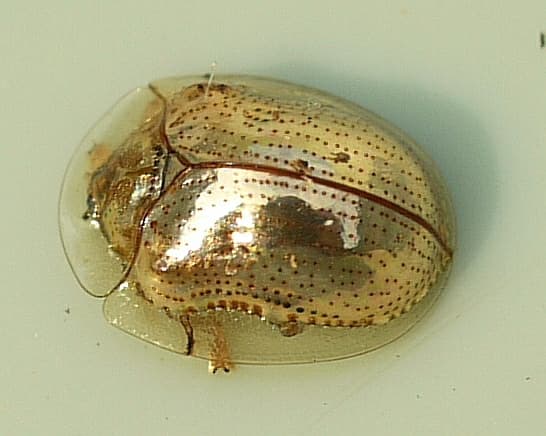
A golden tortoise beetle can look like a tiny drop of polished metal resting on a leaf. Yet the gold-like appearance belongs to a living surface whose reflectivity can change.
Its beauty is more dynamic than a permanent metallic coating.
A small beetle with a domed shield
The golden tortoise beetle, Charidotella sexpunctata, belongs to the leaf beetle family. North American references also use the name Charidotella sexpunctata bicolor.
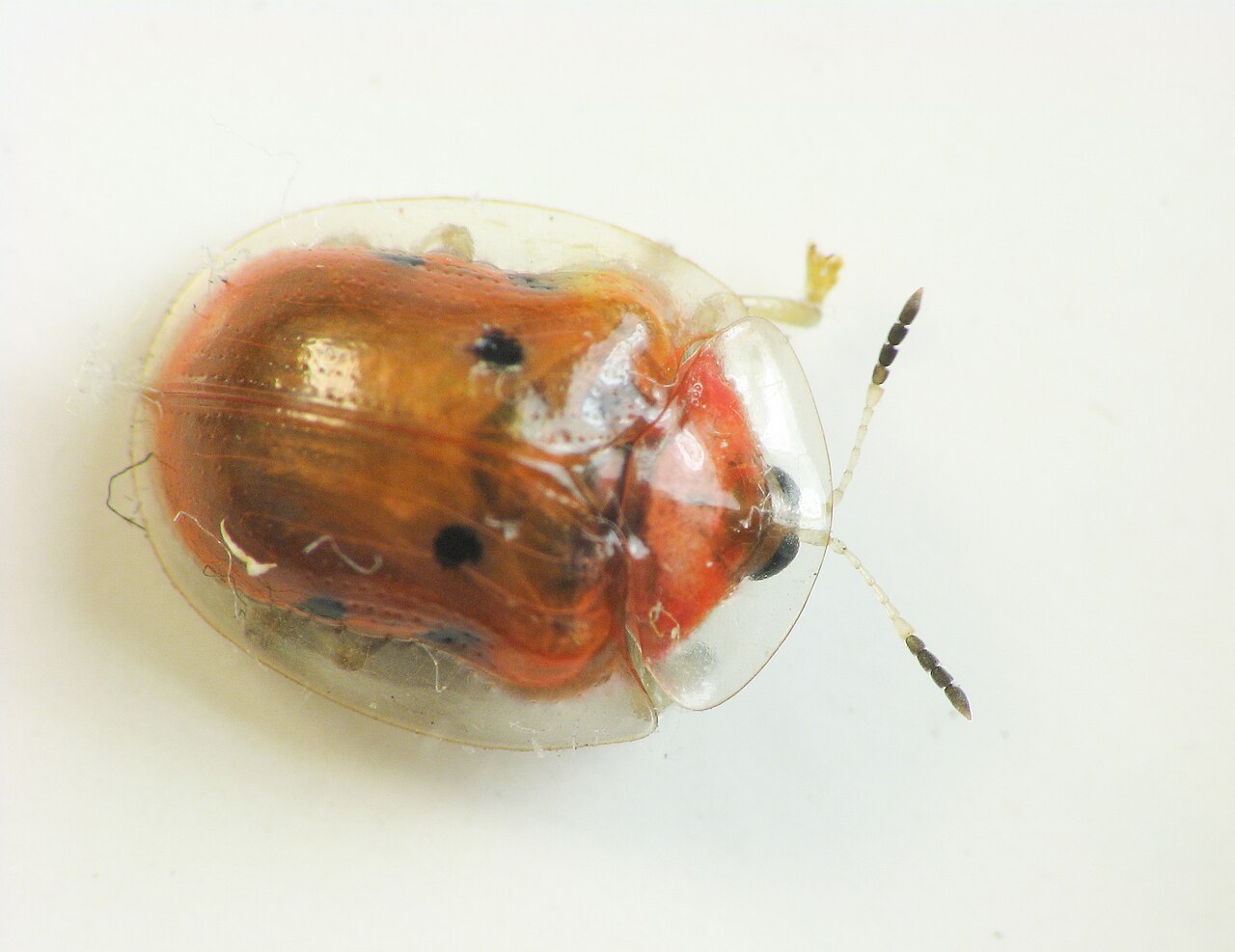
Its domed body and flatter outer edges help explain the comparison with a tortoise. When disturbed, it can press against a leaf with its appendages sheltered underneath.
Colorado State University's account describes the shape and color changes.
Why the shine changes
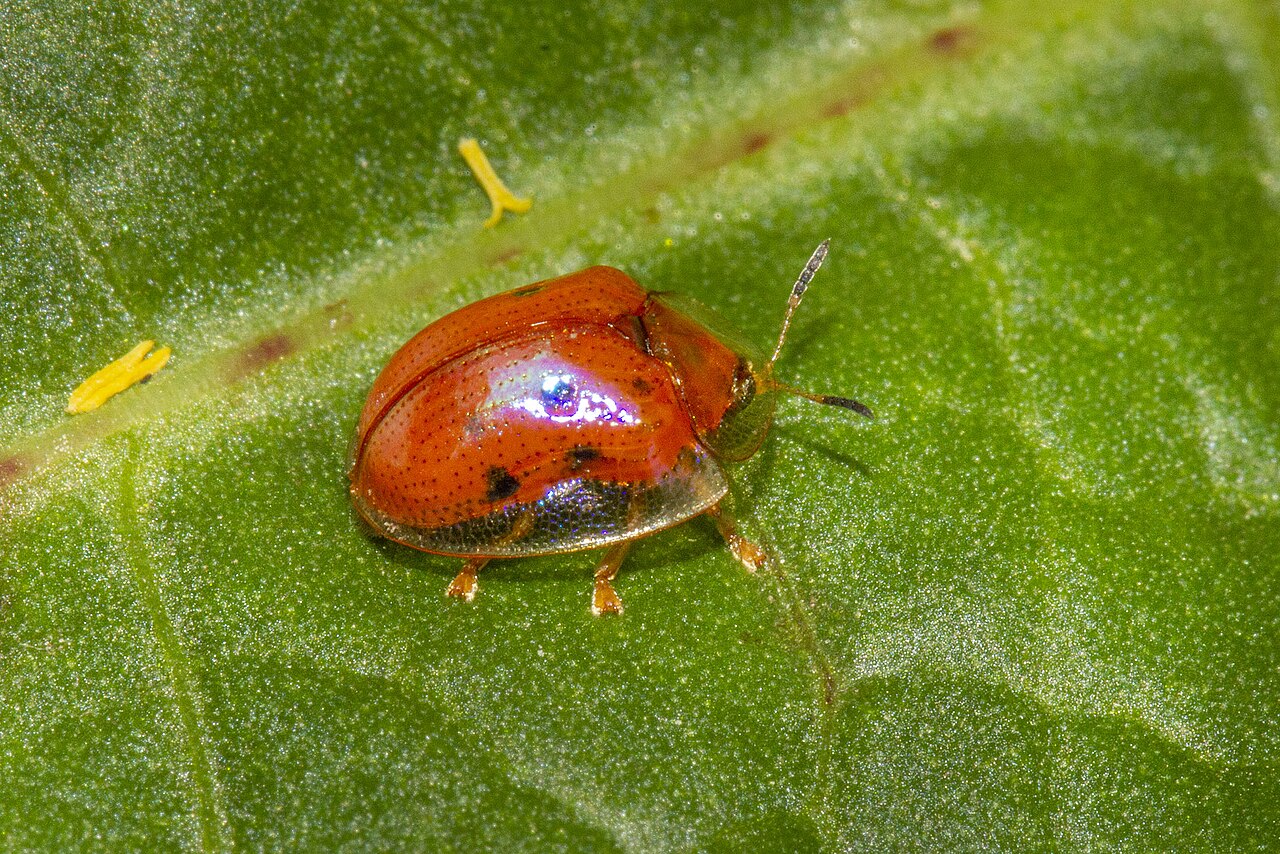
Moisture within the outer covering affects its reflective appearance. When that surface is hydrated, the metallic effect is strong; when conditions change, underlying colors become more visible.
An individual may look bronze or reddish rather than brilliant gold. The familiar shine also disappears after death.
This helps explain why photographs of the same kind of beetle can show surprisingly different colors.
A life tied to leaves
These beetles feed on plants in the morning glory family, including bindweed. Their larvae also feed on foliage, but look very different from the rounded adults.
University of Maine Extension describes tortoise beetles and their host plants.
The golden tortoise beetle turns a small leaf surface into a place worth examining. Its changing shine rewards close observation, revealing a living optical effect where we might first see only a speck of gold.
Photo credits
Featured image: Golden Tortoise Beetle - Charidotella sexpunctata.jpg — Ilona Loser; CC BY-SA 3.0.

Body image 1: Chrysomelidae- Charidotella sexpunctata (Golden Tortoise Beetle).jpg — Kristof Zyskowski & Yulia Bereshpolova; CC BY 2.0.

Body image 2: Charidotella sexpunctata adult.jpg — Beatriz Moisset; CC BY-SA 4.0.

Photographs resized for web display where available. Existing crops are identified in the linked source files.