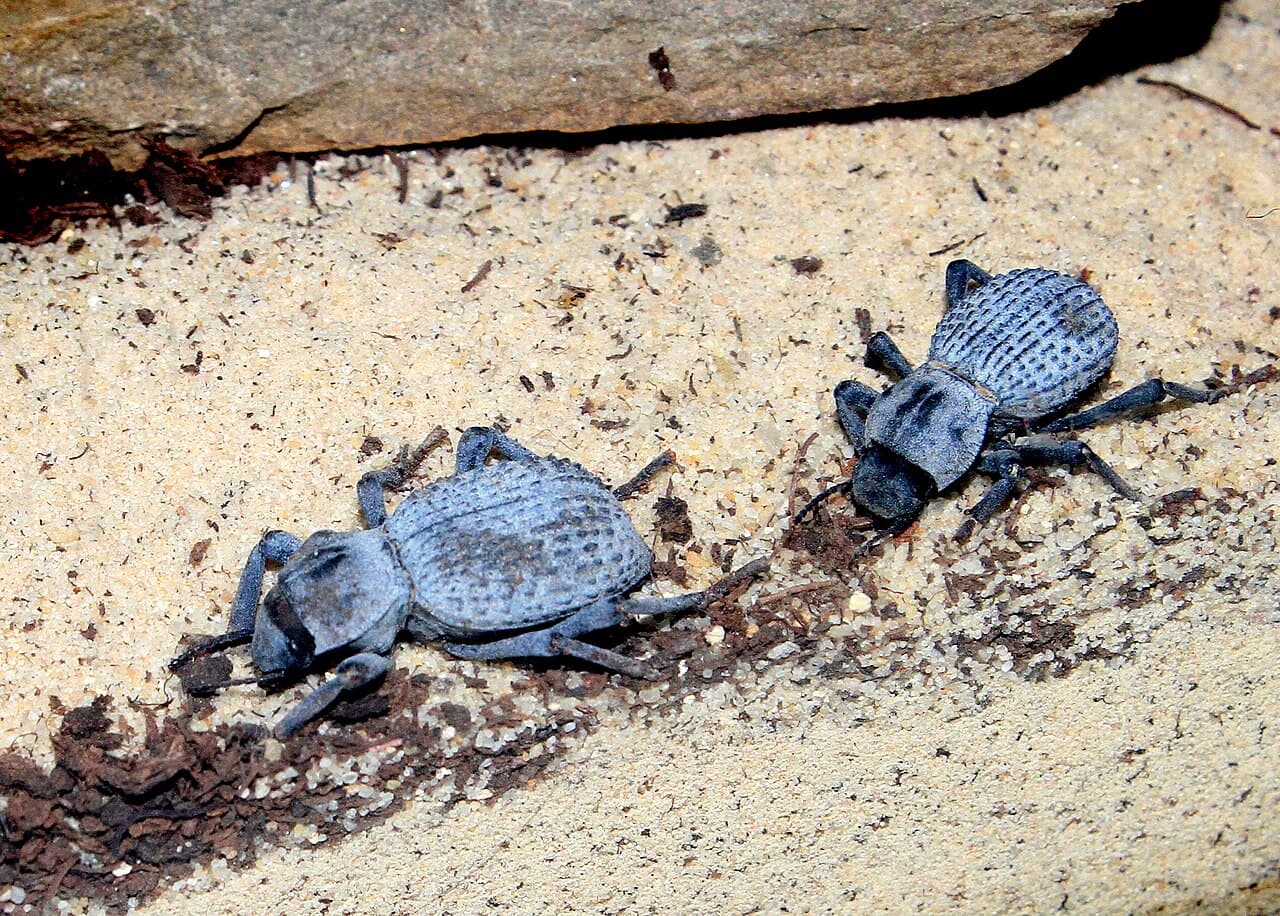
When threatened, a blue death-feigning beetle can become motionless, sometimes lying on its back with its legs tucked in. The behavior makes it look as though the encounter is already over.
Its powdery blue appearance is another adaptation to an equally challenging setting: the desert.
Where the blue comes from
The blue death-feigning beetle, Asbolus verrucosus, lives in deserts of the southwestern United States and northwestern Mexico.
A waxy coating gives it a blue-gray appearance and helps protect it from drying out. Oregon Zoo describes this coating and the species' desert life.
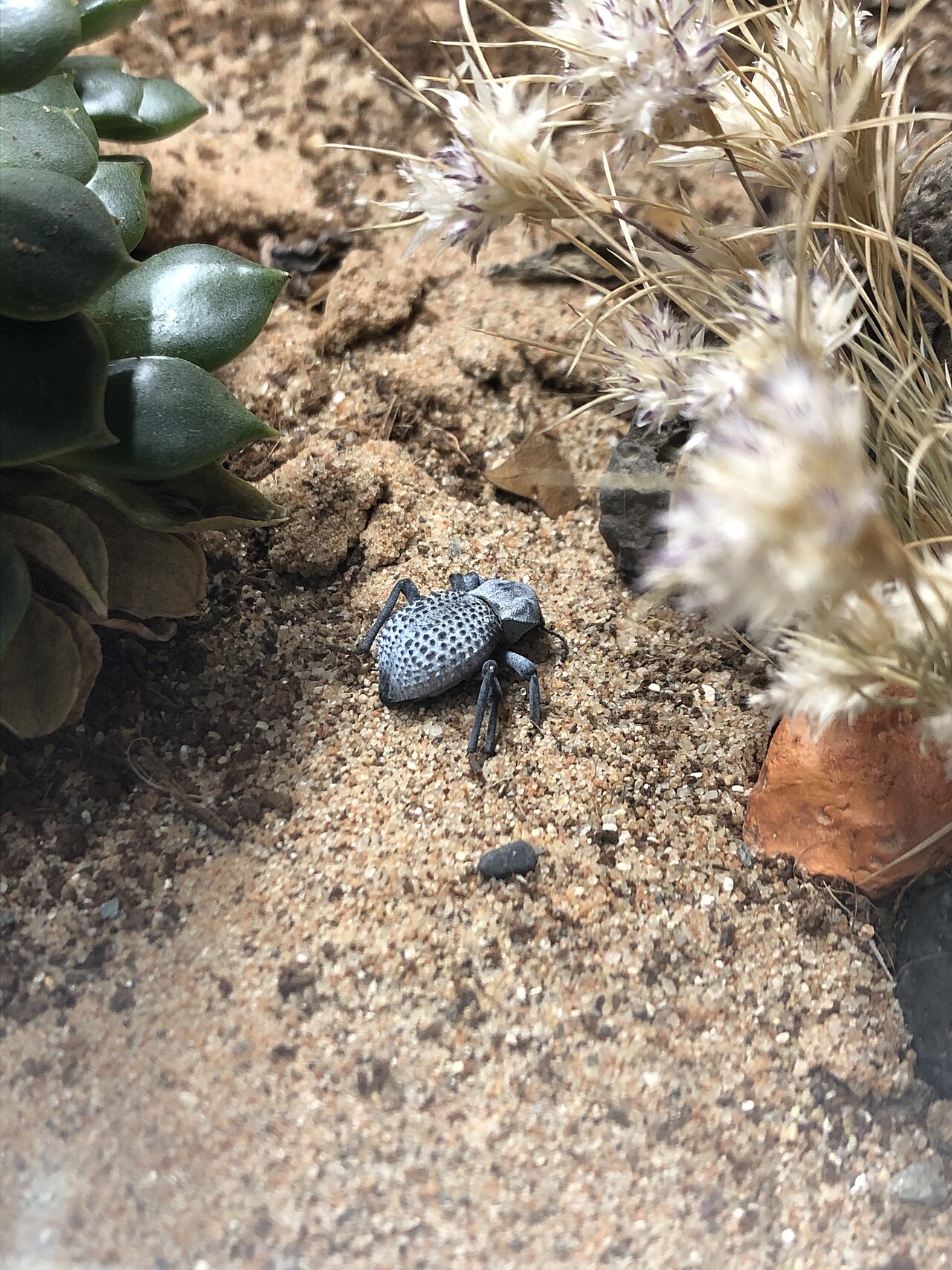
The body is also covered in small bumps, reflected in the scientific name verrucosus, meaning wart-covered.
A defense built around stillness
Death-feigning is a response to danger. By stopping movement, the beetle may become less interesting to a predator seeking active prey.
The behavior does not mean the animal is injured or dead. It is one reason a still beetle deserves careful observation before anyone assumes otherwise.
Phoenix Zoo places it among the darkling beetles, a large and varied group.
An unexpected desert color
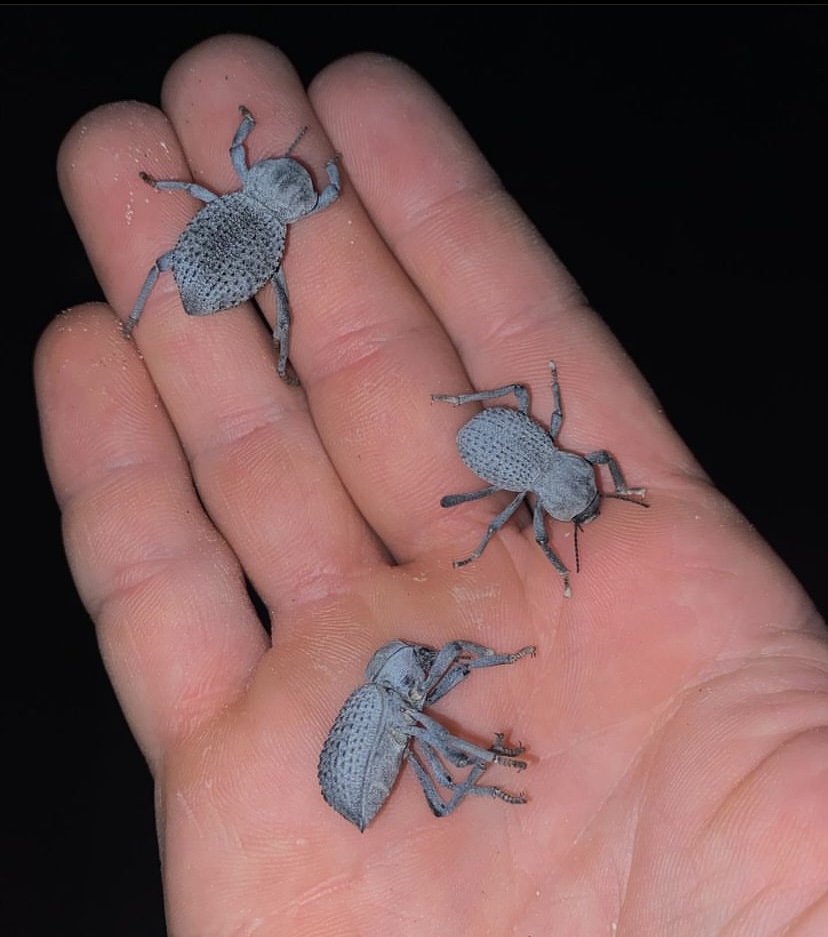
The blue coating stands out in close photographs, especially beside sand and rough ground. Its appearance invites us to look beyond the idea that every desert animal must be simply brown.
Color, a tough outer body, and a motionless defense belong to the same small survivor.
The blue death-feigning beetle shows that an effective response to danger need not be a fast escape. Sometimes the most remarkable action is a sudden absence of movement.
Photo credits
Featured image: Asbolus verrucosus.jpg — Greg5030; CC BY 3.0.

Body image 1: Asbolus verrucosus on sandy ground.jpg — Noroi; CC0.

Body image 2: Asbolus verrucosus playing dead, Insta-Cor2ran.jpg — Cor2ran; CC0.

Photographs resized for web display where available. Existing crops are identified in the linked source files.