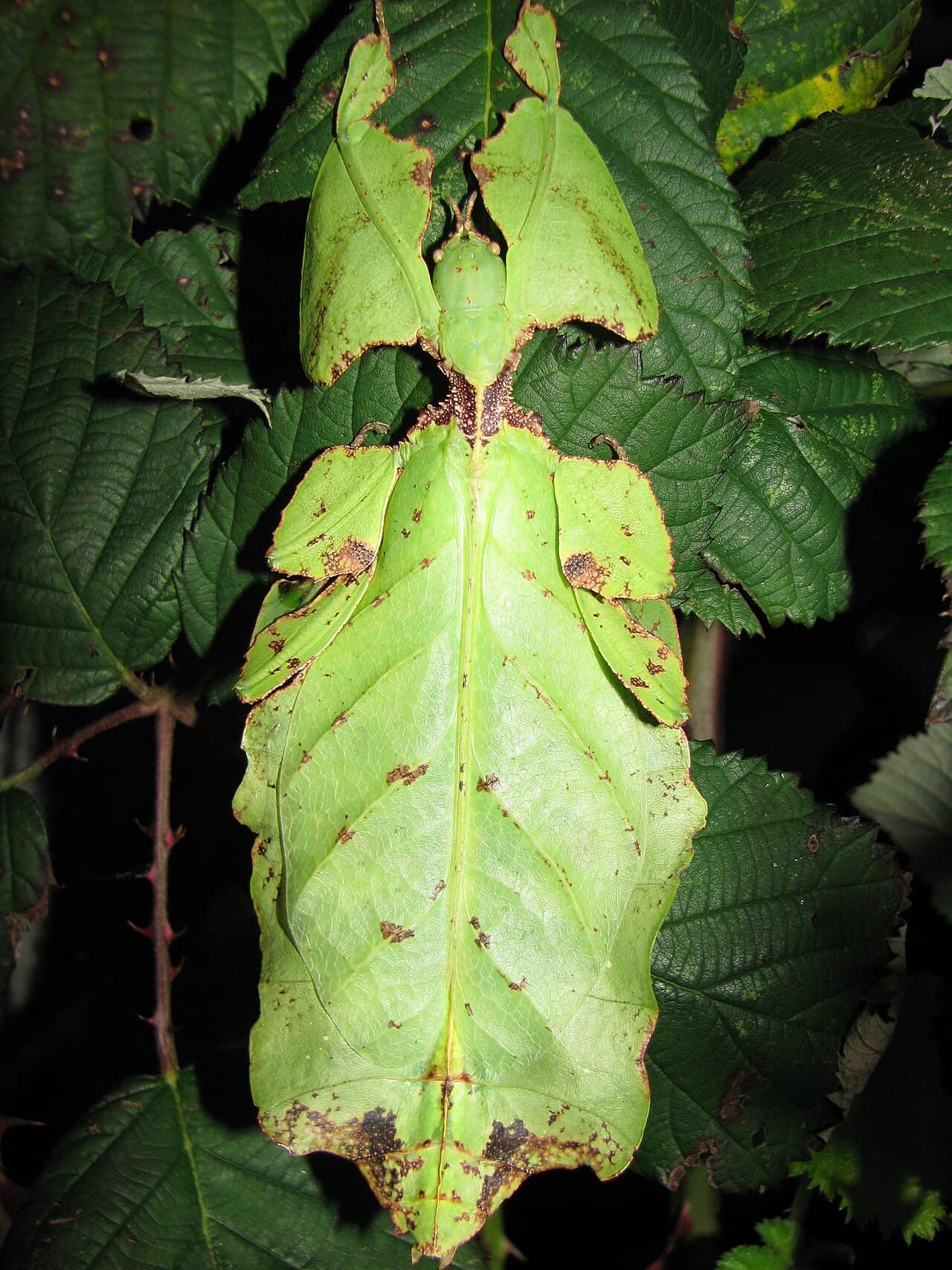
A giant Malaysian leaf insect can hide behind the appearance of the very thing it eats. Its broad green body, leaf-like legs, and vein patterns turn a plant-eating insect into a convincing piece of foliage.
The disguise is especially striking in adult females.
Following the veins
The species is now called Pulchriphyllium giganteum, although older sources use Phyllium giganteum.
The Smithsonian's Insect Zoo guide describes how the vein patterns on the wings resemble those of leaves.
Flattened body parts extend the illusion beyond color. Find the head and antennae, then follow the legs outward: the apparent leaf gradually becomes an animal.
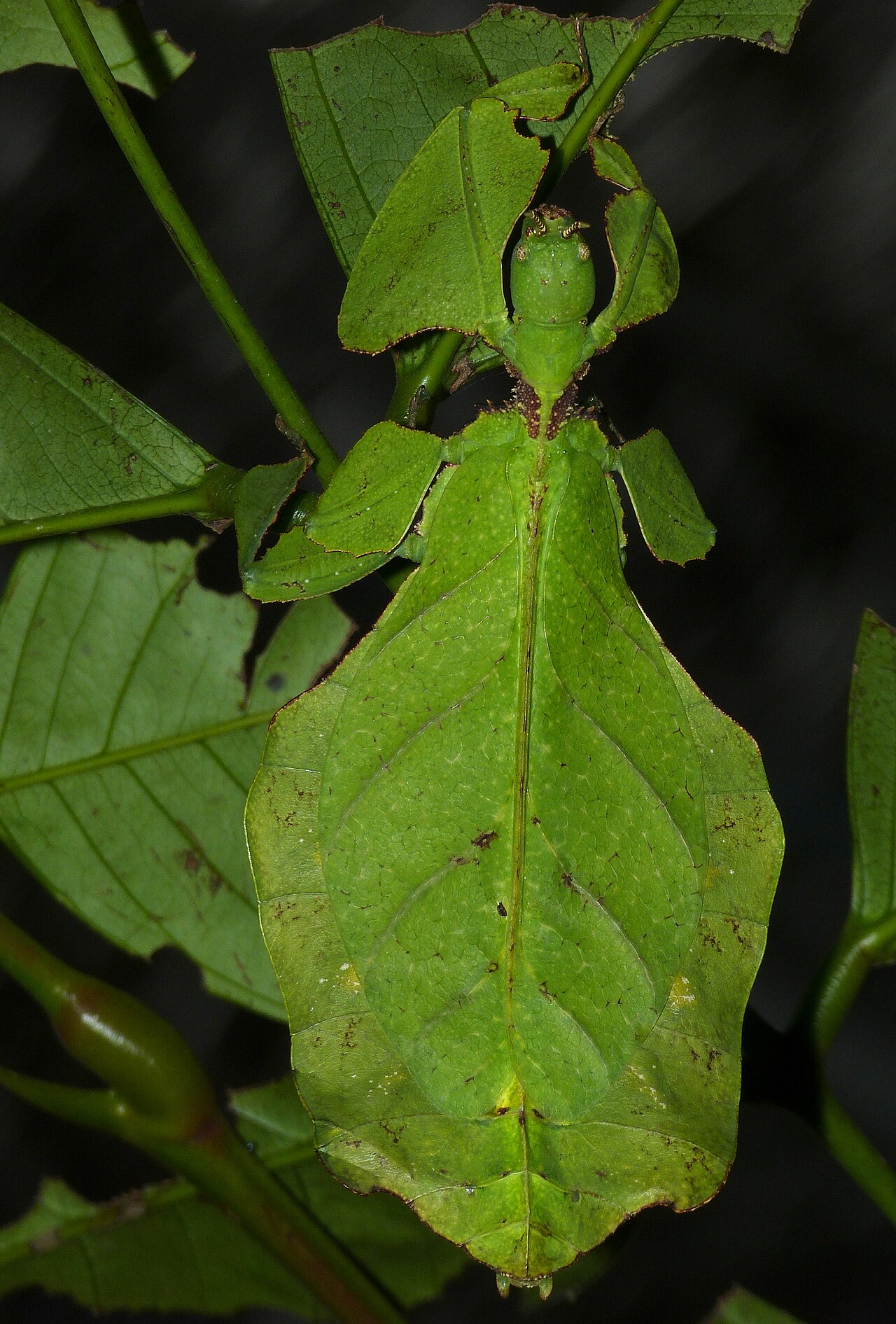
A leaf eater among leaves
These insects feed on plant foliage. The California Academy of Sciences' educator guide describes their leaf diet and swaying movement.
Camouflage can help conceal the animal as it rests or moves among vegetation. The green disguise belongs to a herbivore, in contrast to the leaf-like mantises that hunt other insects.
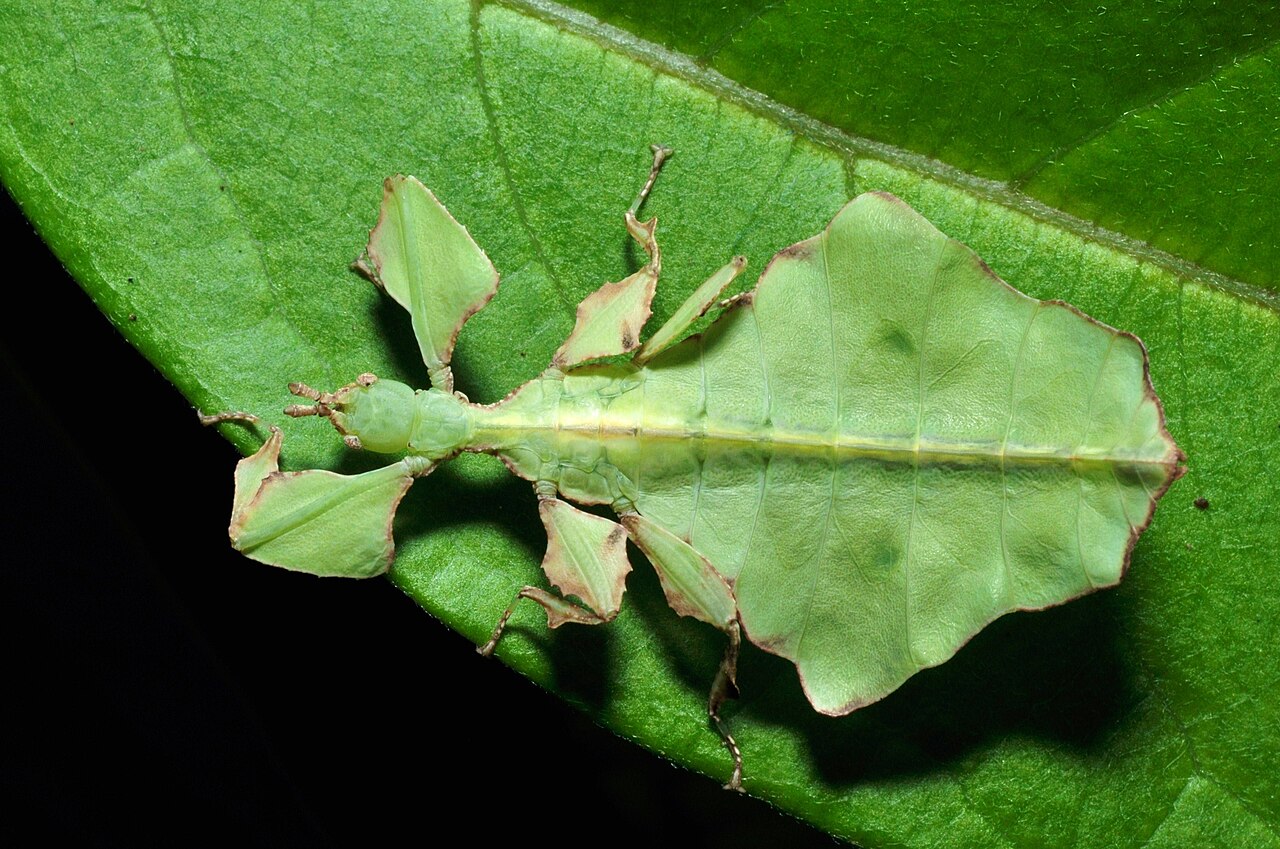
Another surprise in the life cycle
Captive females can produce offspring without mating, through a process called parthenogenesis. This does not mean that males never exist.
The species was described from Malaysia, and a museum study recorded it in southern Thailand.
A walking leaf is remarkable enough. Add the details of its wings, movement, and reproduction, and the insect becomes a reminder that the familiar shape of a leaf can conceal an unexpectedly complex life.
Photo credits
Featured image: Pulchriphyllium giganteum, adult femal from dorsal.jpg — Drägüs; CC BY-SA 3.0.

Body image 1: Giant Leaf Insect (Phyllium giganteum) (8758278704).jpg — Bernard DUPONT from FRANCE; CC BY-SA 2.0.

Body image 2: Phyllium giganteum L3 (13697478454).jpg — Pavel Kirillov from St.Petersburg, Russia; CC BY-SA 2.0.

Photographs resized for web display where available. Existing crops are identified in the linked source files.