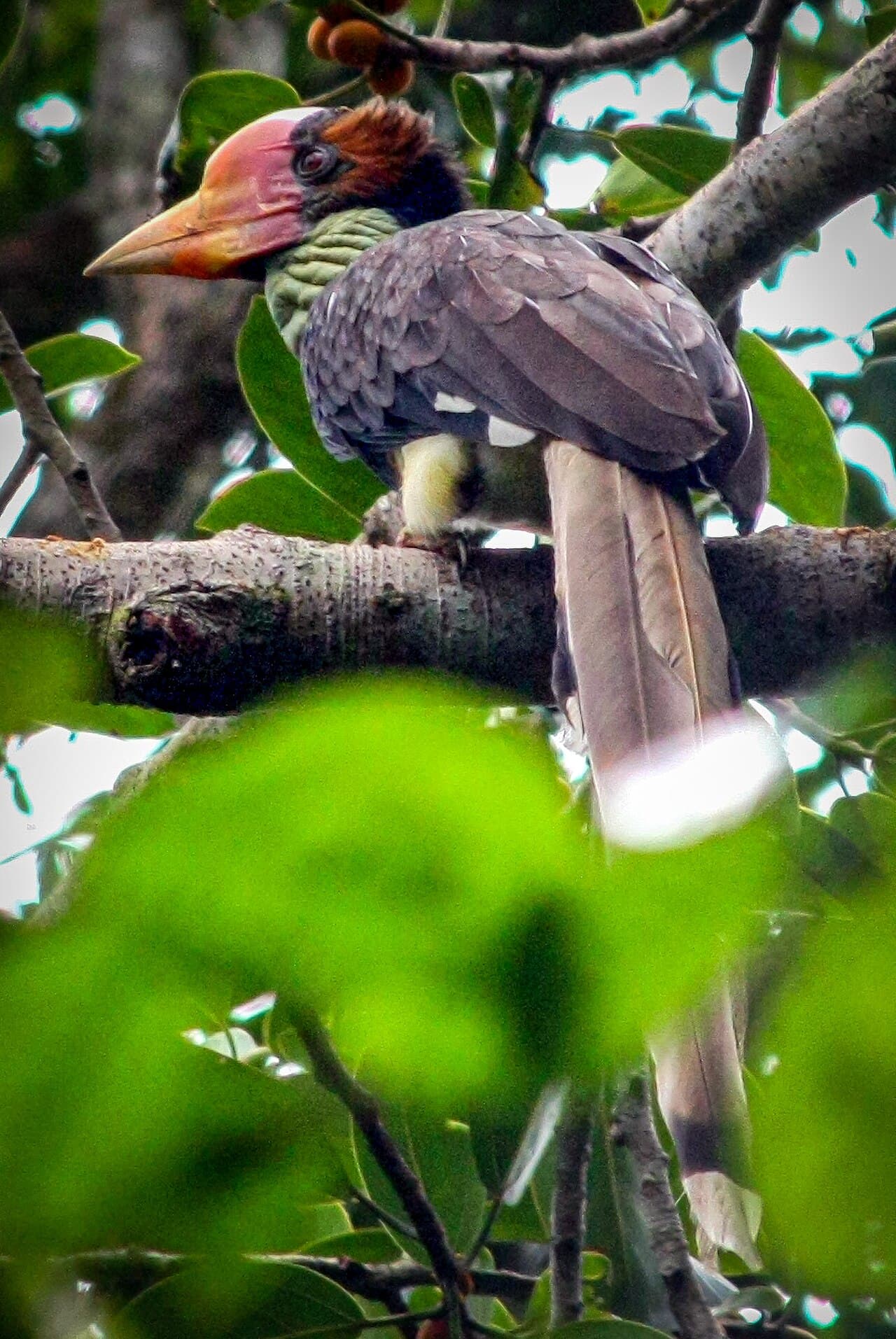
Above the helmeted hornbill's bill sits an extraordinary structure: a solid casque, made of keratin. It helps give the bird its powerful profile—and has made it a target for illegal trade.
The helmeted hornbill, Rhinoplax vigil, is one of Southeast Asia's most remarkable forest birds. Its story connects an unusual head, giant trees, and a family life that depends on trust.
A Helmet Unlike Most Others
Many hornbills have relatively light, hollow casques. The helmeted hornbill's is much more solid.
Cornell's Living Bird describes that dense keratin structure. The material is often called “hornbill ivory,” although it is not elephant ivory.
A close view rewards patience: the bill and casque belong to a long-bodied bird with an equally striking tail.
A Rainforest Life
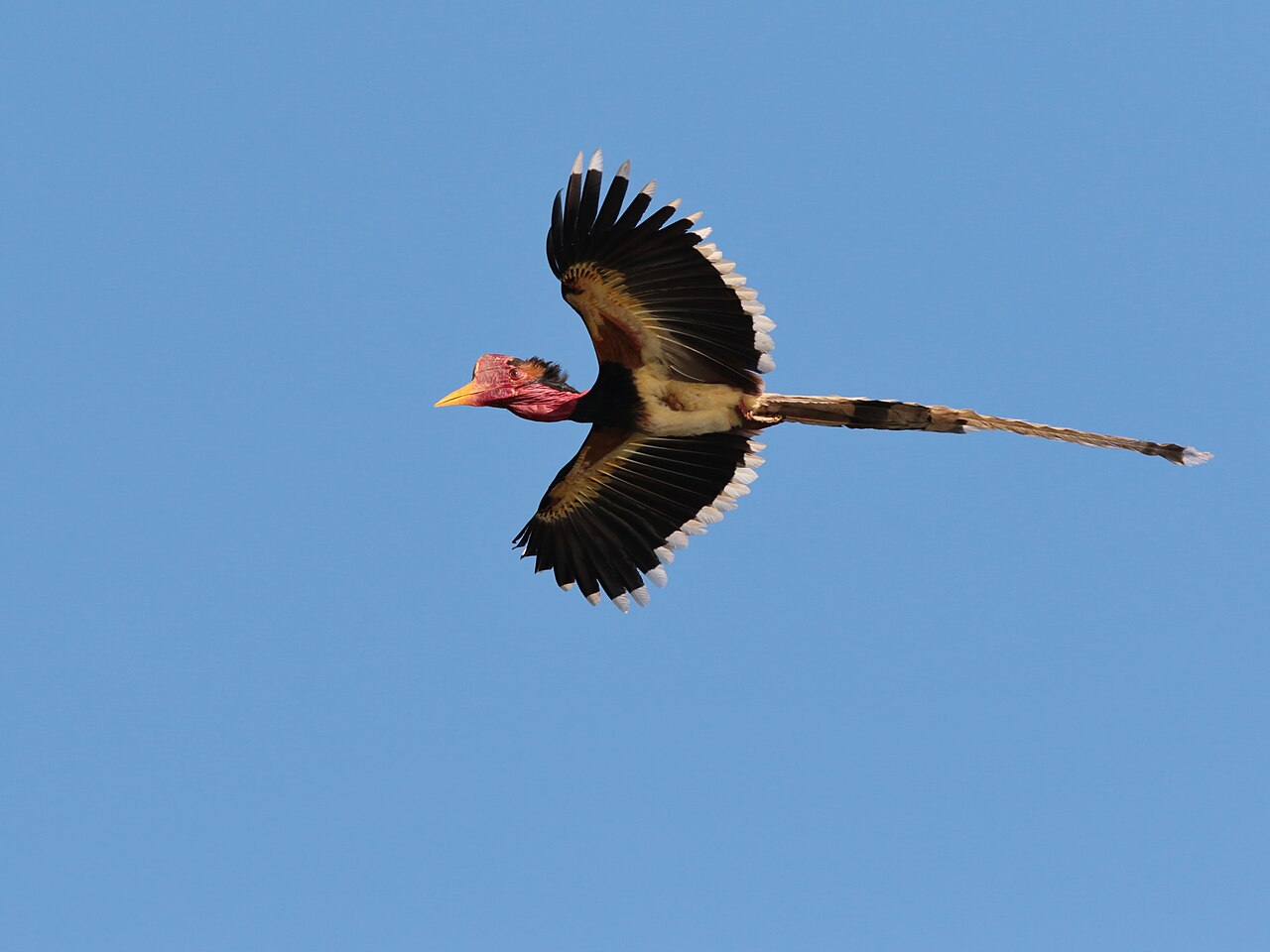
Helmeted hornbills live in parts of Southeast Asia, including Borneo, Sumatra, and the Malay Peninsula.
Large forest trees matter especially during breeding. A suitable nest cavity must accommodate a female and her developing chick while still allowing food to be passed inside.
Figs form an important part of the diet. The forest supplies both feeding trees and a place to raise the next generation.
The Female Seals Herself Inside
After entering a nesting cavity, the female closes most of the opening. A narrow gap remains for the male to deliver food.
She stays inside through incubation and the chick's early development. The male's food deliveries support the family during this long period.
It is an astonishing arrangement. The safety of a tree cavity comes with dependence on a partner outside.
Why the Casque Has Become a Threat
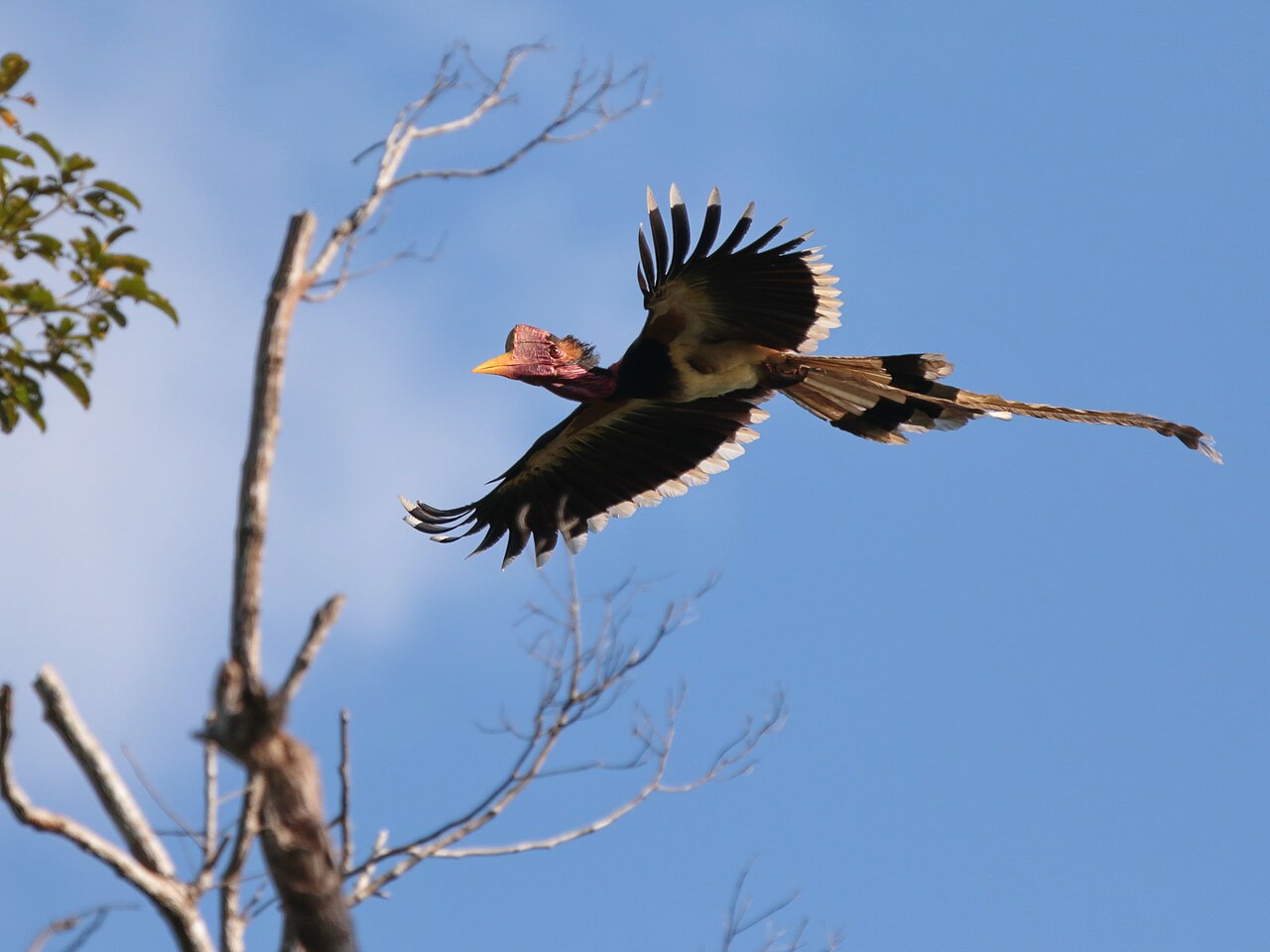
The wildlife-trade organisation TRAFFIC lists the helmeted hornbill as Critically Endangered and identifies trafficking in carved casques as a major danger.
The species is in CITES Appendix I, with international commercial trade prohibited. Legal protection alone cannot stop every poacher, so enforcement and local conservation work remain important.
Losing a breeding male can also threaten the family depending on him inside a nest.
Worth More Alive
Nest guardians, forest protection, and action against trafficking all address different parts of the problem.
The helmeted hornbill's casque is most extraordinary where it belongs: on a living bird. Protecting that bird also protects the slow, intricate family story hidden inside a rainforest tree.
Photograph Credits
Featured image: Nur Nafis Naim, CC BY-SA 4.0. Resized for display. A juvenile helmeted hornbill in Temengor rainforest, Malaysia.

Body image 1: Ian Dugdale, CC BY 4.0. Resized for display. Helmeted hornbill, Rhinoplax vigil, in Thailand.

Body image 2: Ian Dugdale, CC BY 4.0. Resized for display. A second view of a helmeted hornbill in Thailand.
