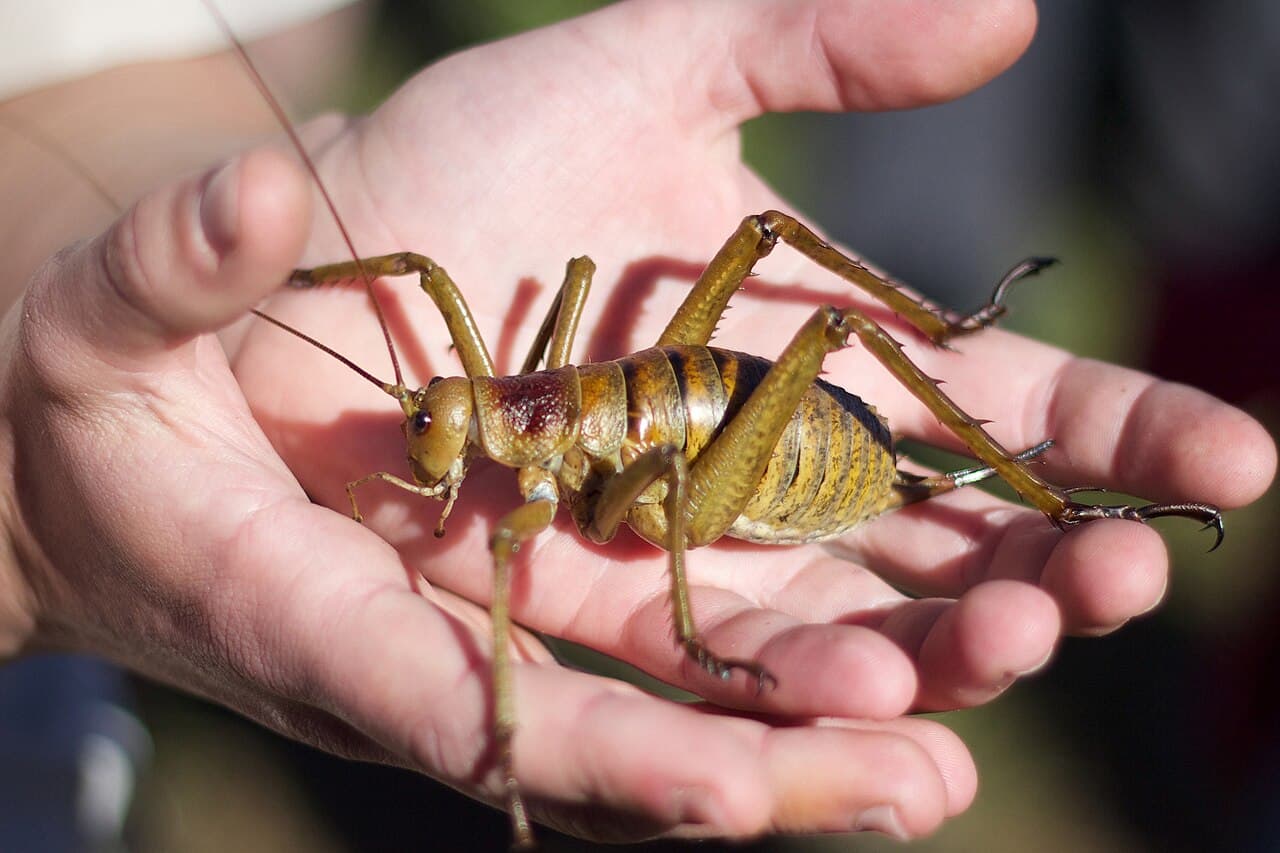
An insect heavy enough to outweigh a small bird sounds unlikely. Yet a large female wētāpunga can weigh more than a house sparrow.
This giant wētā from New Zealand combines a bulky body, long antennae, and spiny legs. Its appearance is dramatic. Its daily life is often quieter: hiding, climbing, and eating leaves.
One Member of a Giant Family
“Giant wētā” refers to several species in the genus Deinacrida. Here, the focus is wētāpunga, Deinacrida heteracantha.
New Zealand's Department of Conservation describes adult females reaching around 35 grams. Exceptional record weights should not be mistaken for an ordinary individual's size.
Wētāpunga cannot fly. That makes their forest surroundings a place to move through on foot, rather than leave behind on wings.
A Leaf Eater After Dark
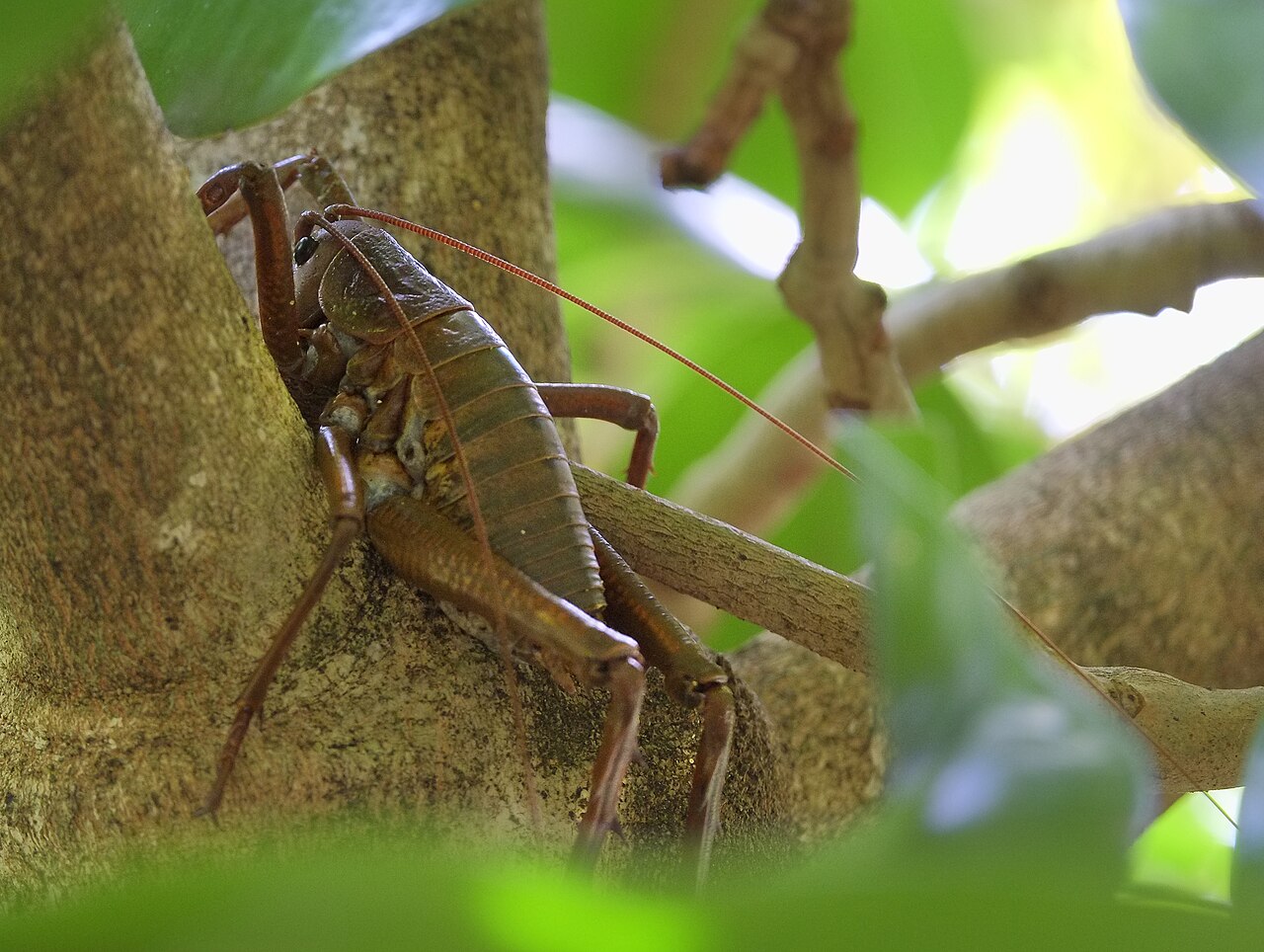
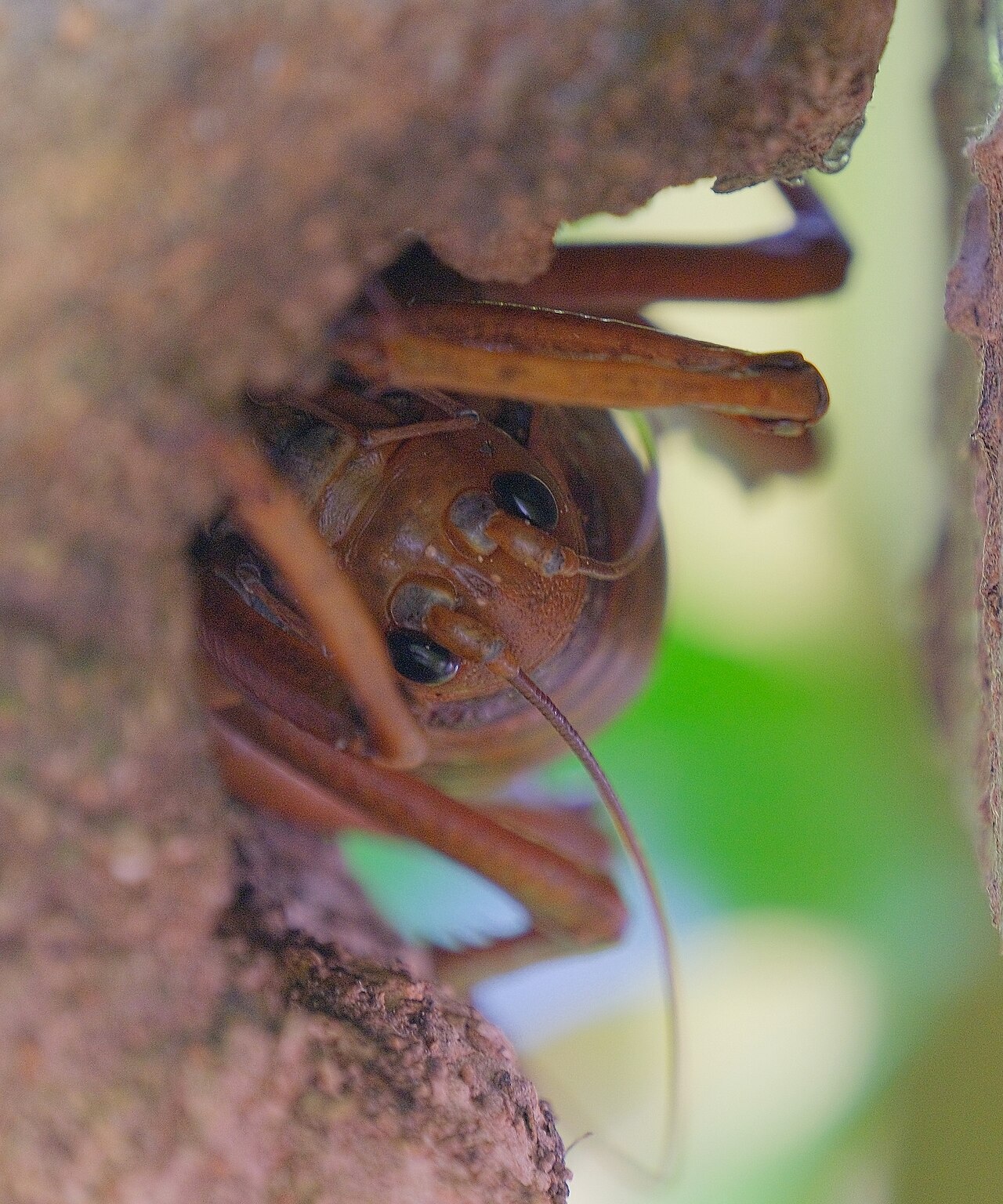
During the day, these insects shelter in foliage and other protected spaces. At night, they become active in trees and on the ground.
Fresh leaves are an important part of their diet. They feed on several native plants, including māhoe and karaka.
Te Papa's account describes a slow-moving insect whose tough outer covering and spiny legs are part of its defenses. Looking formidable does not make it a hunter of large prey.
Growing Means Shedding a Shell
A young wētā cannot grow indefinitely inside a rigid outer covering. It must moult, shedding that covering as it develops.
Wētāpunga go through a series of juvenile stages before reaching adulthood, a process that can take roughly two years. Females eventually place eggs in soft soil.
That long development makes an adult's appearance the result of many small changes, most of them hidden from casual view.
An Island Survival Story
Habitat loss and introduced predators greatly reduced the species' range. Hauturu-o-Toi/Little Barrier Island became its last natural stronghold.
Breeding and translocation programmes have helped establish other populations, including on Tiritiri Matangi and Motuora. The photographs here show wētāpunga on Tiritiri Matangi.
Protecting an insect takes more than admiring its size. It means protecting its shelter, food plants, and places to breed.
A giant wētā reminds us that New Zealand's wildlife wonders are not limited to birds. Sometimes an extraordinary island story unfolds on six legs, beneath a leaf.
Photograph Credits
Featured image: Dinobass (Derek R. Tearne), CC BY-SA 4.0. Resized for display. A wētāpunga from the Tiritiri Matangi conservation population.

Body image 1: Pseudopanax, public domain. Resized for display. Wētāpunga resting on a tree branch.

Body image 2: Pseudopanax, public domain. Resized for display. A wētāpunga in a sheltered tree hollow on Tiritiri Matangi.
