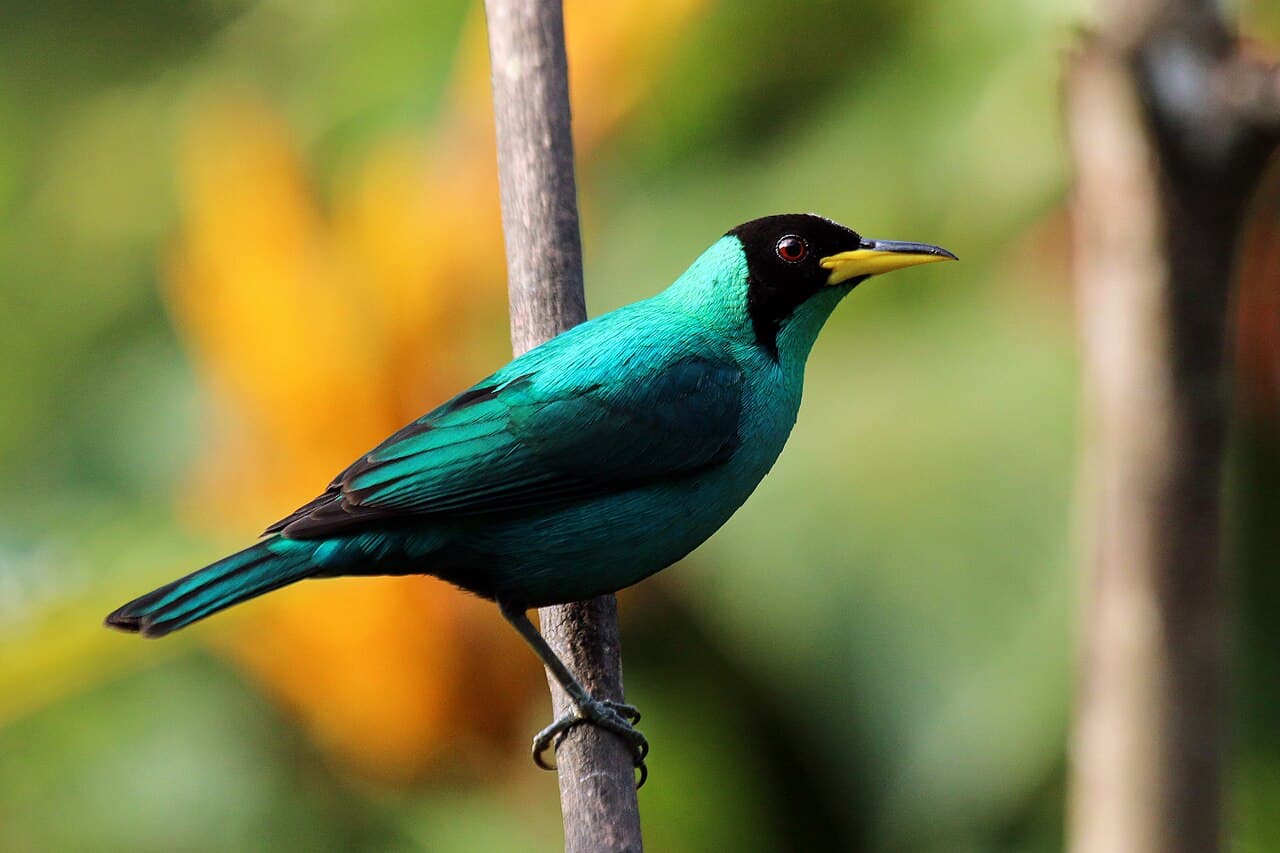
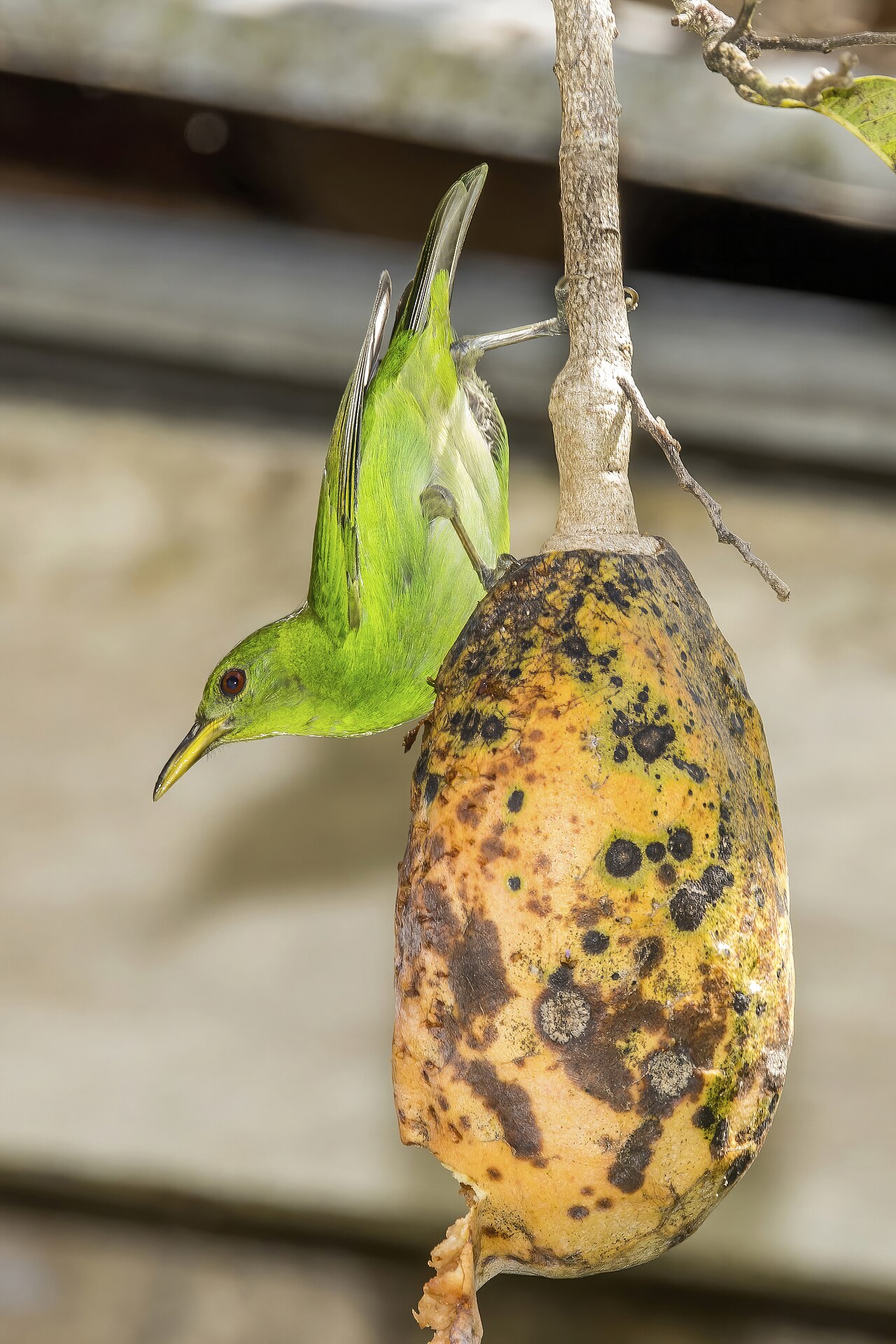
A male green honeycreeper can shine blue-green beneath a black cap, while a female wears softer, grassy green. The two can look like different birds until their shape and curved yellow bills give the connection away.
This small tropical bird, Chlorophanes spiza, belongs to the tanager family. Its name introduces one color, but its life offers much more to discover.
Green is only the beginning
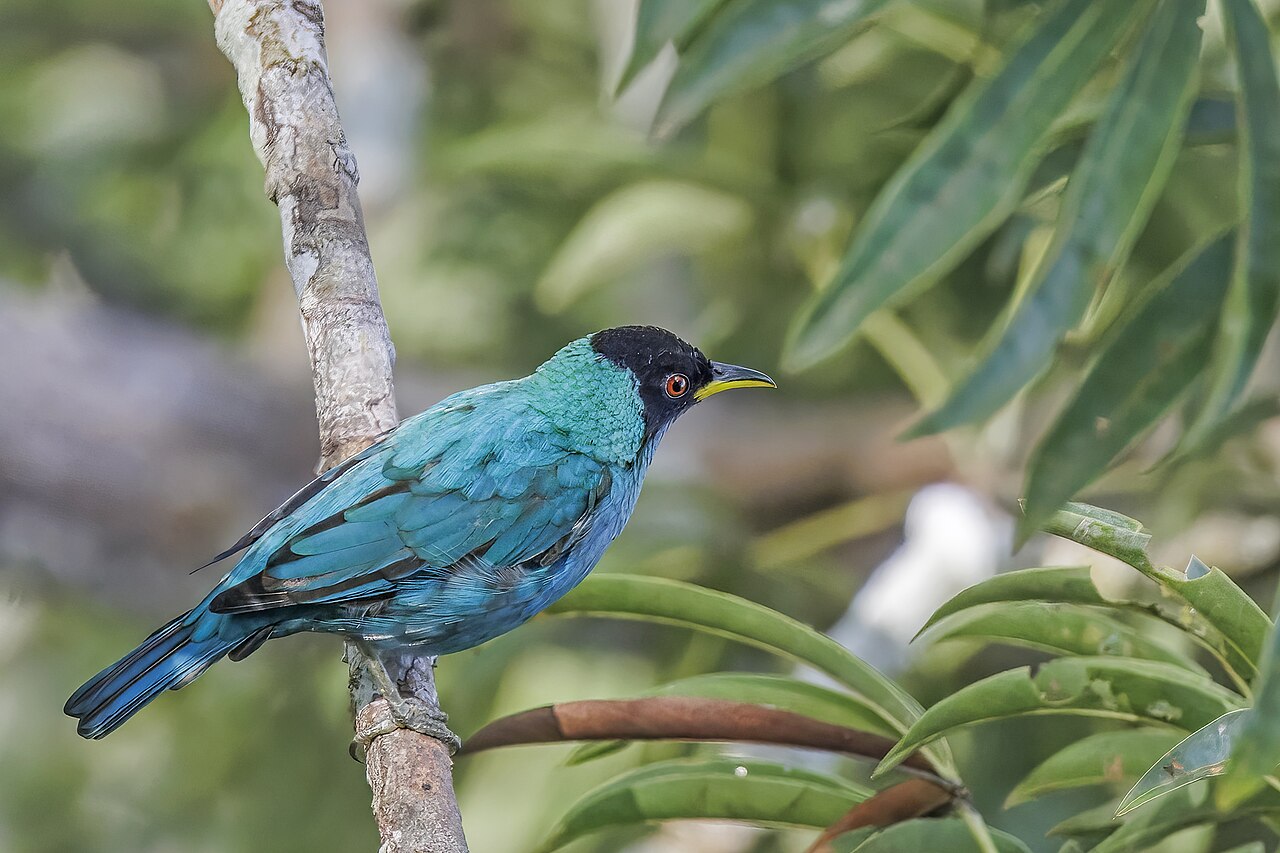
The University of the West Indies species account describes a bird about 13–14 centimeters long. Males have a dark head and blue-tinged green body; females lack that black hood.
This difference between the sexes is called sexual dimorphism. Learning both appearances makes birdwatching more rewarding: a quiet green bird deserves just as much attention as a brilliant turquoise one.
A honeycreeper with a varied menu
The common name might suggest a bird living entirely on sweet liquids. Its food is much more varied. Fruit, nectar, and insects all feature in the diet.
A feeding bird may hop between twigs, check a fruiting tree, or pursue insects. Different foods connect it with different parts of the canopy's life.
The Migration Research Foundation's identification guide is another useful reminder that age matters too. Young males can show a mixture of green and developing adult colors, so an in-between appearance need not mean a different species.
A moving gathering in the treetops
Green honeycreepers occur across a broad part of tropical America, from southern Mexico south into South America, including Trinidad. They use forest canopy and edges and may visit tree-filled gardens.
They can feed alone, in pairs, or with mixed-species flocks. One bird's movement can draw your attention to several others sharing the same tree.
Keep the whole scene in view
Appreciating a canopy bird means noticing its surroundings as well as its plumage. Trees provide food, cover, and places to nest. Keeping native vegetation is a practical way to value those connections.
The male's bright colors may be the first surprise. The second is realizing that a much greener bird nearby could be the female of the very same species.
Photo credits
Featured image: Green honeycreeper (Chlorophanes spiza spiza) male.jpg — Charles J. Sharp, CC BY-SA 4.0.

Body image 1: Green honeycreeper (Chlorophanes spiza caerulescens) male Rio Napo.jpg — Charles J. Sharp, CC BY-SA 4.0.

Body image 2: Green honeycreeper (Chlorophanes spiza guatemalensis) female Orange Walk.jpg — Charles J. Sharp, CC BY-SA 4.0.

Photographs resized to up to 1,280 pixels wide for web display.