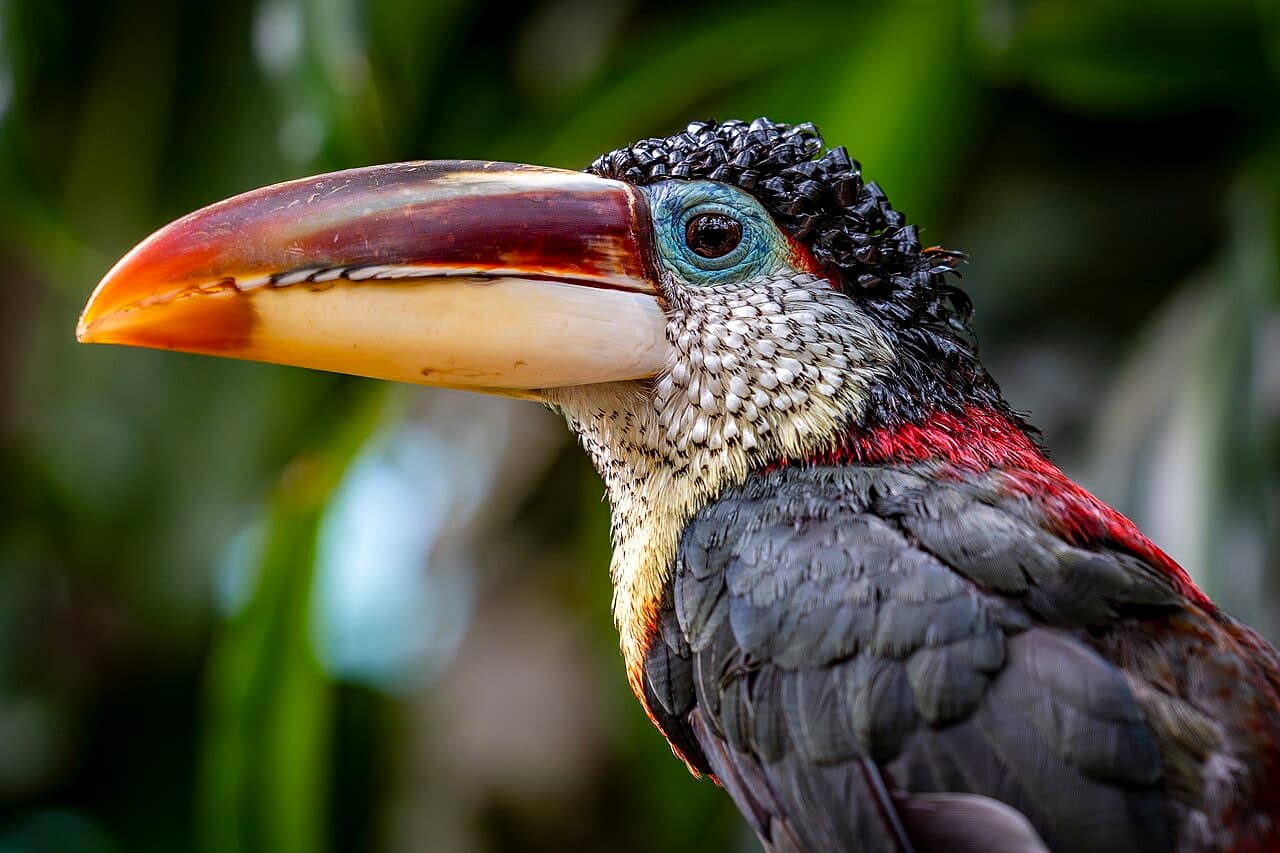
The curls on this bird's head can look like shiny strips of ribbon. Look closer: they are feathers. The curl-crested aracari carries one of the toucan family's most unusual crowns.
Its common name also appears as “curl-crested araçari.” It lives in tropical lowland forests of western Brazil, southeastern Peru, and northeastern Bolivia.
A crown made of real feathers
The glossy black head feathers form tight curls. Their smooth, unusual appearance can make them seem artificial, but they are part of the bird's natural plumage.
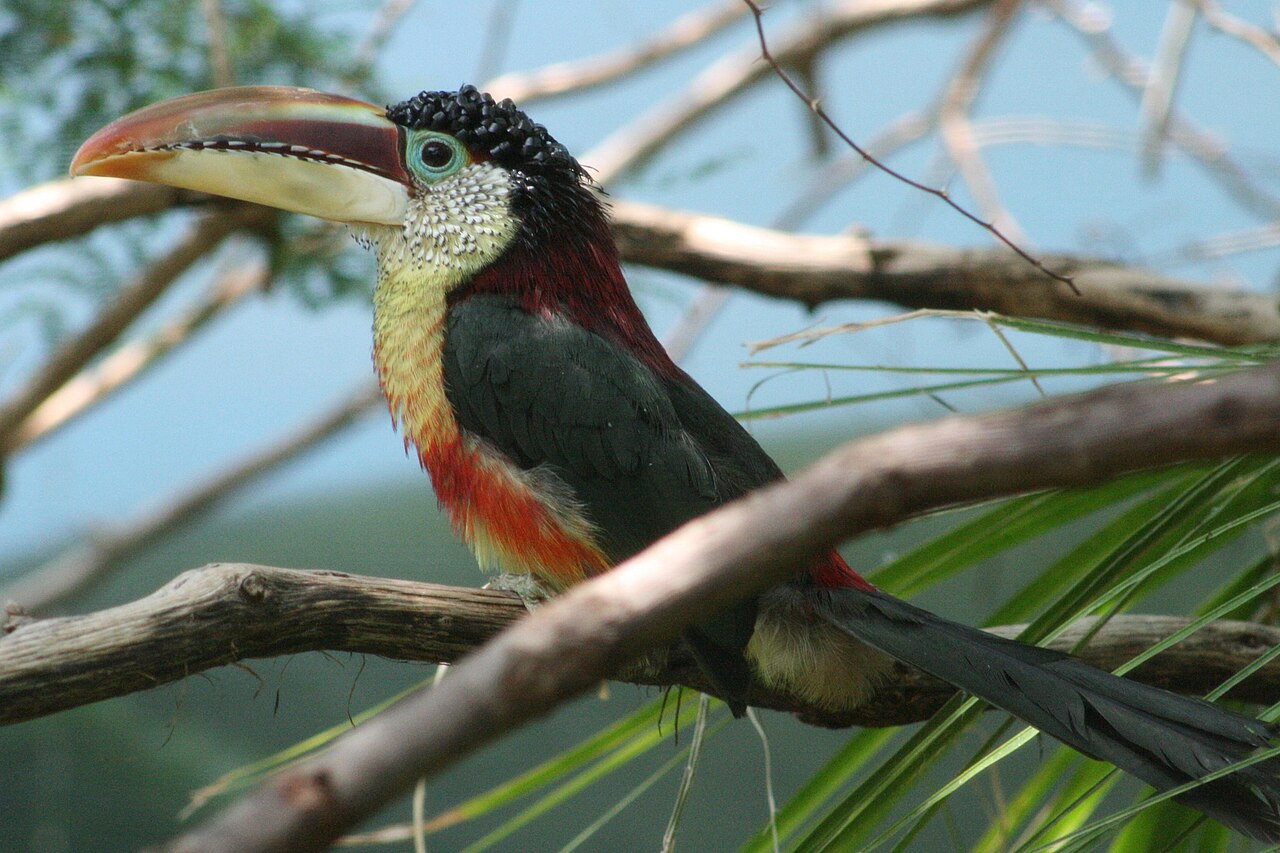
San Francisco Zoo describes these modified crown feathers alongside a long tail and a colorful bill. The bird also has two toes facing forward and two facing backward, a foot arrangement useful for gripping branches.
A photograph catches the hairstyle. Seeing the feet, tail, and bill together reveals an animal built for a life above the forest floor.
Meals among the branches
Fruit is the main food, but this is an omnivore: eggs and young birds may also be eaten. Its diet is more varied than the cheerful colors might suggest.
The Oregon Zoo account explains that the bill helps collect fruit and reach water held in tree crevices. A large bill can serve several everyday tasks.
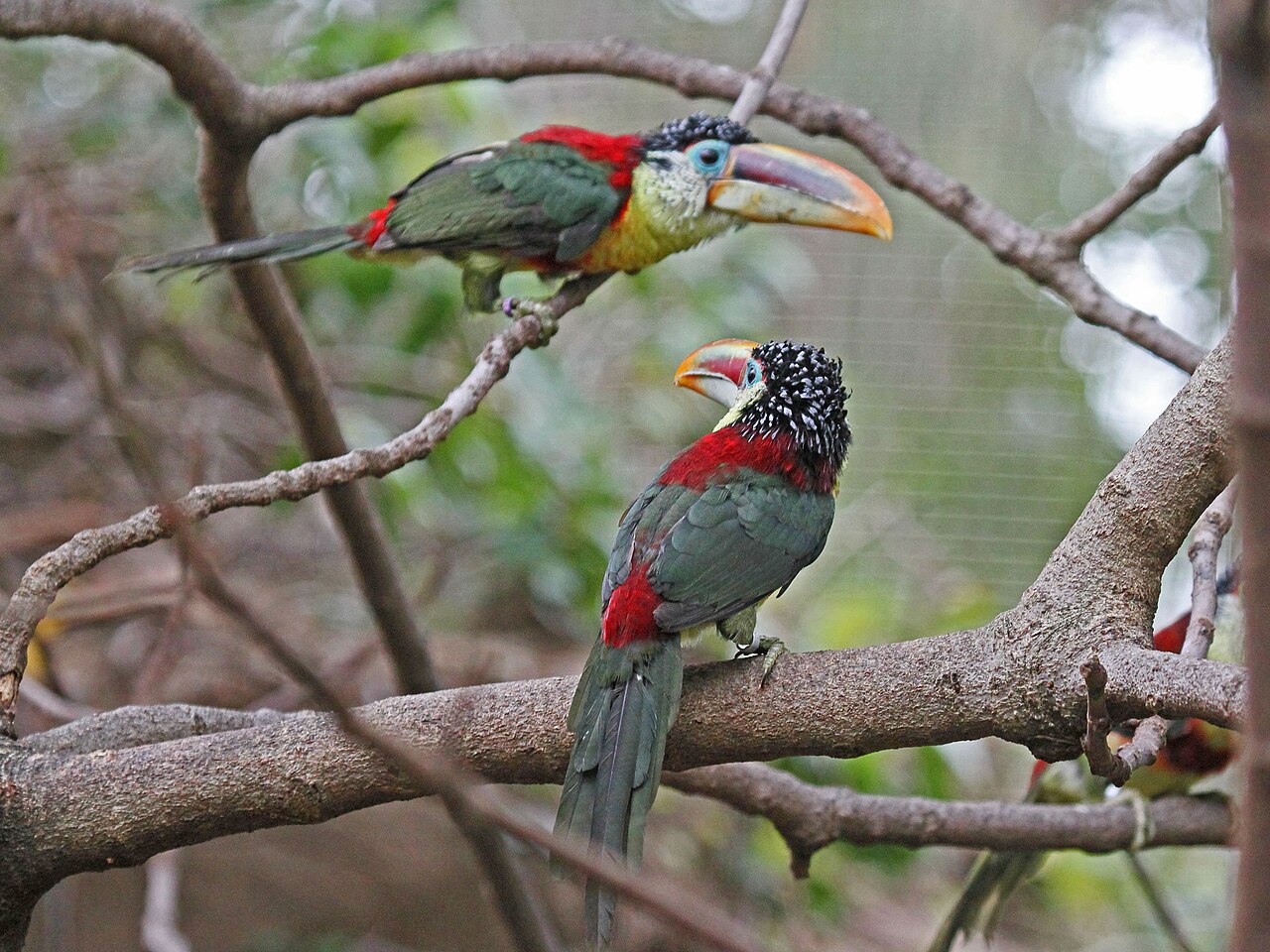
Aracaris often travel in pairs or small groups. A fruiting tree becomes a shared stopping place in a canopy full of changing food supplies.
A shared family job
Pairs nest in holes in trees. Both parents take part in caring for their young, including incubation and feeding. Newly hatched chicks need considerable care.
At night, these toucans can fold their tails up over their backs, creating a compact resting shape. The same bird that appears long and angular by day can become a much smaller bundle at rest.
Protecting more than a hairstyle
San Francisco Zoo lists the species as Least Concern. That category is a reason to keep its forest functioning, rather than wait until it becomes rare.
Fruiting trees, nest cavities, and connected canopy all belong in its story. Those little black curls introduce us to a bird whose ordinary daily life is just as fascinating as its extraordinary head.
Photo credits
Featured image: Curl-crested Aracari at Woodland Park Zoo.jpg — Tom Maher, CC0.

Body image 1: Curl-crested Aracari.jpg — Lonnie Huffman, CC BY 3.0.

Body image 2: Curl-crested Aracari RWD3.jpg — DickDaniels (http://theworldbirds.org/), CC BY-SA 3.0.

Photographs resized to up to 1,280 pixels wide for web display.