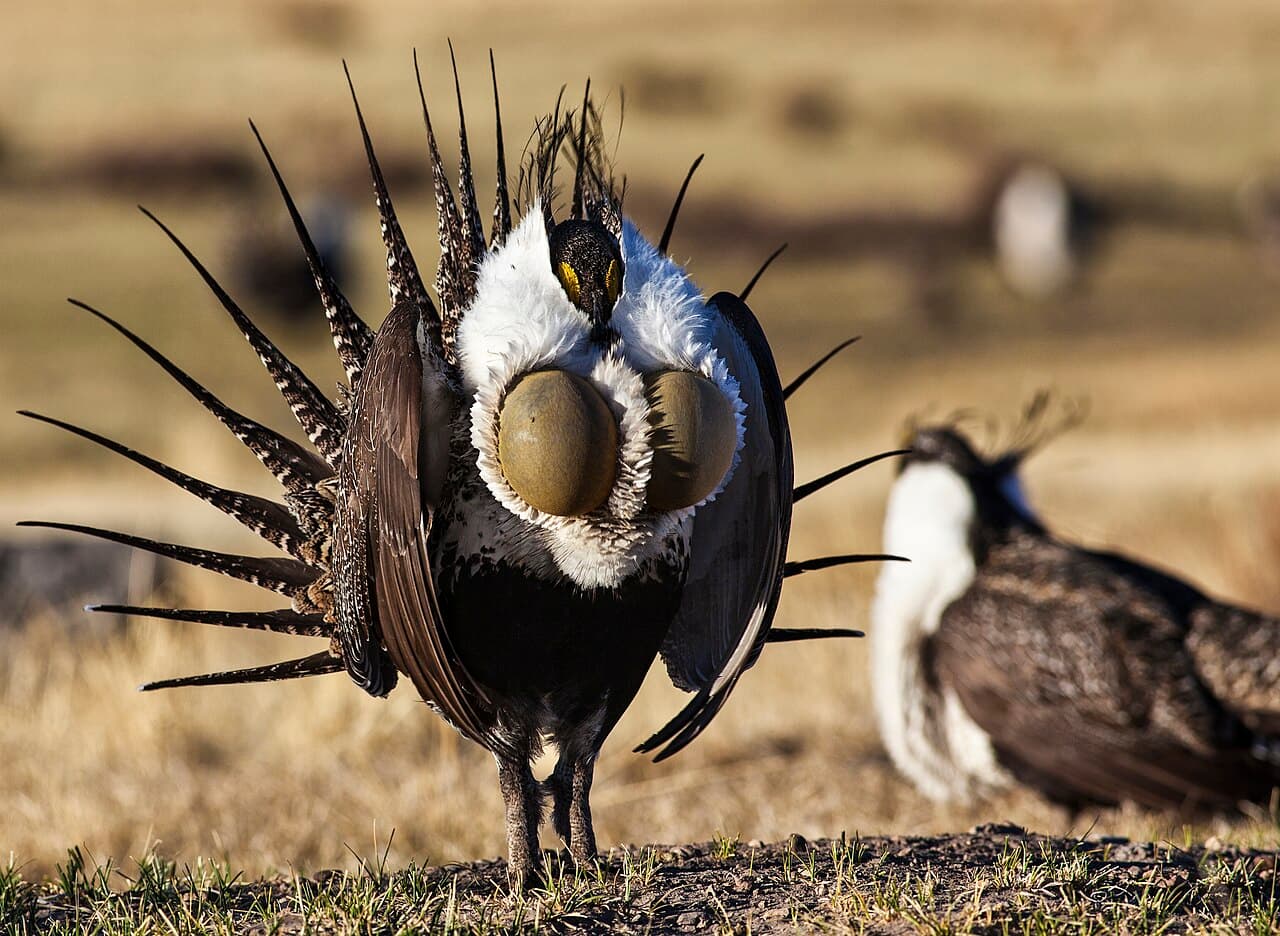
At dawn, a male greater sage-grouse can transform into a round display of white feathers, yellow sacs, and a pointed fan of tail feathers. Pops and swishes accompany the performance.
For much of the year, the same bird blends quietly into sagebrush country.
A gathering called a lek
Greater sage-grouse are Centrocercus urophasianus, birds of western North America's sagebrush landscapes.
Males assemble at display areas called leks, where females can assess potential mates.
The Cornell Lab of Ornithology describes the seasonal transformation and the sounds that accompany it.
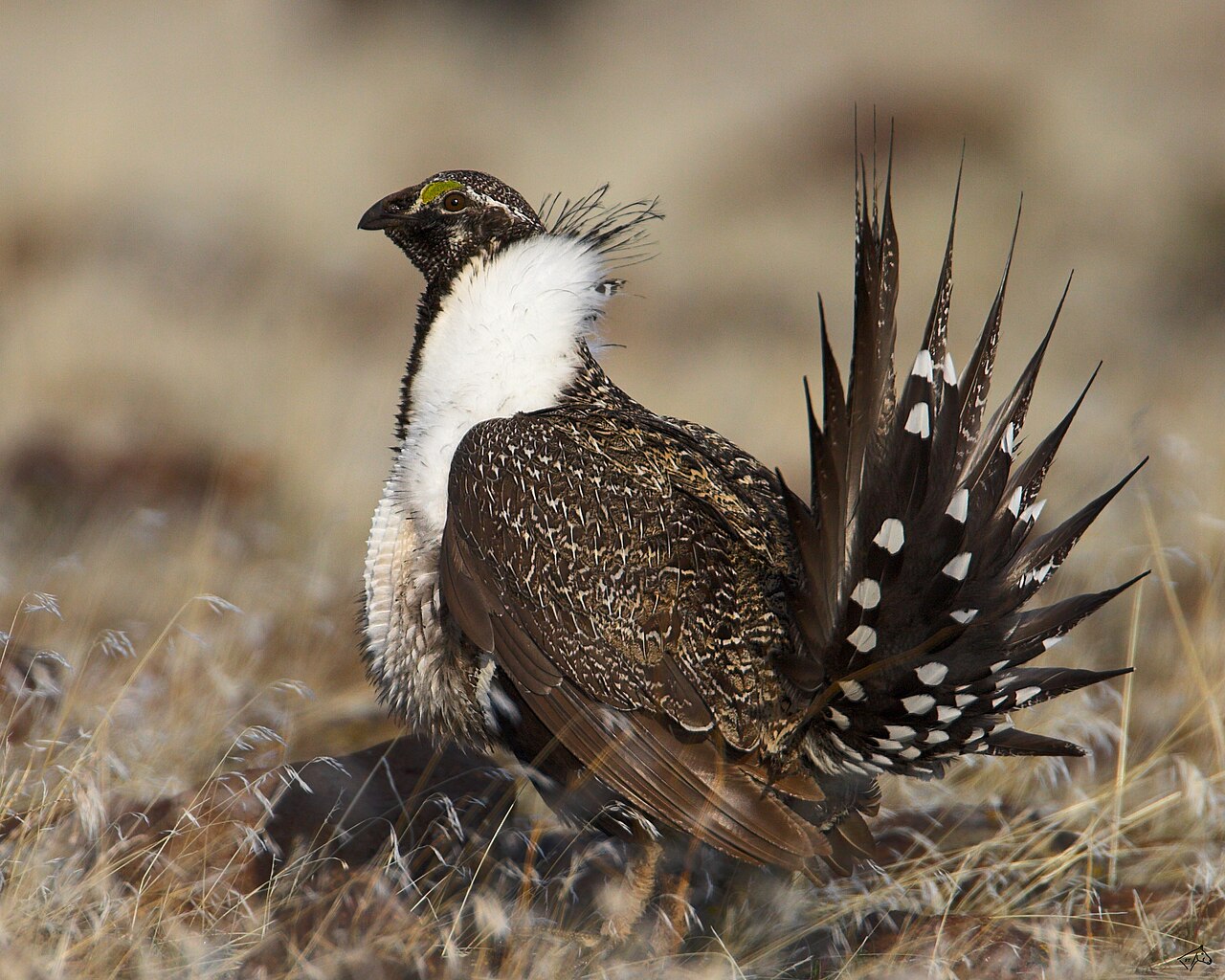
Air changes the outline
A male gulps air and uses an expandable esophageal structure during display. The paired yellow areas become prominent as the chest changes shape.
The visible sacs should not be confused with exposed lungs. The display involves specialized anatomy, feathers, posture, and precisely timed movements.
The U.S. Fish and Wildlife Service explains how males inflate, move, and release air during their courtship sequence.
The wings contribute sound
The performance is more than a balloonlike chest. Wing movements across stiffened feathers create swishing sounds, while other movements produce the familiar pops.
Cornell's account of the swish shows how close observation and slowed recordings help reveal the mechanics.
A still photograph captures only one instant of this coordinated sequence.
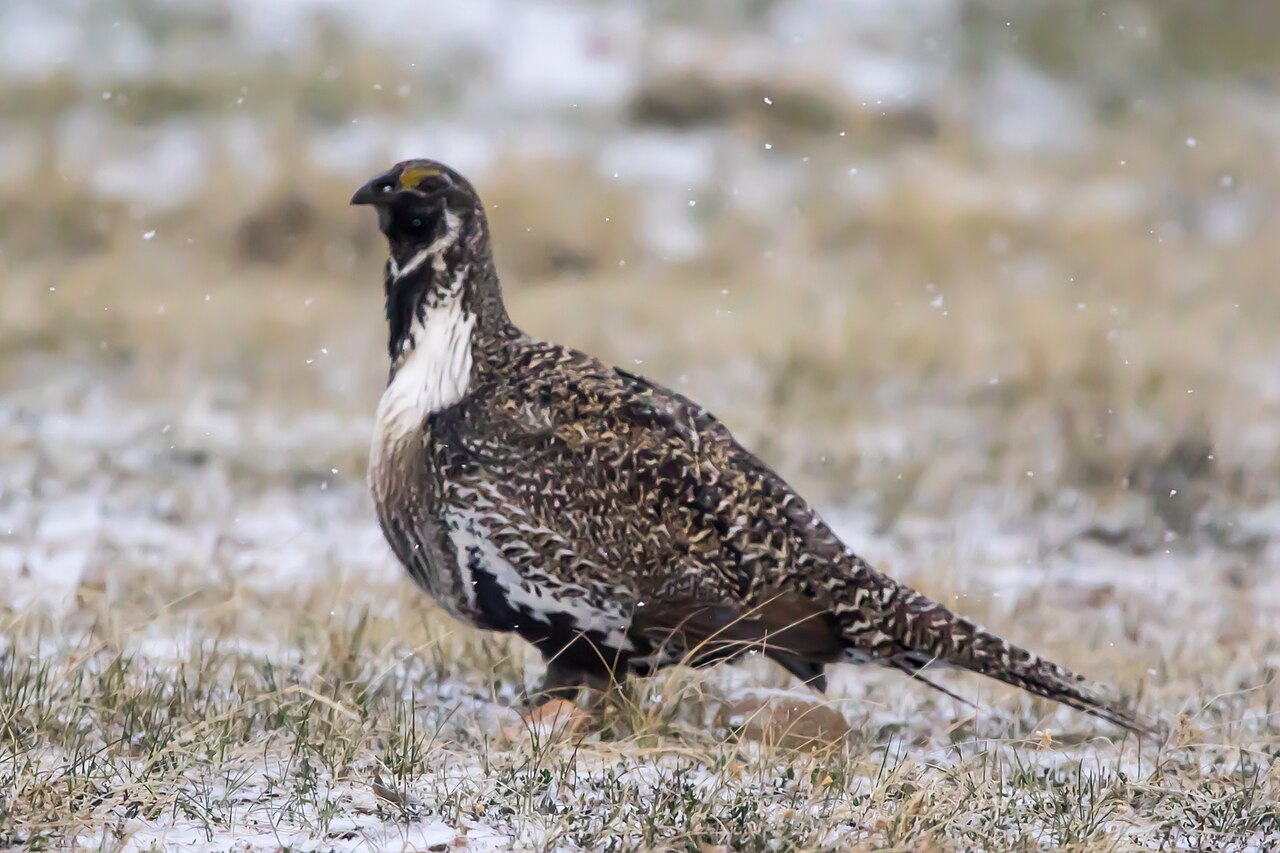
The stage is not enough
A lek is important, but the birds also need feeding areas, nesting habitat, and places that support chicks through changing seasons.
Habitat fragmentation can affect all those needs. Protecting a small display patch alone cannot replace a functioning sagebrush landscape.
The greater sage-grouse's dawn performance is extraordinary because so many parts work together. Its future depends on another kind of coordination: keeping the wider habitat connected beyond the stage.
Photo credits
Featured image: Bureau of Land Management; Source; Public domain. Resized for web display.

Body image 1: Pacific Southwest Region U.S. Fish and Wildlife Service from Sacramento, US; Source; Public domain. Resized for web display.

Body image 2: Ron Knight from Seaford, East Sussex, United Kingdom; Source; CC BY 2.0. Resized for web display.
