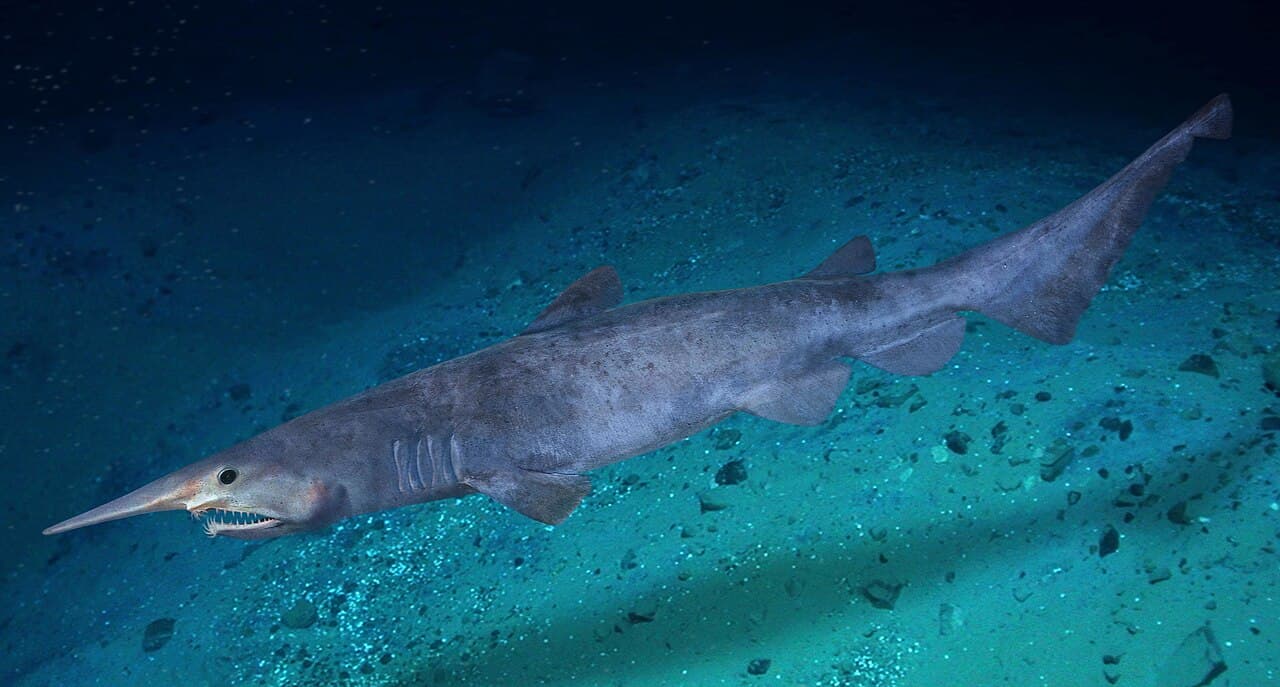
A goblin shark can move its mouth toward its meal. Its jaws shoot forward from the head, closing the gap between predator and prey in a striking feeding motion.
The result can look unreal in photographs. Yet the mechanism is a genuine part of the anatomy of Mitsukurina owstoni, a rarely encountered deep-water shark.
A mouth with extra reach
The Australian Museum describes the goblin shark’s unusually protrusible jaws. Rather than relying only on swimming closer, the shark can extend the mouth forward.
Its narrow, pointed teeth help it grasp prey. Examined stomach contents have included bony fishes, squids, and crustaceans.
The shark’s resting appearance and feeding appearance can therefore look very different. A single photograph may catch only one stage of the movement.
The long snout is a sensory tool
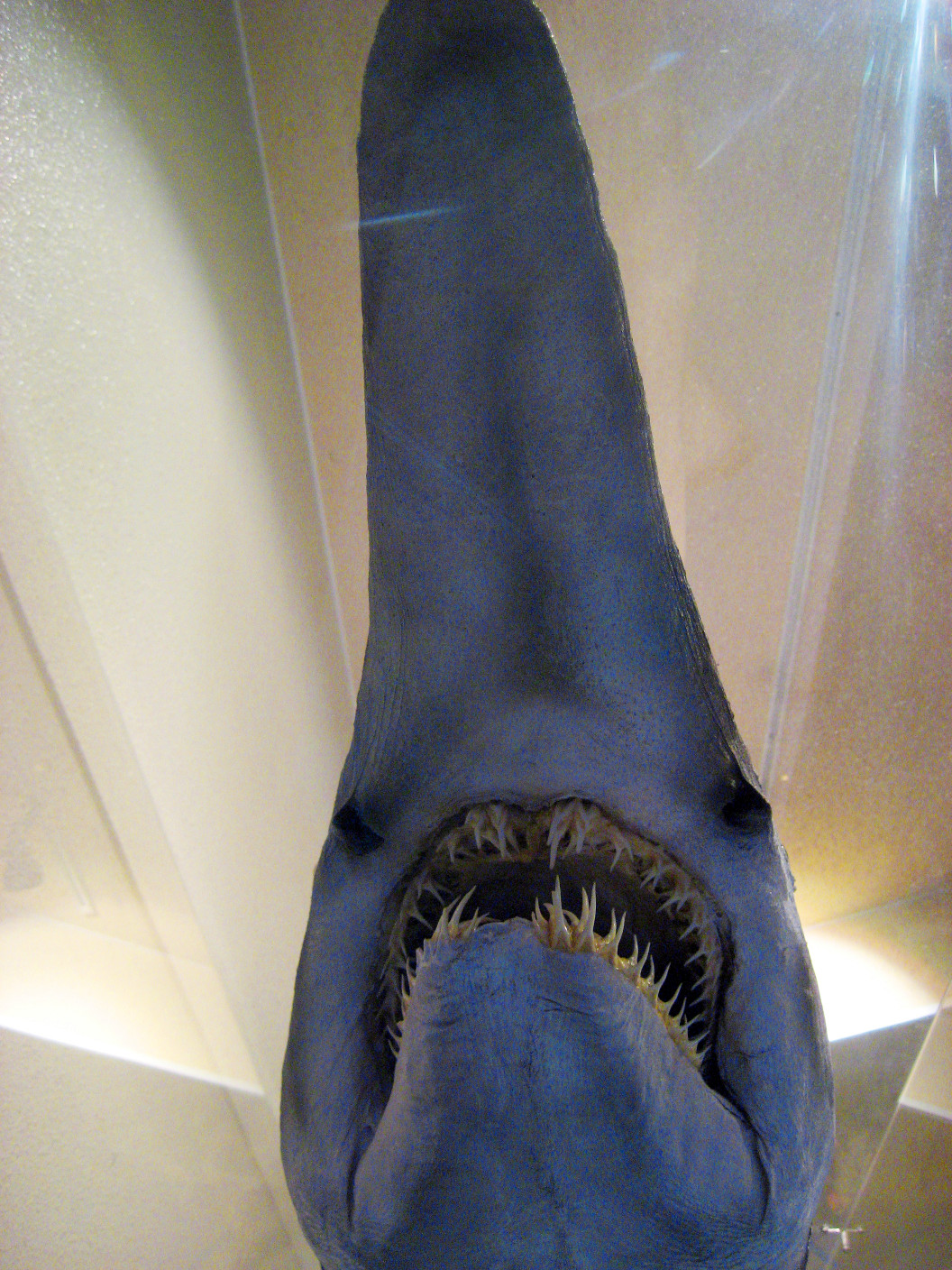
The flattened snout carries pores connected to the ampullae of Lorenzini, the electrical sensing system found in sharks.
Smithsonian Ocean explains that these organs help the goblin shark sense electric fields. In dark water, information does not have to arrive as a clear visual image.
The combination is remarkable: a snout equipped to detect signs of another animal, followed by a mouth capable of reaching outward.
Why specimen photographs need context
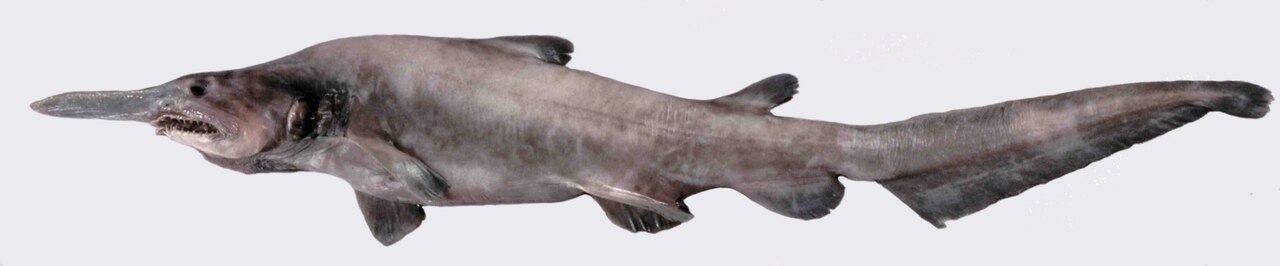
Goblin sharks are difficult to observe in their normal surroundings. Museum collections help researchers study their bodies, but preserved or collected animals are not the same as live animals swimming at depth.
The Australian Museum’s account of a collected juvenile explains how specimens enter scientific collections. The photographs here are labeled to distinguish underwater views from collected material.
More than a frightening face
An unusual mouth can make a shark seem like a monster. Its anatomy tells a more useful story about finding and catching food in an environment very different from our own.
The goblin shark reminds us how incomplete surface impressions can be. Understanding the purpose of an extraordinary feature makes the animal more fascinating—and gives us another reason to value careful deep-ocean research.
Photo credits
Featured image: Michigan State University/USFWS — Public domain.

Body image 1: Hungarian Snow — CC BY-SA 2.0.

Body image 2: Dianne Bray / Museum Victoria — CC BY 3.0 au.

Photographs are illustrative. Captive animals and collected specimens are identified in the captions; these images do not document a new sighting. Image adaptations retain their respective source licenses.