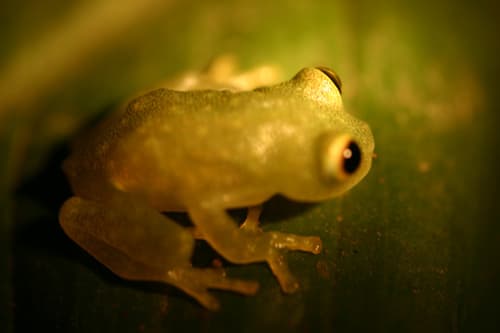
A small green frog can become harder to see by hiding much of its red blood. For Fleischmann’s glass frog, camouflage involves more than the color of its skin.
Glass frogs are named for their partly transparent undersides. Depending on the species, a view from below can reveal internal organs. Their unusual appearance raises an obvious question: how can an animal with red blood look so clear?
The color problem inside a transparent animal
Red blood cells absorb light. Even if skin allows light through, a network of visible blood vessels can reveal the animal underneath.
In a 2022 Science study, researchers examined Fleischmann’s glass frogs, Hyalinobatrachium fleischmanni. While the frogs rested, they packed most circulating red blood cells into the liver, increasing transparency elsewhere.
The cells returned to circulation when the frogs became active. This is a changing physiological process, rather than a frog simply being made from permanently transparent material.
A resting frog’s remarkable disguise
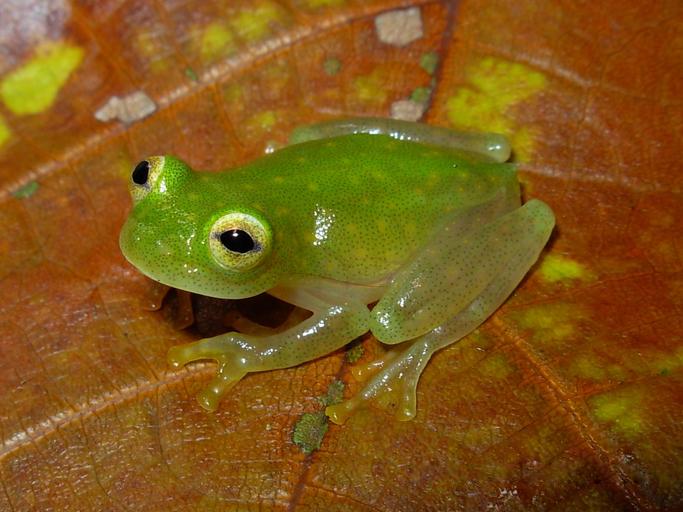
The American Museum of Natural History describes the discovery as a form of camouflage associated with the frogs’ daytime rest. These nocturnal animals spend daylight hours on leaves.
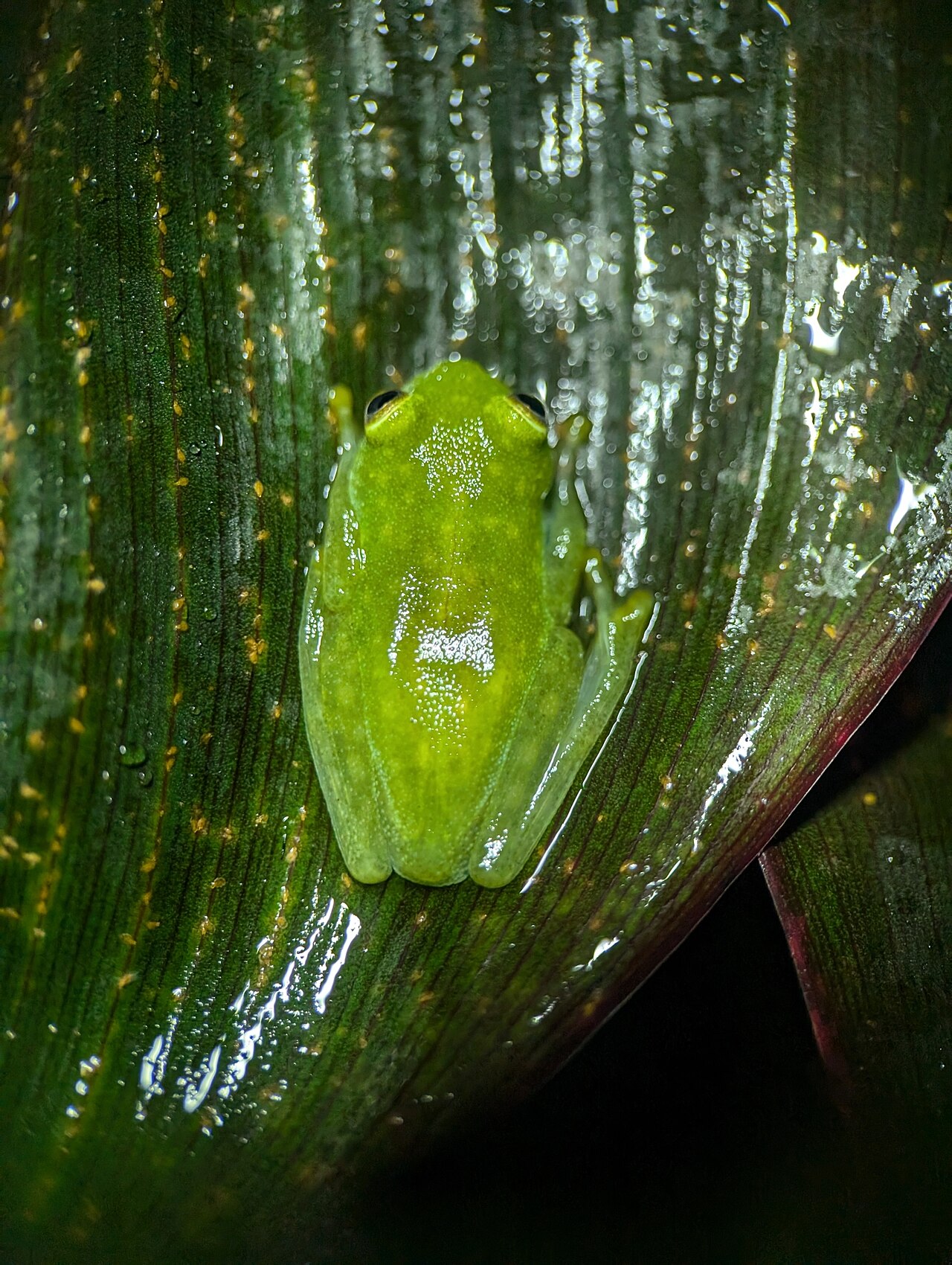
Their green upper surfaces and light-transmitting tissues help soften the contrast between a frog and its surroundings. Transparency does not make the animal literally invisible. It changes what an observer can distinguish.
Why scientists find the liver so interesting
Packing many red blood cells into one organ presents another puzzle: how do the frogs do it without the harmful clotting that might be expected?
The researchers identified the blood-storage behavior, but that does not settle every question about how it works. The National Institute of Biomedical Imaging and Bioengineering explains the imaging methods used to investigate this living system.
Small frogs, large questions
The finding concerns a studied species; it should not be treated as proof that every glass frog behaves identically.
That precision makes the story more interesting. A tiny amphibian has revealed a way of managing light, blood, and concealment that researchers are still exploring. Nature’s most remarkable solutions sometimes begin with an animal quietly resting on a leaf.
Photo credits
Featured image: oli23000 — CC BY 2.0.

Body image 1: Mauricio Rivera Correa — CC BY-SA 2.5.

Body image 2: Borja Fierro — CC BY 4.0.

Photographs are illustrative. Captive animals and collected specimens are identified in the captions; these images do not document a new sighting. Image adaptations retain their respective source licenses.