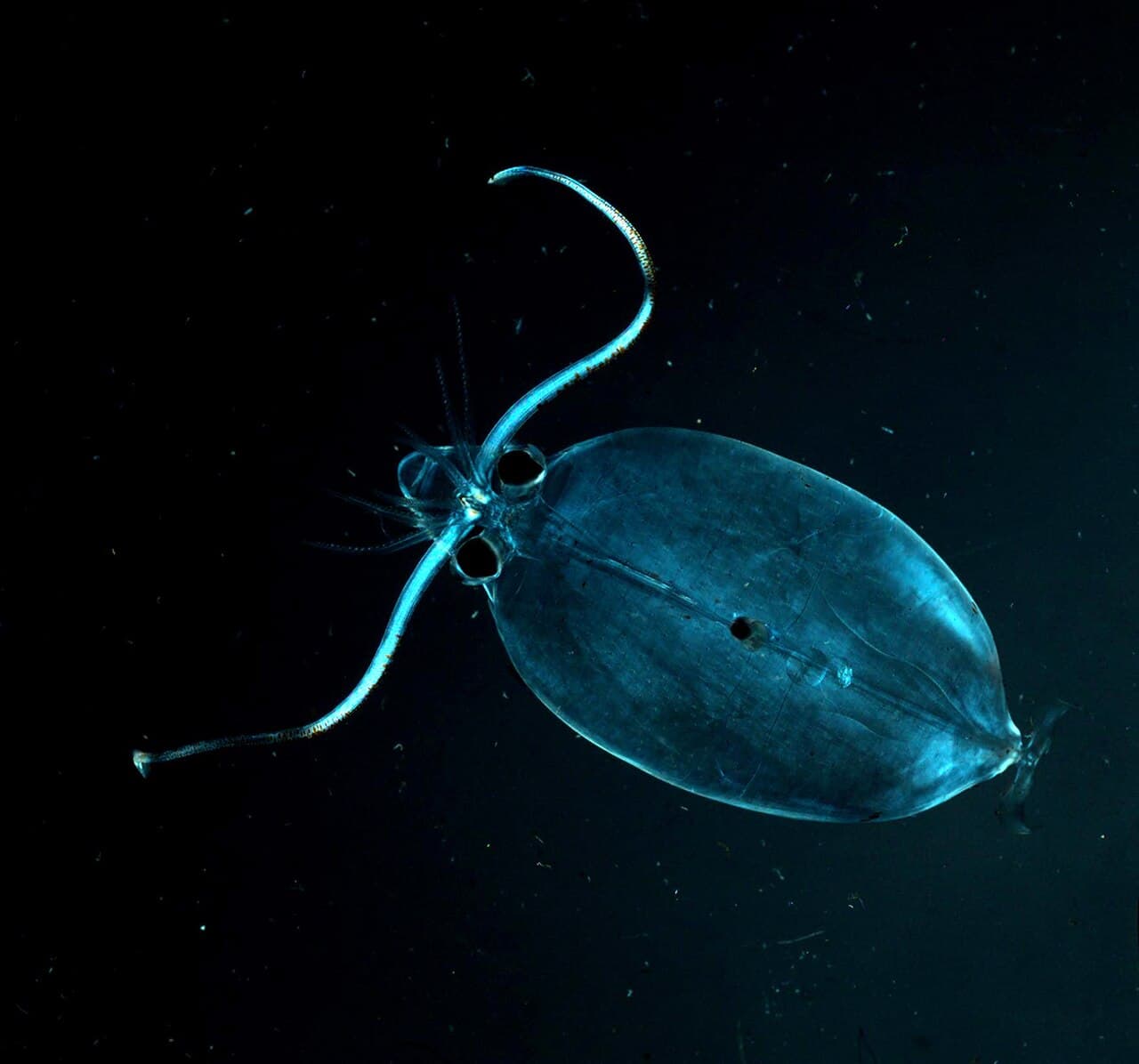
A glass squid can leave you looking through much of its body. In open water, where there is no rock to hide behind, transparency can make an animal harder to notice.
“Glass squid” describes the family Cranchiidae, rather than one species. Its members vary in shape, size, and appearance.
Hiding in plain water
The MBARI glass-squid guide describes animals found throughout the world's oceans, from near the surface into deep water.
Clear tissue reduces the outline that a predator might otherwise detect. Eyes and internal organs can still be visible, so transparent does not mean completely invisible.
Some members have light-producing organs. In suitable species, light near the eyes can help reduce their dark silhouette when seen from below.
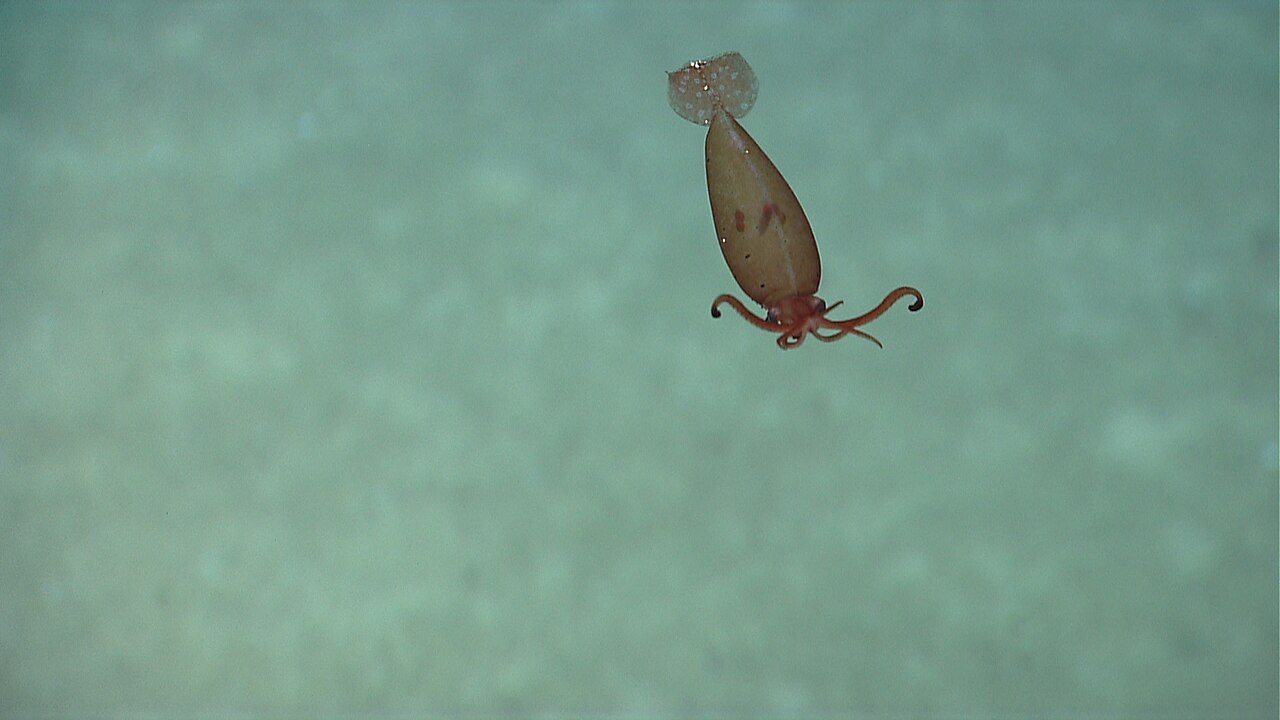
One family, many forms
The photographs here show different members of the family, each with its own proportions and appearance.
A clear, rounded body and a more elongated squid can share a family relationship without looking identical. Growth also changes how an individual appears.
MBARI's account of a young glass squid filmed in Monterey Bay shows why deep-sea observations can leave species identification uncertain.

Cameras bring the water column into view
Remote vehicles allow researchers to watch fragile animals in their surroundings. A collected specimen and an undisturbed swimmer can reveal different details.
Continued exploration matters because there is still much to learn about this family's lives and interactions.
The glass squid makes a familiar idea feel new: sometimes the best way to survive is to let the world show through you.
Photo credits
Featured image: Cranchiid.jpg — Edie Widder; Public domain.

Body image 1: Cranchiidae - Expn2374.jpg — NOAA Photo Library; CC BY 2.0.

Body image 2: Teuthowenia megalops.jpg — George Sedberry, NOAA-OE; Public domain.

Images supplied at web display size where available.