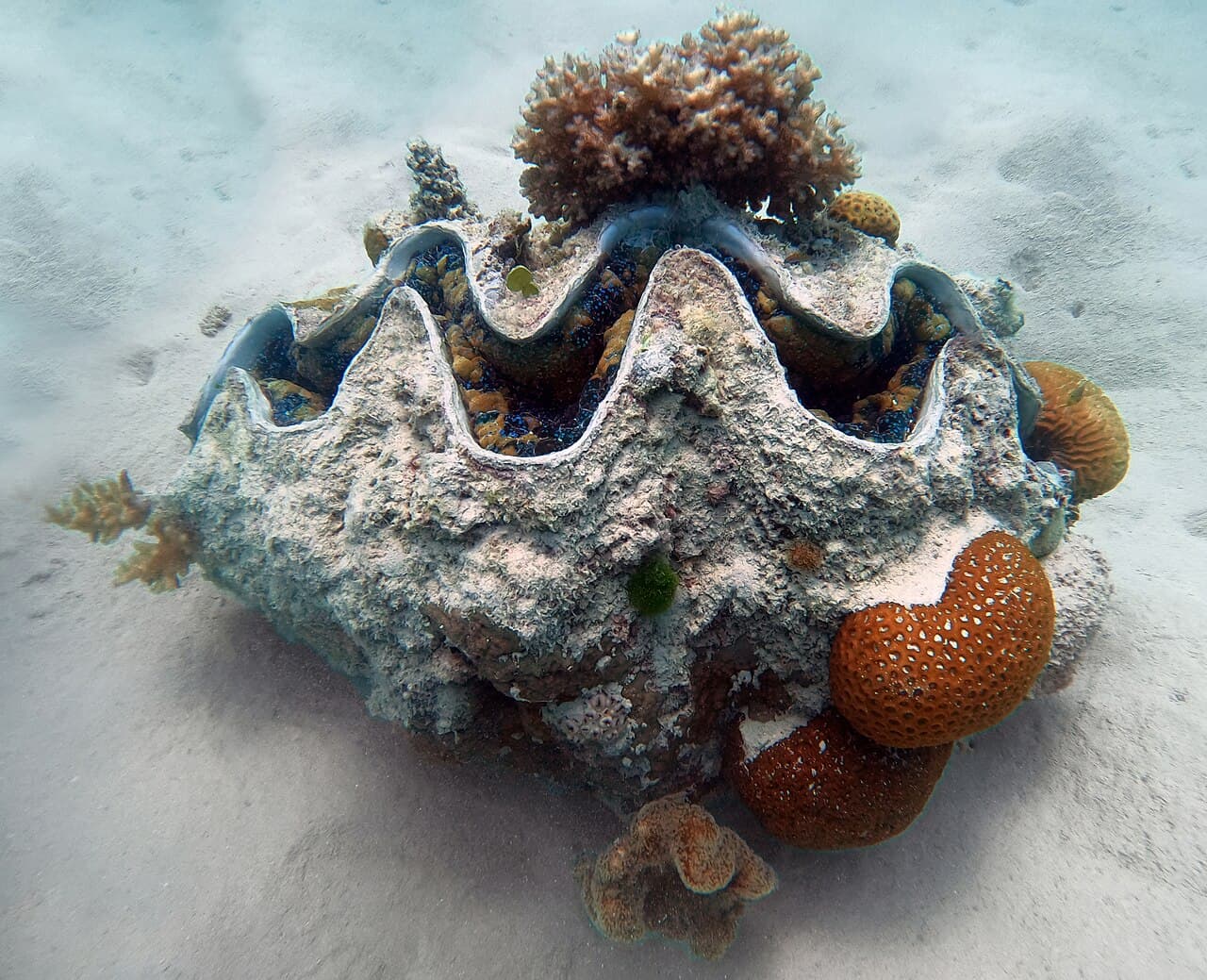
A giant clam can grow longer than a meter while receiving part of its food from microscopic algae living inside its tissues. The ocean's largest living bivalve is also a small, sunlit partnership.
The species is Tridacna gigas. Other impressive tropical clams belong to related species, so “giant clam” photographs need careful identification.
A colorful living edge
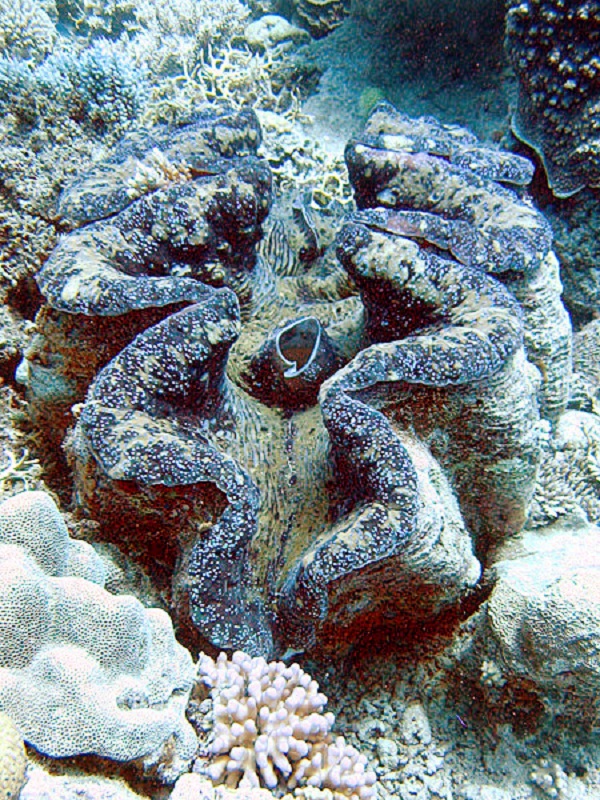
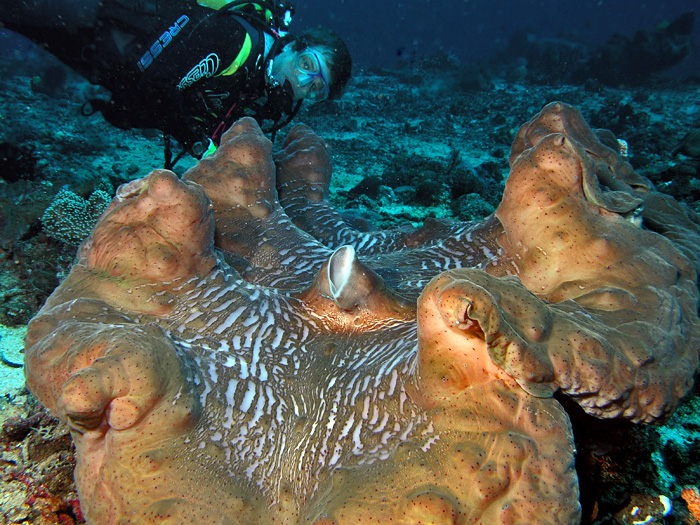
The patterned tissue visible between the shell halves is the mantle. Its colors and folds can be more eye-catching than the heavy shell itself.
According to the Monterey Bay Aquarium giant-clam account, algae within the tissues use sunlight to make food. The clam receives nutrients from that partnership.
It also filters food from seawater. Sunlight supports its life without turning the animal into a plant.
A large animal tied to a reef
Giant clams live in warm Indo-Pacific reef waters. A settled adult has a very different lifestyle from a fish moving between feeding sites.
Its size develops over time. Removing a large clam takes away an animal whose place in the reef cannot be replaced overnight.
Why protection matters
Overharvesting and pressure on reef habitats threaten giant clams. The aquarium lists Tridacna gigas as critically endangered.
National University of Singapore conservation research highlights the need for coordinated protection, enforcement, and recovery work in Southeast Asia.
Conservation requires more than admiring an empty shell. It means keeping living clams and their reef homes intact.
The next time a bright mantle catches your eye, imagine the tiny algae working inside it. One enormous mollusk can hold a whole partnership that begins with sunlight.
Photo credits
Featured image: Giant clam (Tridacna gigas) Michaelmas Cay.jpg — Charles J. Sharp; CC BY-SA 4.0.

Body image 1: Giant clam or Tridacna gigas.jpg — Janderk; Public domain.

Body image 2: Tridacna gigas.jpg — Nick Hobgood; CC BY-SA 3.0.

Images supplied at web display size where available.