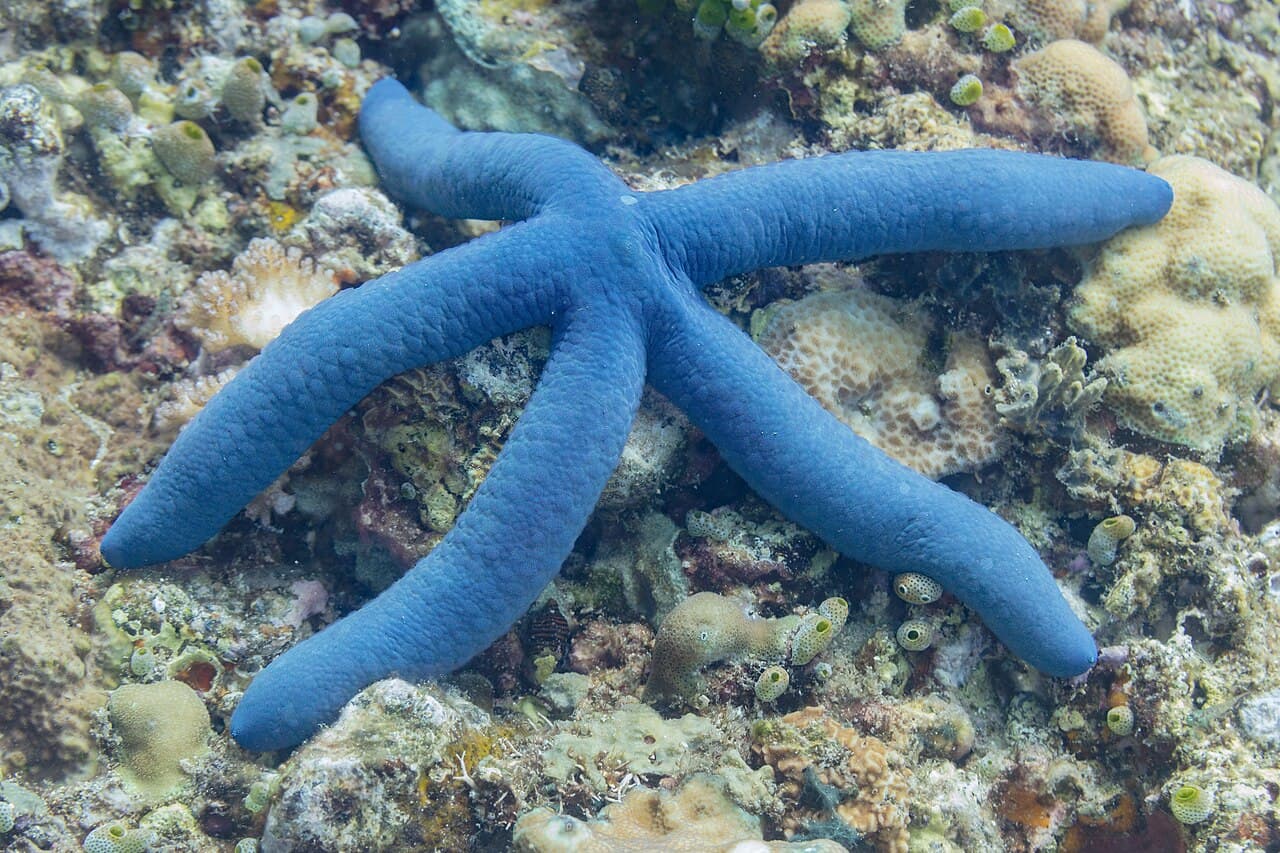
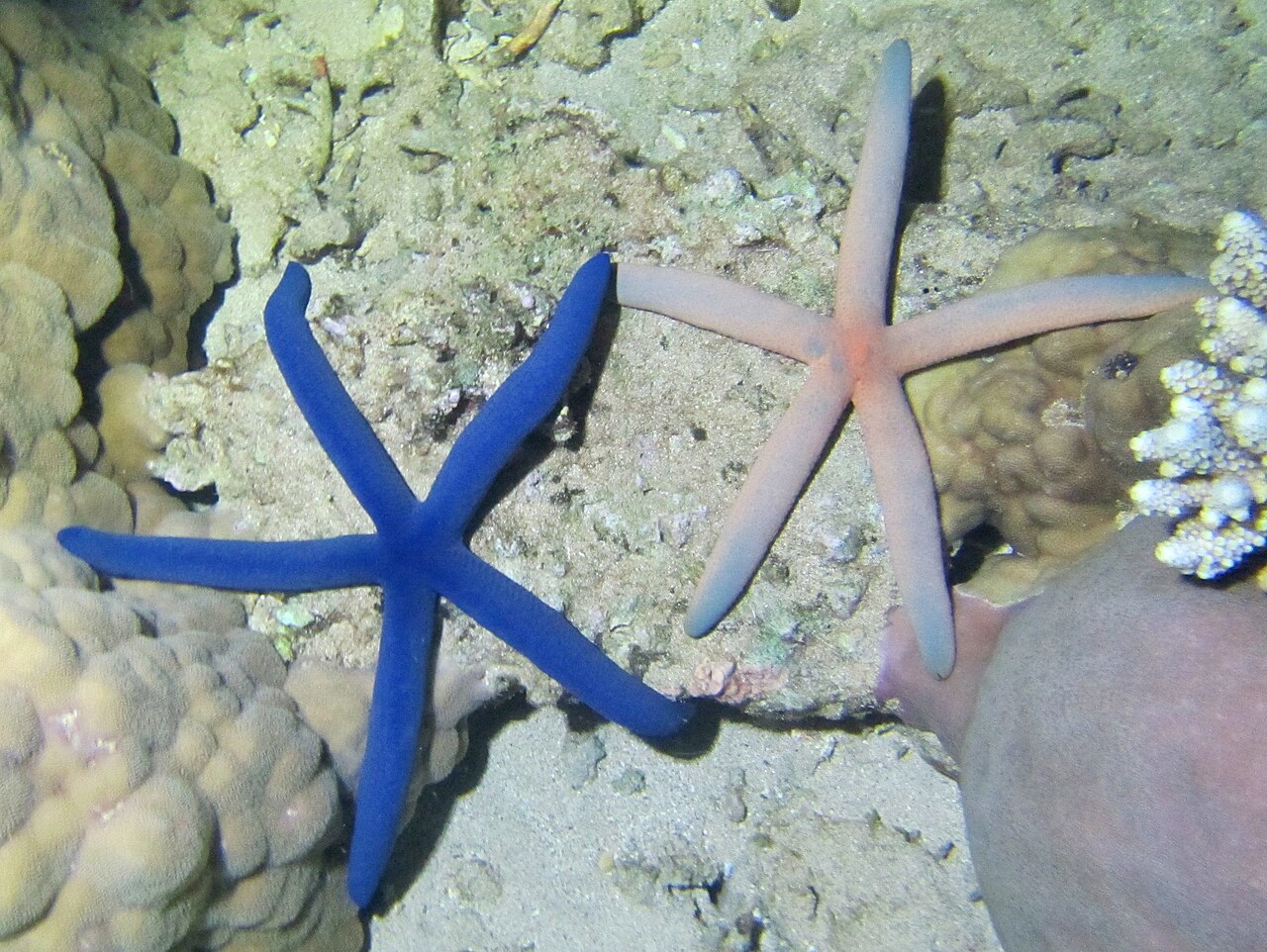
A blue sea star can look as though someone painted it before placing it on a reef. Its intense color is natural—and blue is not the only shade this species can wear.
Linckia laevigata lives in tropical waters of the Indian and Pacific Oceans. It is an animal adapted to a slow life on the seabed.
Where that blue comes from
The Animal Diversity Web species account describes a blue pigment called linckiacyanin. Different pigment combinations help explain the animal's range of colors.
Some individuals appear green, pink, or yellow. A common name is a useful introduction, but cannot describe every individual.
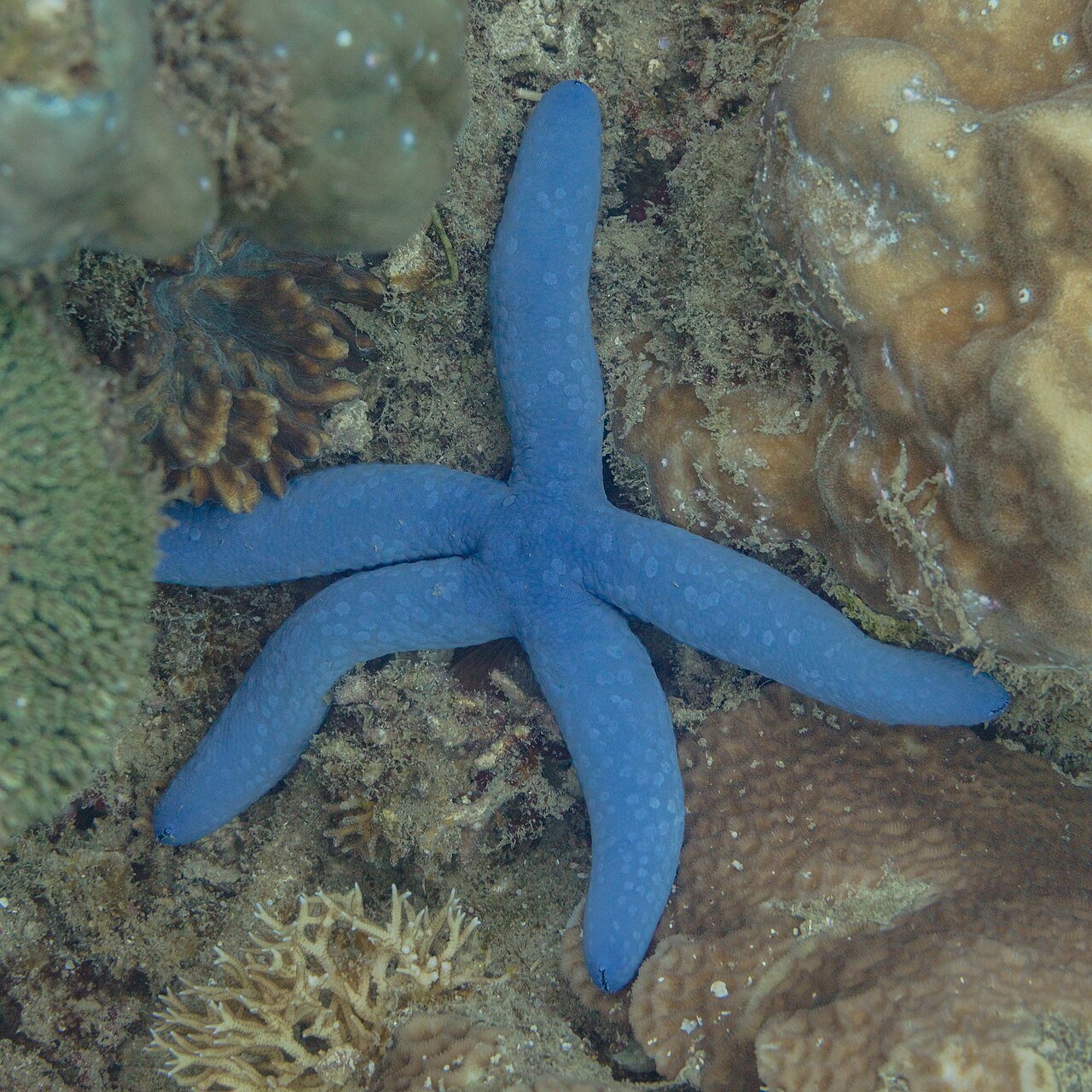
Five rounded arms create the familiar outline. Close inspection reveals a much more textured surface than the bold color first suggests.
Tiny feet beneath the arms
Small tube feet line the underside. They allow movement and contact with the surface below.
A photograph freezes the sea star in place, but it is not a decoration. It is moving through a habitat shared with corals, algae, and many other reef animals.
The species account describes a life that begins with larvae in the water before young animals settle. The adult's slow movements are only one stage of that story.
Leave the color where it belongs
Enjoying a reef animal does not require lifting it for a photograph. Watching it in place preserves the scene and avoids unnecessary disturbance.
Reef protection also keeps attention on the surroundings that support these animals.
A blue sea star rewards a slower look. What begins as a striking patch of color becomes a living connection between open water, tiny larvae, and the busy reef floor.
Photo credits
Featured image: Estrella de mar azul (Linckia laevigata), Anilao, Filipinas, 2023-08-25, DD 63.jpg — Diego Delso; CC BY-SA 4.0.

Body image 1: Estrella de mar azul (Linckia laevigata), Anilao, Filipinas, 2023-08-22, DD 183.jpg — Diego Delso; CC BY-SA 4.0.

Body image 2: Linckia laevigata x2.jpg — Frédéric Ducarme; CC BY-SA 4.0.

Images supplied at web display size where available.