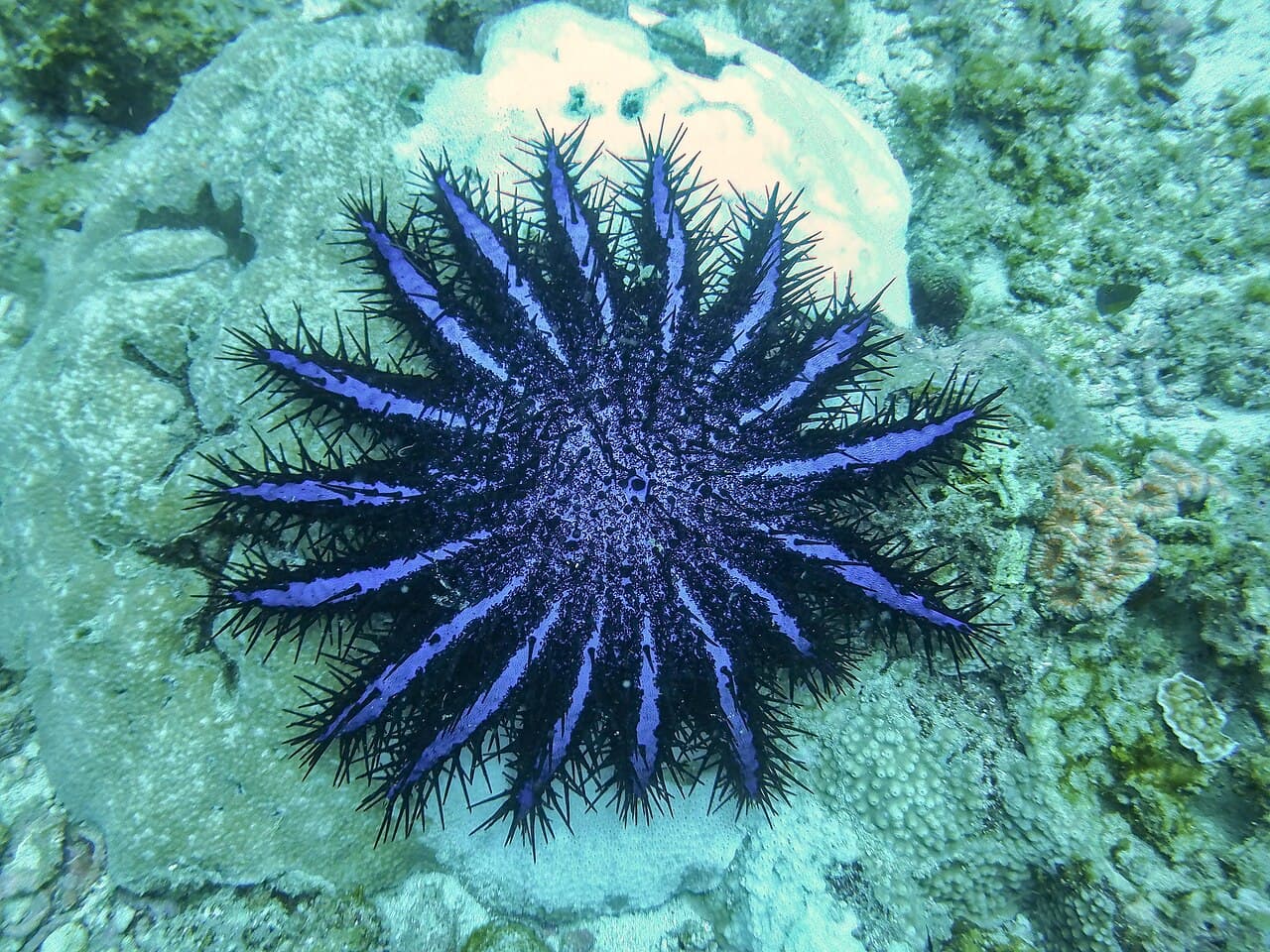
A crown-of-thorns starfish can feed by spreading its stomach over living coral. Its many spiny arms frame one of the reef's most unusual ways to eat.
The common name covers coral-eating members of Acanthaster. Species names have changed as scientists have learned more about the group.
A meal outside the body
The Australian Institute of Marine Science explains how these starfish consume coral tissue. The stomach extends through the mouth and digestion takes place against the prey.
The skeleton of the coral remains after its living covering is eaten. At high predator densities, this can affect large areas.
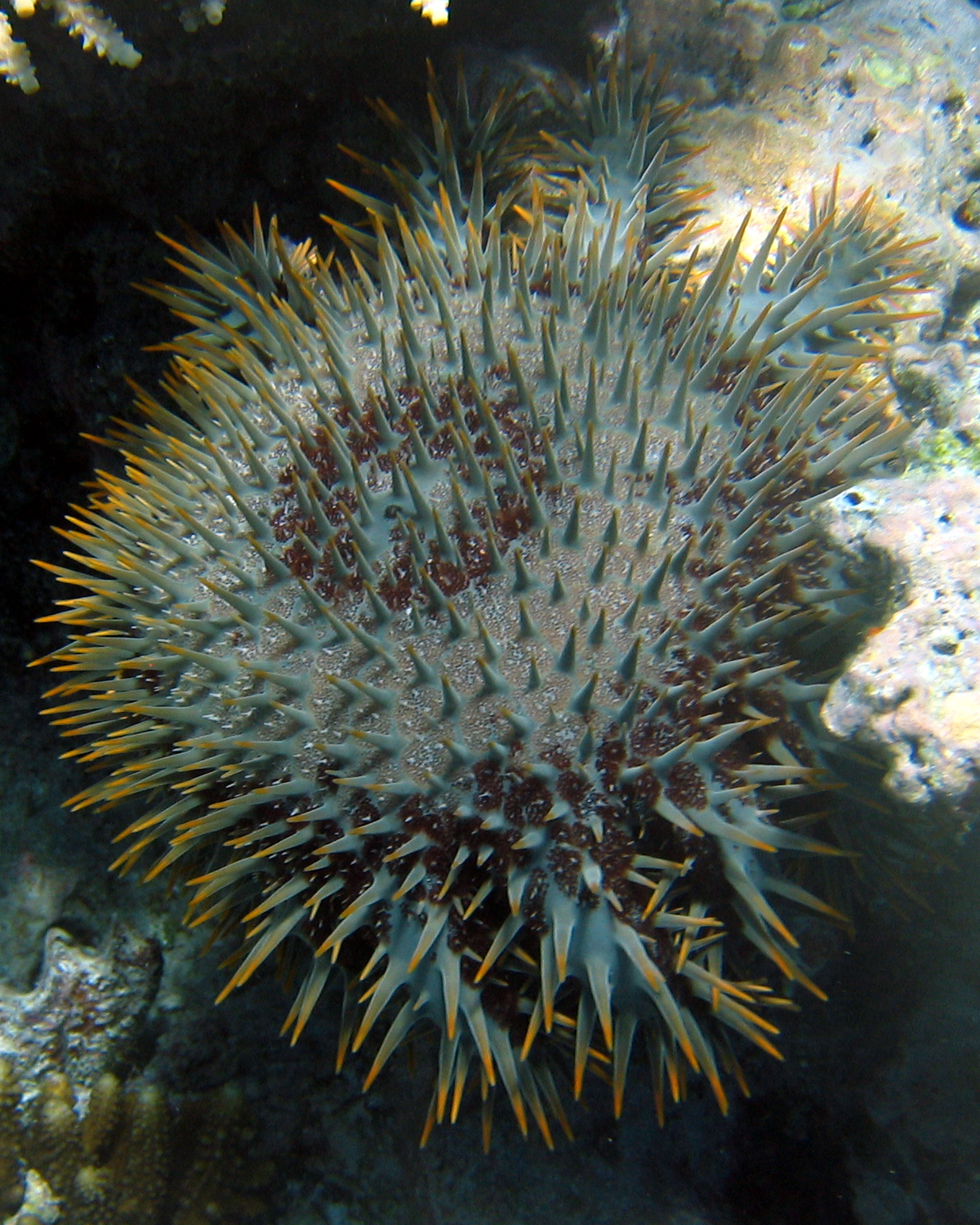
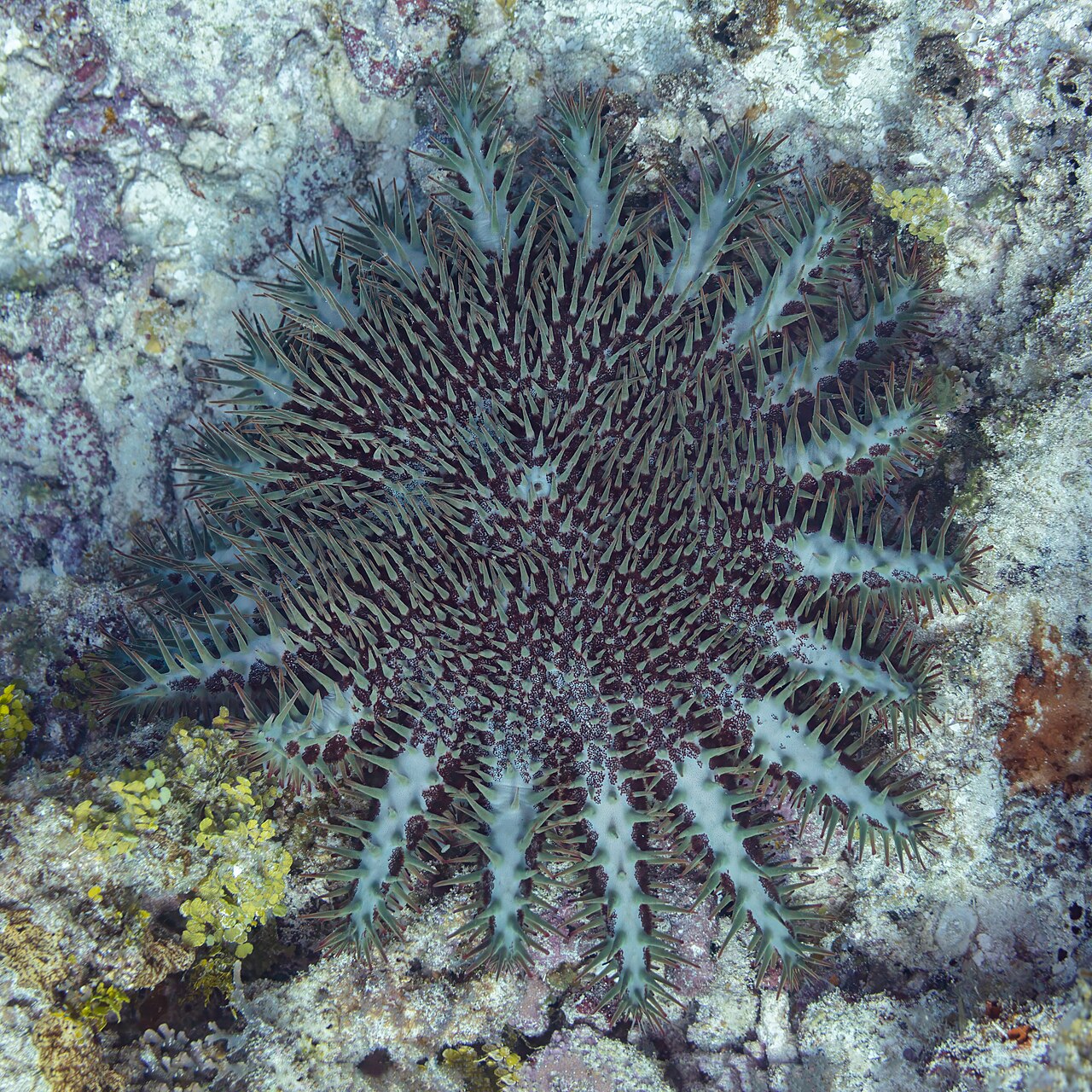
Sharp spines give the animal its memorable name. They also make hands-off observation sensible.
Native does not always mean harmless
Crown-of-thorns starfish are natural members of Indo-Pacific reef ecosystems. Calling every outbreak an invasion gives the wrong impression.
The problem develops when populations become unusually large. Heavy feeding then adds pressure to reefs already facing other challenges.
Different reefs and different species should not be treated as one identical case. The photographs here include animals from more than one part of the Indo-Pacific.
Management needs evidence
AIMS studies outbreaks and their links with reef conditions. Monitoring helps managers decide where intervention can make a difference.
The Great Barrier Reef Marine Park Authority's reef-protection work includes trained efforts to reduce impacts.
These are jobs for authorized teams, not a reason for visitors to handle wildlife.
The crown-of-thorns starfish reminds us that nature is full of relationships with changing effects. Understanding a coral predator means looking at the animal, its numbers, and the reef around it.
Photo credits
Featured image: Acanthaster planci - Sirinat.jpg — The Cosmonaut; CC BY-SA 2.5 ca.

Body image 1: CrownofThornsStarfish Fiji 2005-10-12.jpg — Matt Wright; CC BY 2.5.

Body image 2: Corona de espinas (Acanthaster mauritiensis), Zanzíbar, Tanzania, 2024-05-29, DD 50.jpg — Diego Delso; CC BY-SA 4.0.

Images supplied at web display size where available.