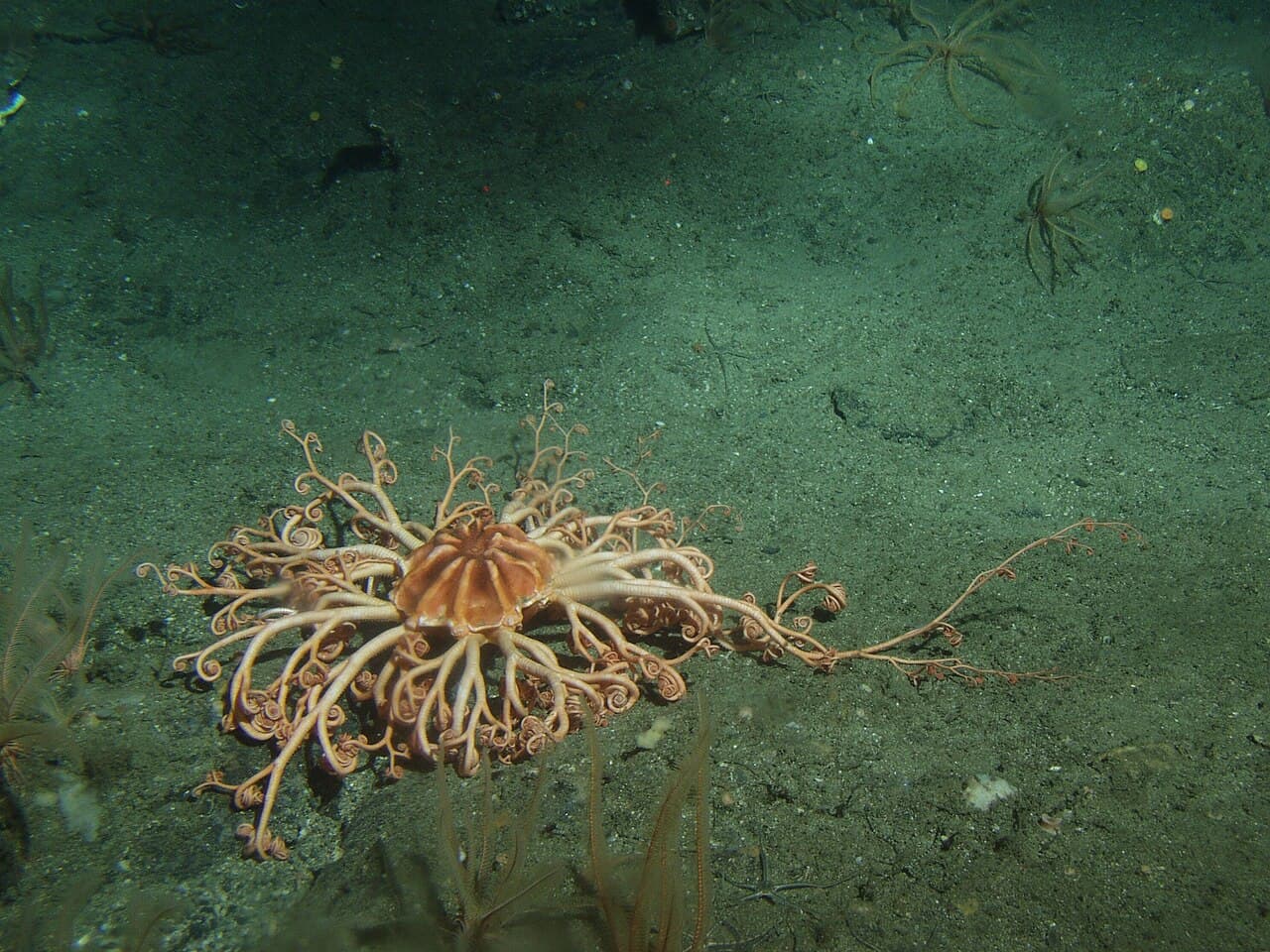
A basket star can open its arms into an intricate net, then curl sections inward to move a captured meal. What looks like a small underwater tree is an animal feeding.
Basket stars are relatives of brittle stars. Their many branches grow from a much simpler central body plan.
A living net in the current
The Monterey Bay Aquarium basket-star account describes Gorgonocephalus eucnemis, one member of the group.
Its arms divide again and again. Spread into moving water, the branches intercept small drifting prey.
Curling movements help bring food toward the mouth on the underside of the central disc. The animal does not need to chase every passing meal.
A family resemblance with many details
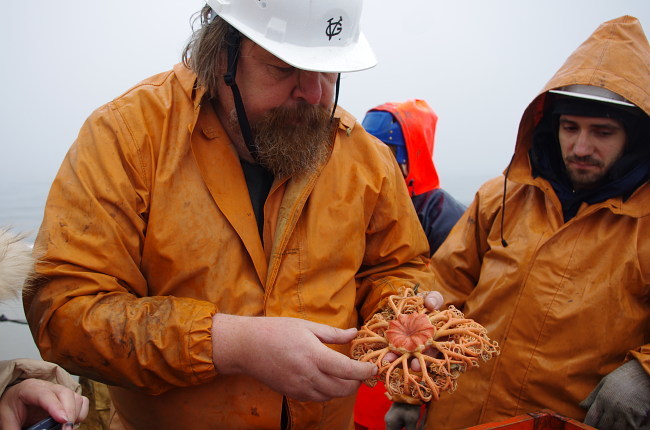
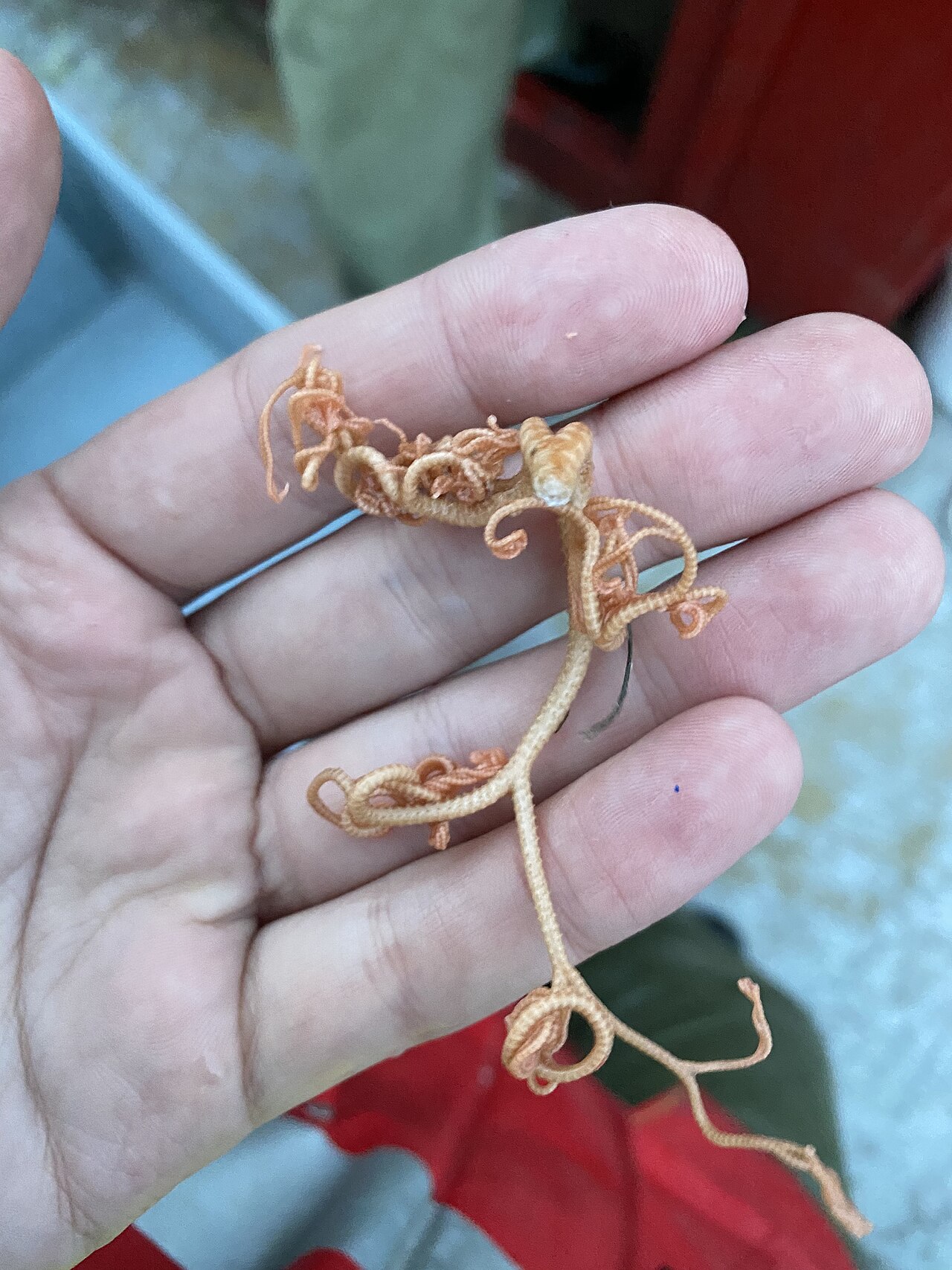
The photographs here include Gorgonocephalus from different species. Underwater views show the feeding shape; research photographs show how the branches fold.
During scientific observation, a lifted animal may curl its branches together. In the water, the open network reveals a different part of its life.
MBARI's basket-star guide shows these animals in their ocean setting.
More than a striking shape
A perch above the seabed can give a feeding animal access to moving water. Its position helps connect a small body with food carried from elsewhere.
Observing where an animal lives can therefore explain as much as studying its shape.
Look closely at the branches
At first glance, the basket star seems impossibly tangled. Watch the pattern instead: branching, opening, curling, and gathering.
Nature has turned a set of arms into something both delicate and useful. The beauty becomes more remarkable when you see what the branches do.
Photo credits
Featured image: Sanc1601 - Flickr - NOAA Photo Library.jpg — NOAA/CBNMS.; Public domain.

Body image 1: Gorgonocephalus arcticus 31352734.jpg — Георгий Виноградов (Georgy Vinogradov); CC BY 4.0.

Body image 2: Gorgonocephalus arcticus 97587301.jpg — Robert Blackmore; CC BY 4.0.

Images supplied at web display size where available.