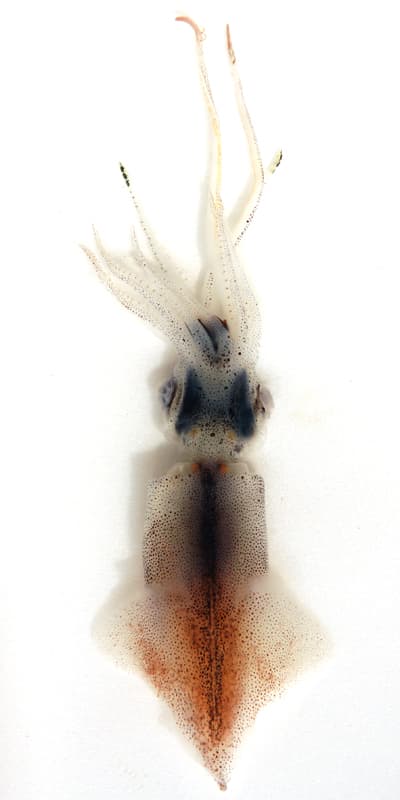
A firefly squid carries its own lights. Small organs called photophores produce blue light through a chemical reaction, turning a tiny animal into a living source of illumination.
The species, Watasenia scintillans, lives in the western Pacific. Its name describes bioluminescence, not sunlight reflecting from its skin.
Light built into a squid
Photophores occur on the body and arms. Their arrangement lets this small squid produce light in more than one place.
The University of Michigan's Animal Diversity Web account describes these organs and their possible roles, including communication and concealment. Scientists distinguish proposed functions from behavior directly observed.
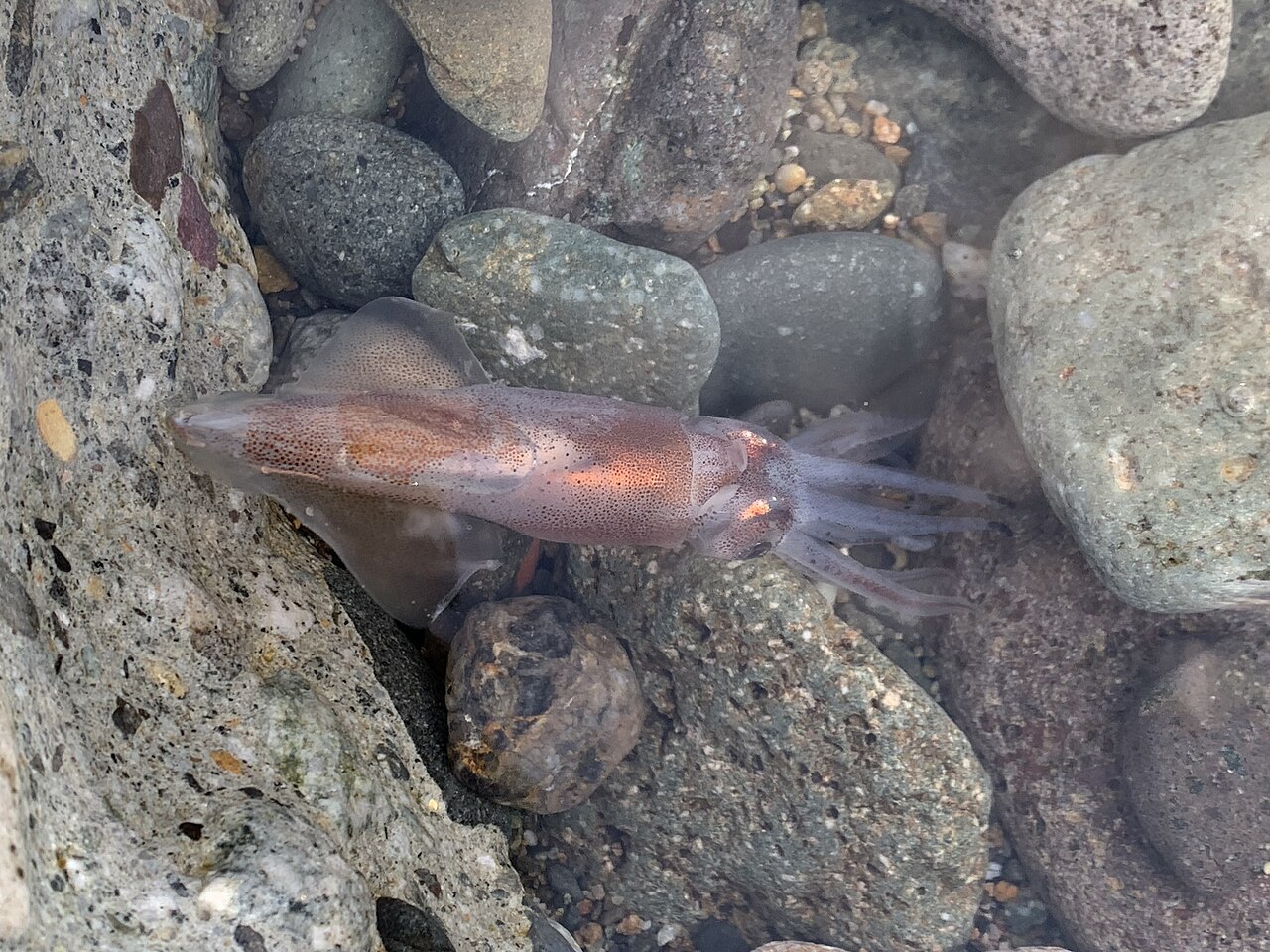
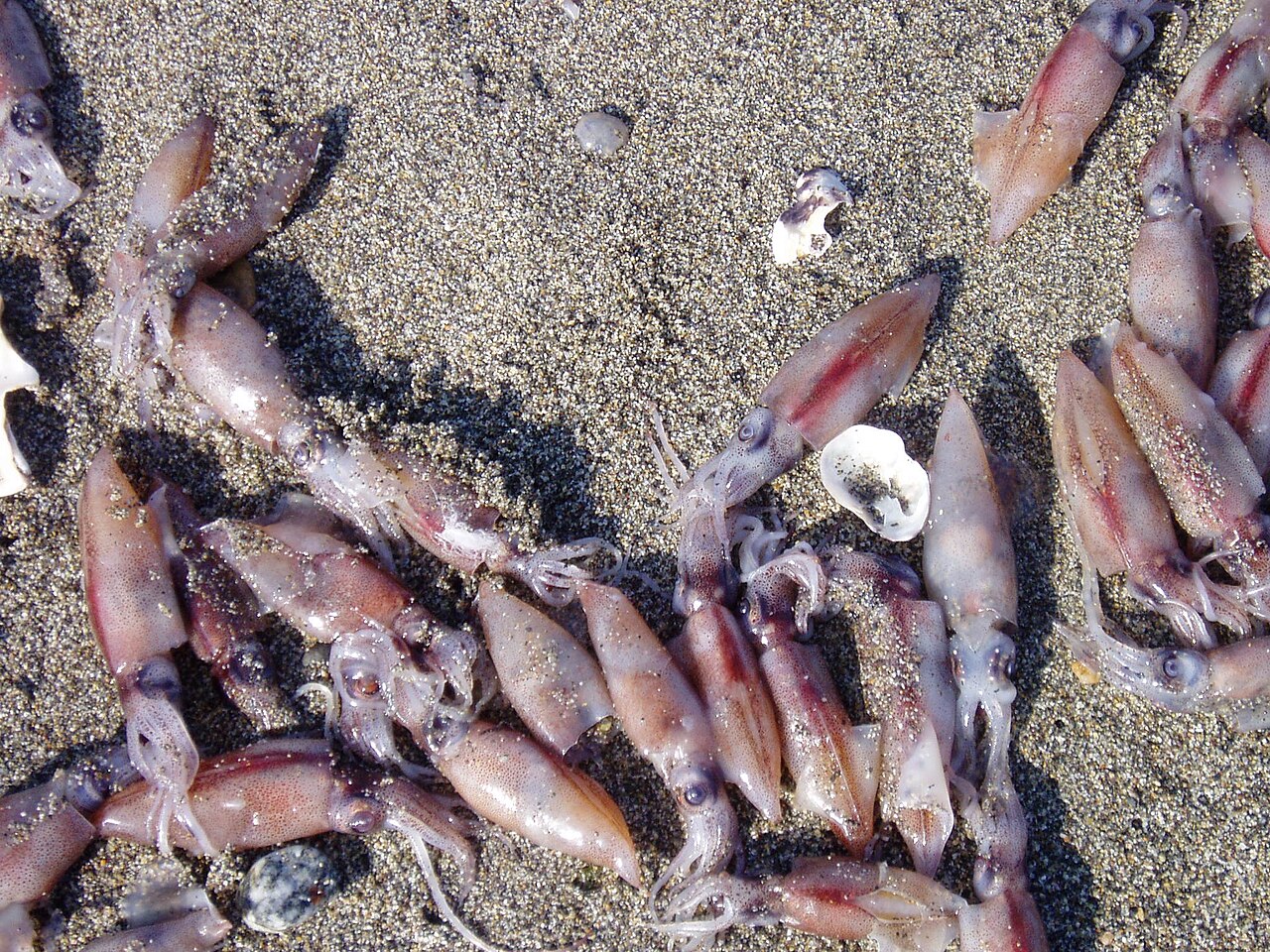
The photographs in this article document the animal's body and a coastal stranding. They do not show the blue glow in action.
A daily journey through darker water
Firefly squid spend daytime in deeper water and rise nearer the surface at night. That movement connects different layers of the ocean.
They feed on small marine animals, including crustaceans and fishes. A short life can still contain a busy cycle of hunting, movement, and reproduction.
Why Toyama Bay is famous
Japan's Toyama Bay is closely associated with spring firefly-squid gatherings. The region's official Hotaruika Museum information explains the local connection and seasonal displays.
The bay also has coastal strandings. Seen in daylight, a squid's small body looks very different from the blue points of light that made the species famous.
A little light worth understanding
Bioluminescence lets us glimpse an ocean that works beyond human daylight. The firefly squid is a reminder that darkness is a habitat full of signals, movement, and life.
Photo credits
Featured image: Watasenia scintillans.jpg — ja:user:Dieno; Public domain.

Body image 1: Watasenia scintillans 002.jpg — iNaturalist user: kamataryo; CC0.

Body image 2: Hotaruika001.jpg — ネプチューン; Public domain.

Images supplied at web display size where available.