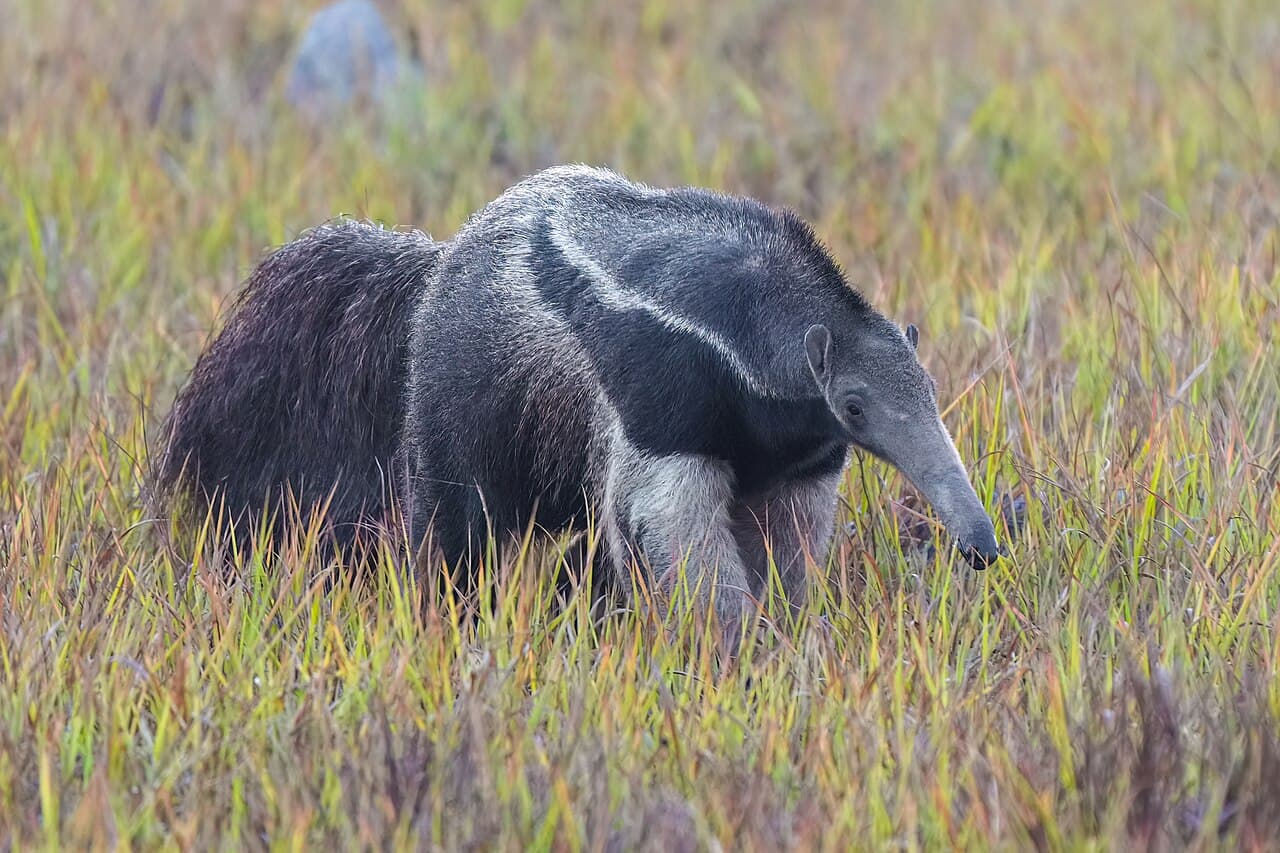
A giant anteater can feed on tiny insects without chewing them. Its narrow snout and long, sticky tongue turn a very large mammal into a specialist at collecting very small meals.
The tongue is remarkable, but it is only one part of the feeding equipment.
A mouth built around a different tool
The giant anteater is Myrmecophaga tridactyla. Its elongated muzzle ends in a small mouth, and adults lack teeth.
The Smithsonian's National Zoo describes the exceptionally long tongue and rapid feeding movements.
Sticky saliva helps insects adhere as the tongue enters a nest and withdraws. The animal relies on that system rather than biting off large pieces of food.
Strong claws open the way
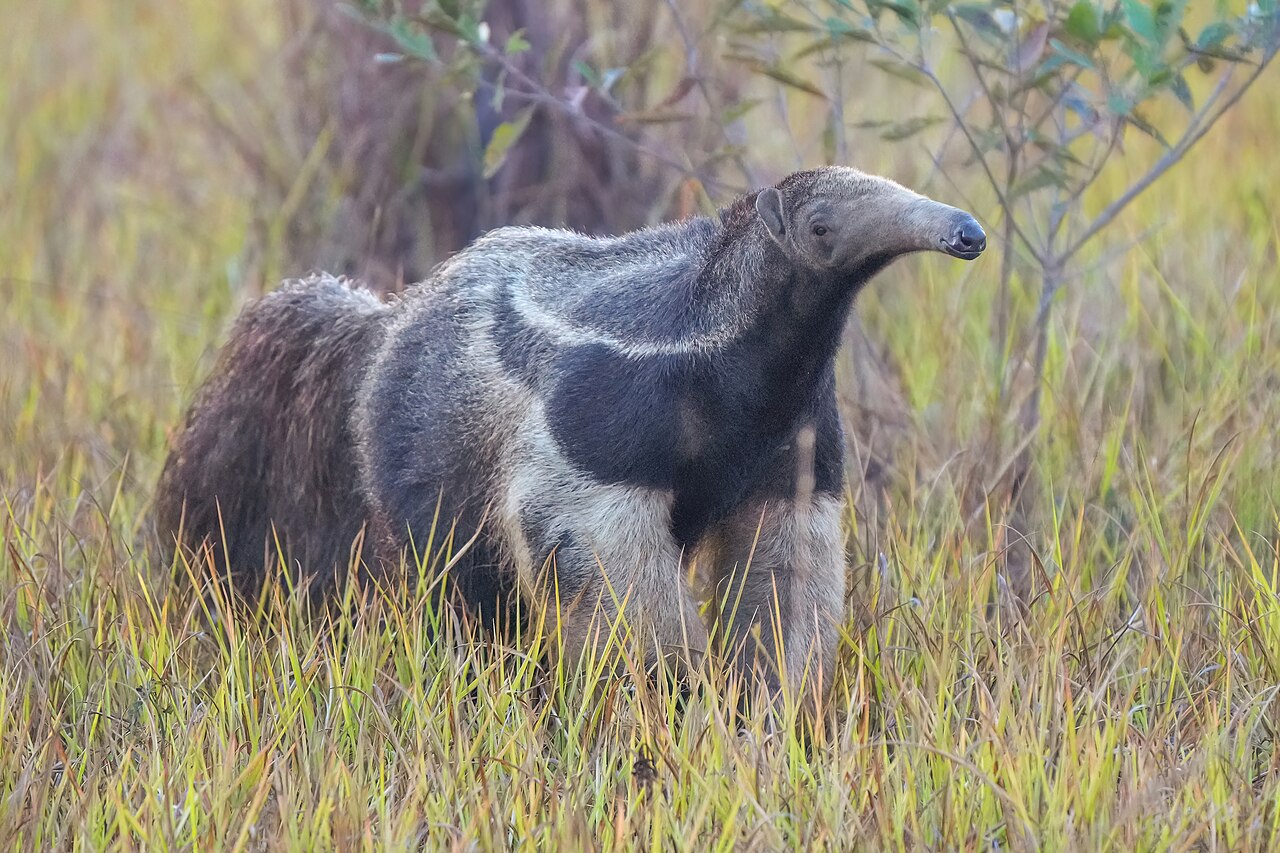
The front claws help tear into insect nests. Their power contrasts with the delicate-looking snout that follows.
Giant anteaters use altered forefoot postures while walking, helping protect those long claws. A photograph of the feet can look awkward until their feeding role is understood.
The animal's diet includes ants and termites, with feeding opportunities differing across habitats.
A young passenger on the back
Young giant anteaters ride on their mothers. The dark body markings can line up in a way that makes the youngster less obvious at a glance.
The National Zoo's breeding account documents this early period of care.
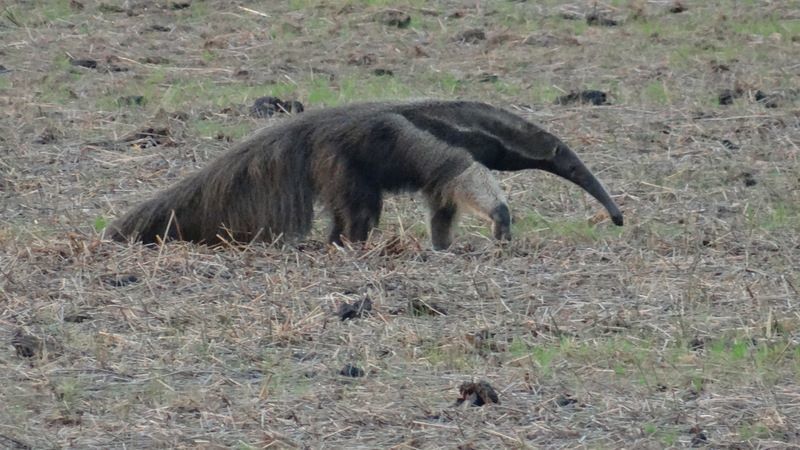
An adult walking alone in one photograph may therefore represent only part of a much longer family story.
A specialist needs a whole landscape
Habitat loss, fires, and road collisions can affect giant anteaters. Protecting them involves grasslands, woodlands, and other habitats, not just patches of dense forest.
Their striking shape is a lesson in specialization. A long tongue, strong claws, sensitive snout, and toothless mouth all contribute to the same daily task: gathering enough tiny prey to sustain an extraordinary mammal.
Photo credits
Featured image: Giles Laurent; Source; CC BY-SA 4.0. Resized for web display.

Body image 1: Giles Laurent; Source; CC BY-SA 4.0. Resized for web display.

Body image 2: Carlos Ruiz; Source; CC BY 4.0. Resized for web display.
