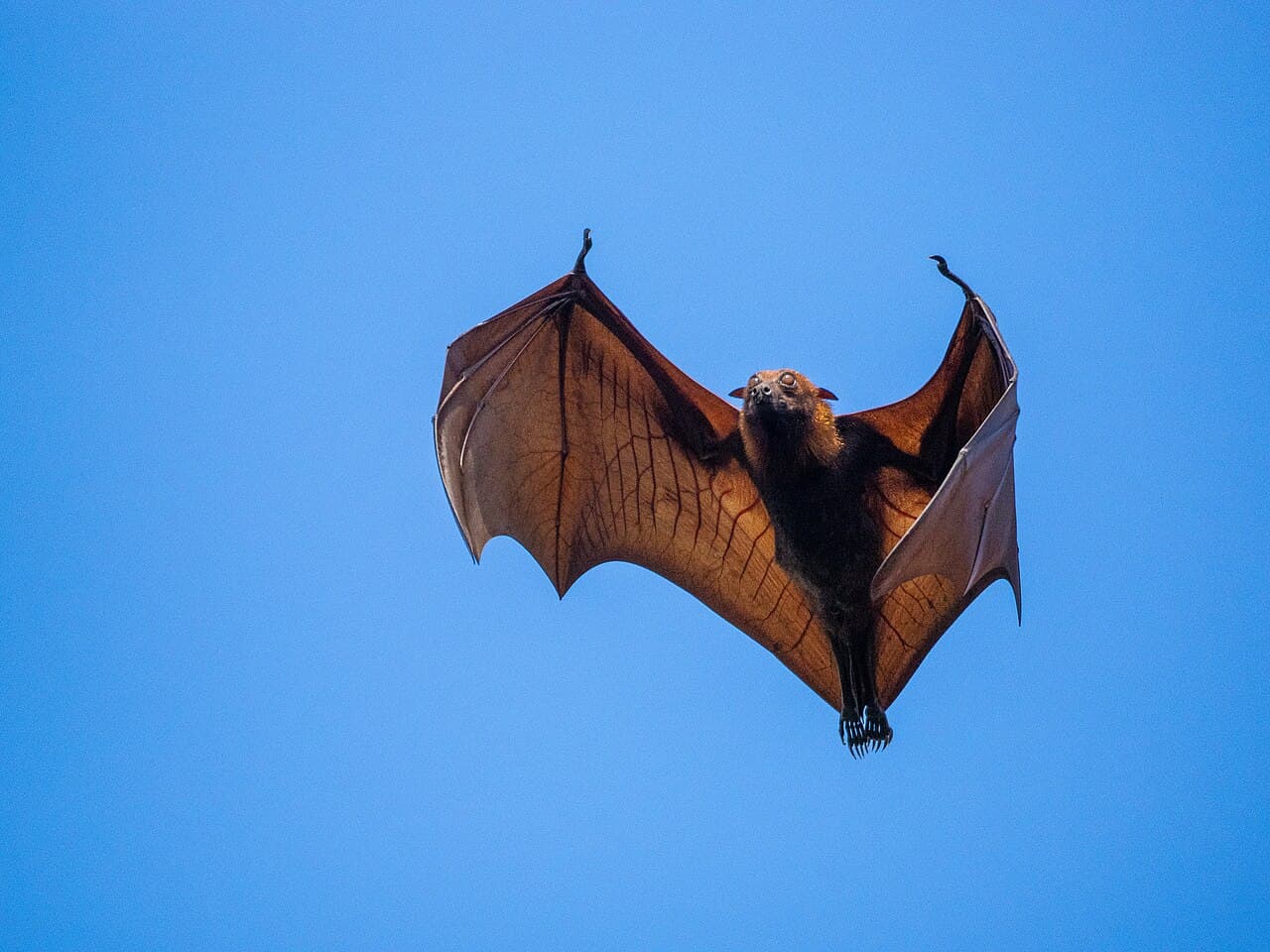
A flying fox has a long muzzle, bright eyes, and pointed ears that can look surprisingly dog-like. Open its wings, and that familiar face belongs to a very different kind of mammal.
Flying foxes are fruit bats in the genus Pteropus, and some rank among the largest bats.
A bat with wings built from fingers
The photographs here feature the large flying fox, Pteropus vampyrus, a Southeast Asian species.
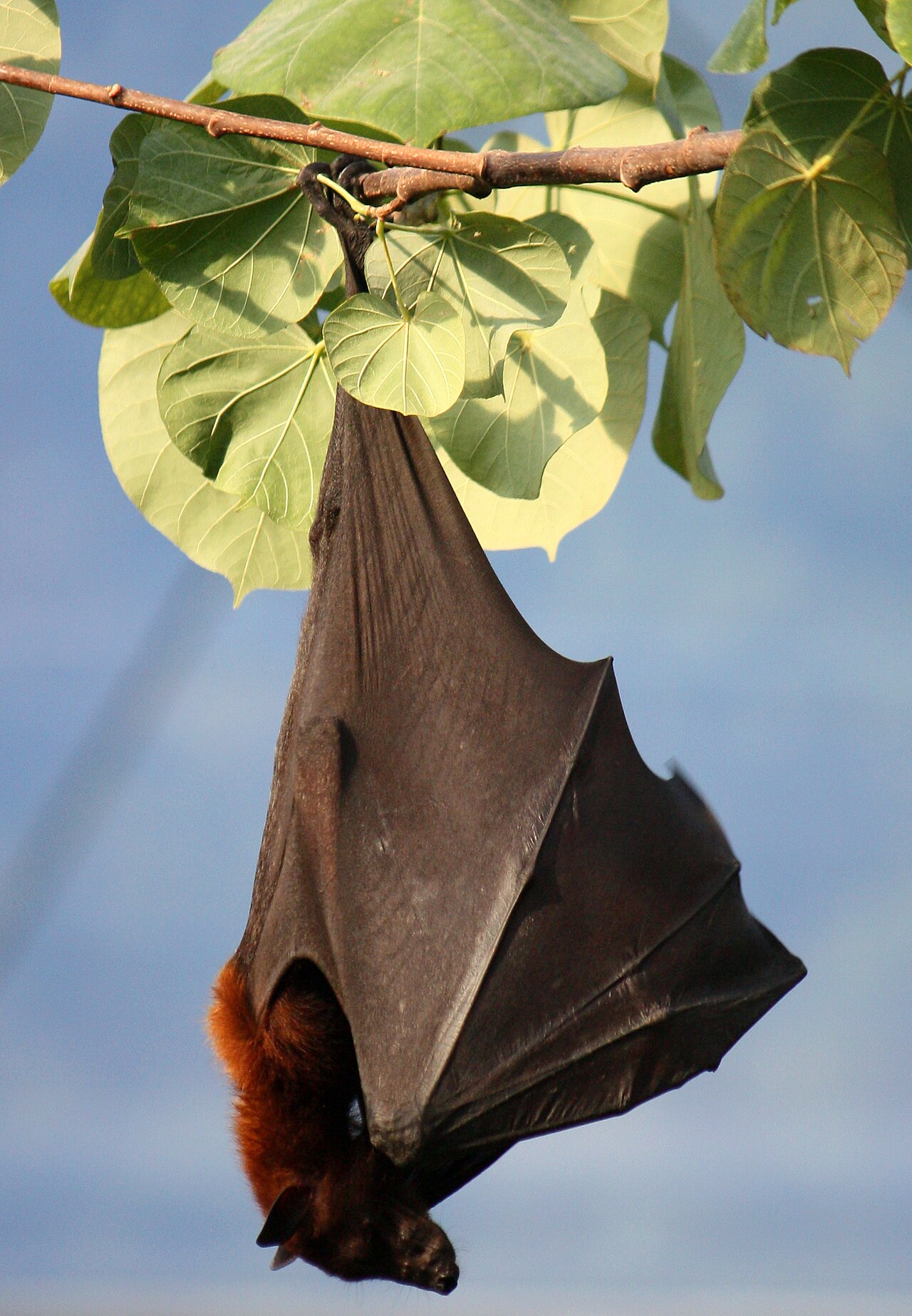
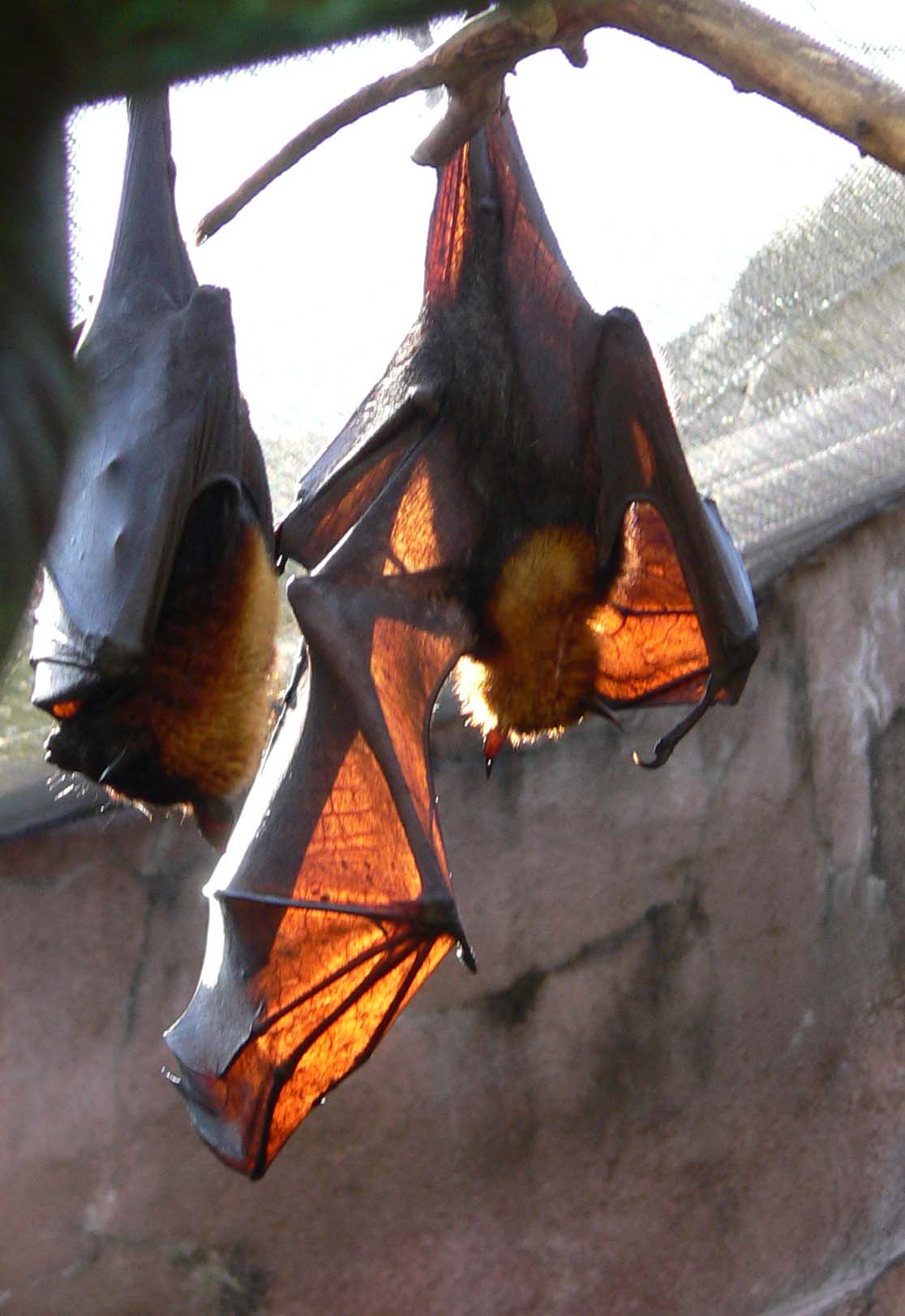
Its wing membrane stretches across elongated fingers. When resting, the bat can wrap those wings around its body while hanging from a perch.
Animal Diversity Web describes its anatomy, roosting behavior, and feeding.
Fruit, flowers, and a useful journey
Flying foxes feed on fruit, nectar, and flowers, with diets varying between species and seasons.
As they move between feeding sites, they can disperse seeds and carry pollen. San Diego Zoo Wildlife Alliance explains these ecological roles in another member of the group, the Rodrigues flying fox.
A feeding bat is therefore part of the forest's movement of plant life, not simply an animal visiting a fruit tree.
A flying fox is not a flying lemur
Flying foxes are bats capable of powered flight. Colugos, sometimes called flying lemurs, are different mammals that glide.
The similar names do not make them close relatives.
Roost-tree loss and hunting create conservation concerns for flying foxes. Protecting their feeding and resting habitats helps preserve the ecological work they do.
The fox-like face catches our attention; the wings and the journeys between trees reveal why this animal matters.
Photo credits
Featured image: Pteropus vampyrus 435399917.jpg — Justin Philbois; CC0.

Body image 1: Kalong (Pteropus vampyrus) sleeping 2.jpg — Dmitrij Rodionov, DR; CC BY-SA 3.0.

Body image 2: Pteropus vampyrus1.jpg — user:Raul654; CC BY-SA 3.0.

Photographs resized for web display where available. Existing crops are identified in the linked source files.