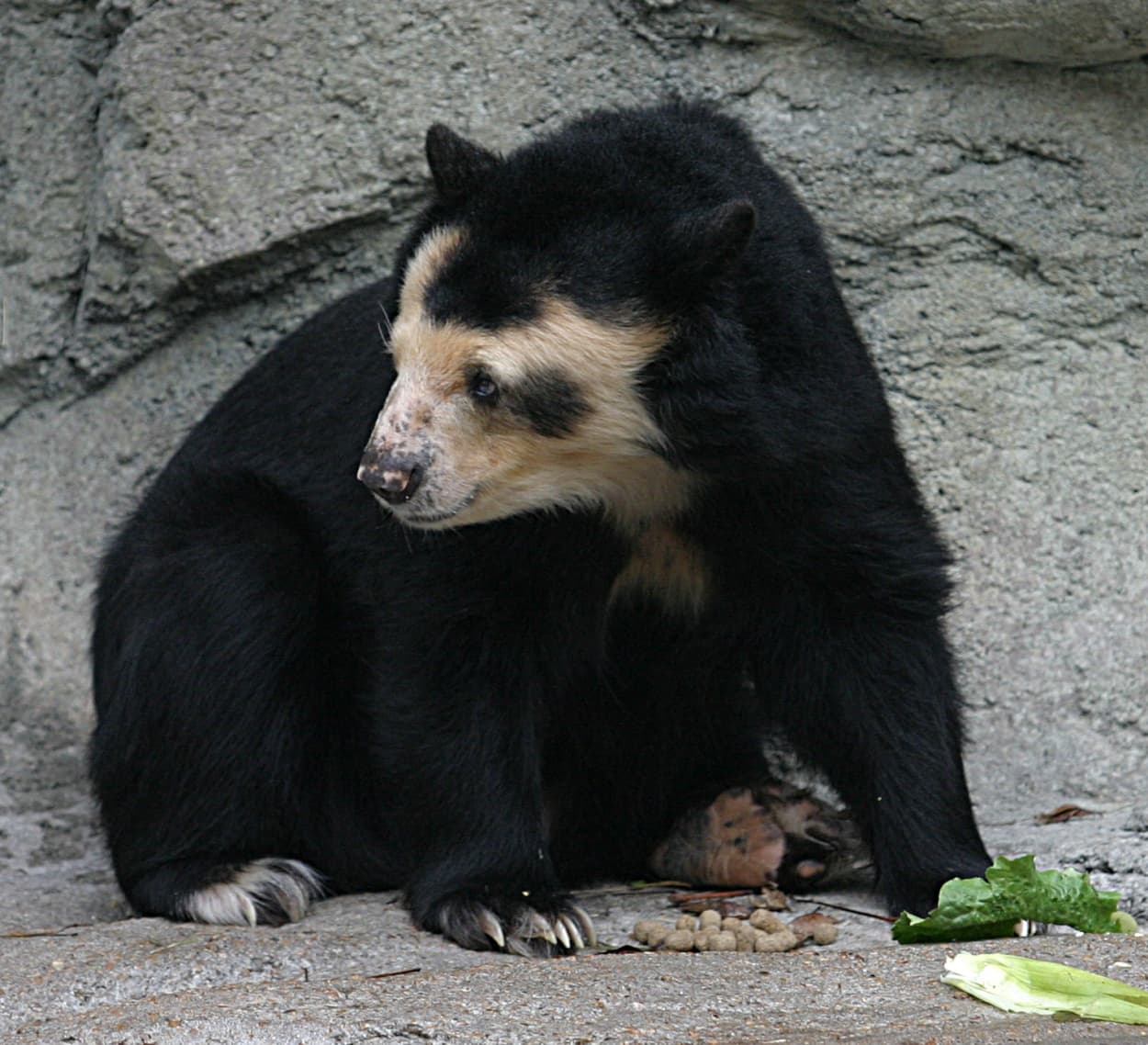
A spectacled bear's pale facial markings can be as distinctive as an individual signature. Some form clear rings around the eyes; others are faint, broken, or spread across the face and chest.
The pattern gives this South American bear its familiar name.
Reading the spectacles
The spectacled bear, Tremarctos ornatus, is also called the Andean bear. It is the only bear native to South America.
The Smithsonian's National Zoo describes the cream or whitish markings and their variation between individuals.
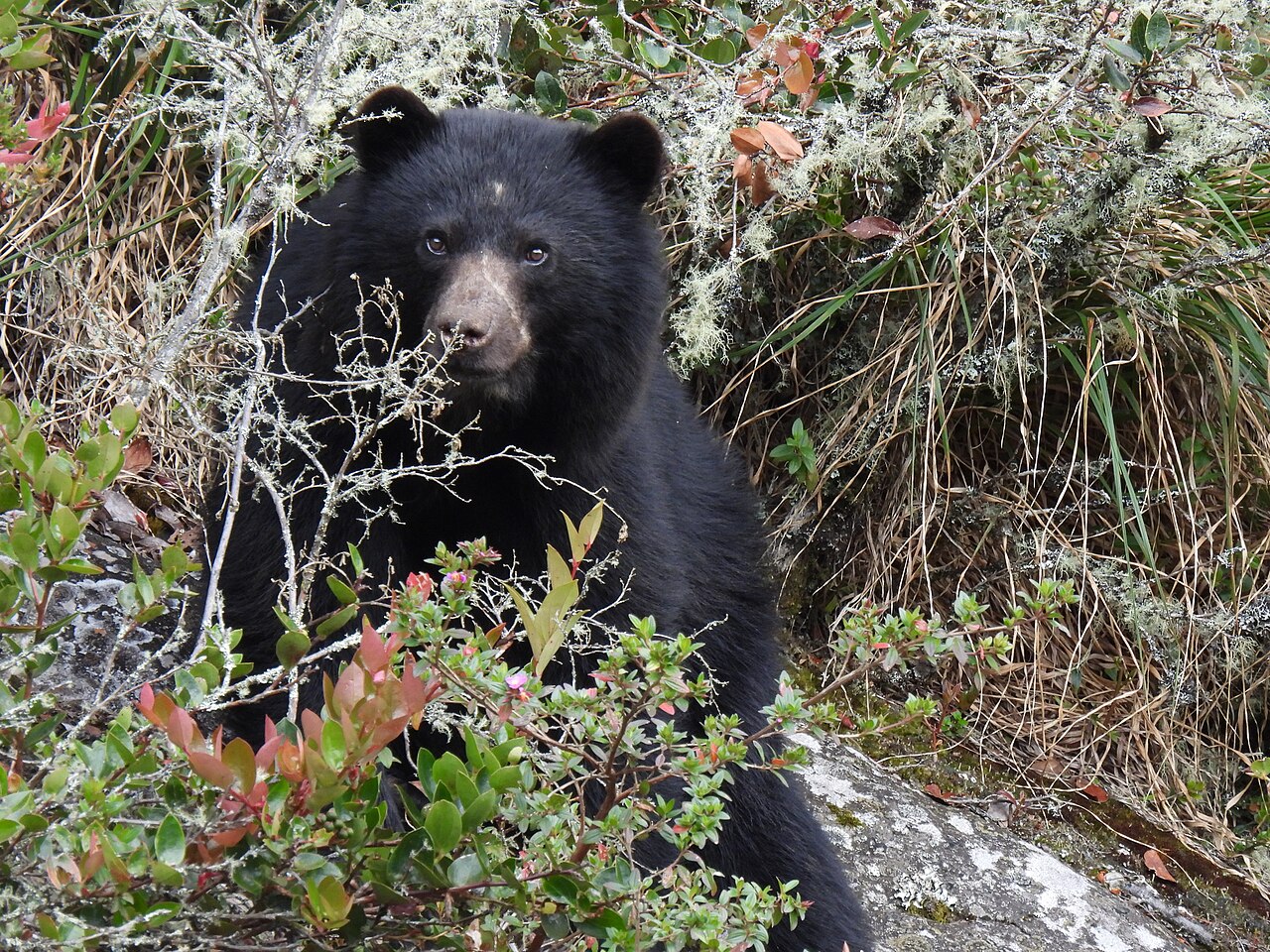
A bear does not need perfectly circular eye rings to belong to the species. Comparing photographs reveals how varied the markings can be.

A large animal at home in trees
Andean bears are capable climbers. They can build platforms from branches for feeding or resting above the ground.
Much of their diet comes from plants, although they are omnivores. Their movements connect feeding places across mountain habitats rather than following a single narrow forest type.
A tree can provide more than food: it can also become a place to pause and sleep.
Protecting a mountain neighbor
Habitat loss and hunting threaten these bears, while conflict can occur where their range overlaps with farms.
Conservation must consider both the animals and the people sharing the landscape. Keeping suitable habitat connected helps bears move between the resources they need.
The spectacles may make a portrait memorable, but the animal's climbing and feeding reveal a wider Andean story. Each distinctive face belongs to a bear whose future is tied to the mountains around it.
Photo credits
Featured image: Spectacled Bear - Houston Zoo.jpg — en:User:Cburnett; CC BY-SA 3.0.

Body image 1: Spectacled Bear 059.jpg — Ltshears; CC BY-SA 3.0.

Body image 2: Tremarctos ornatus 165975083.jpg — Jonathan Candil Méndez; CC BY 4.0.

Photographs resized for web display where available. Existing crops are identified in the linked source files.