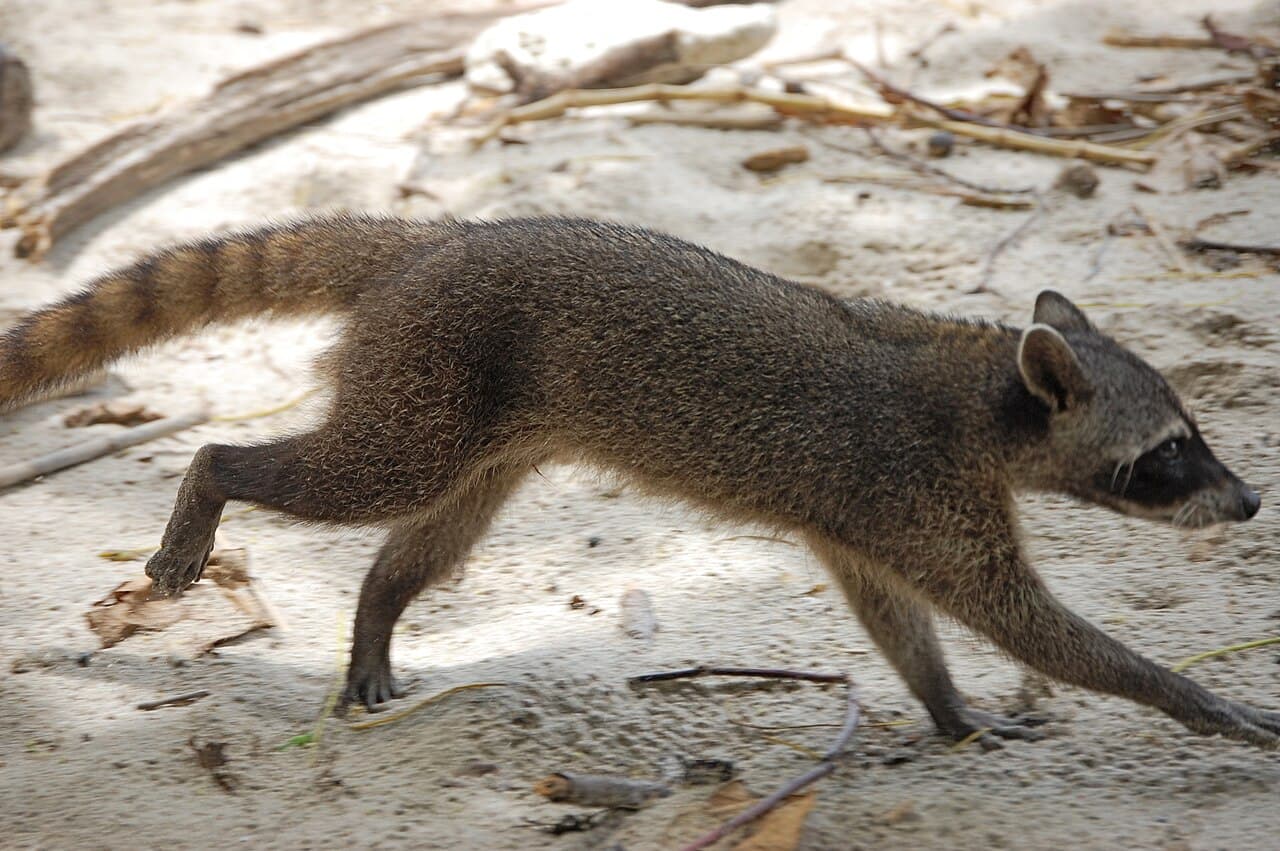
A crab-eating raccoon has a much broader menu than its name suggests. Crustaceans are part of the story, but fruit and many other foods can matter too.
This masked mammal is a flexible forager associated with tropical watersides.
A different raccoon
The crab-eating raccoon, Procyon cancrivorus, occurs from Central America through much of South America.
It is distinct from the familiar northern raccoon, Procyon lotor. Dark limbs and comparatively short fur can give it a slender appearance, while the facial mask and ringed tail remain recognizably raccoon-like.
Animal Diversity Web describes these differences and its varied habitats.
Reading food through the paws
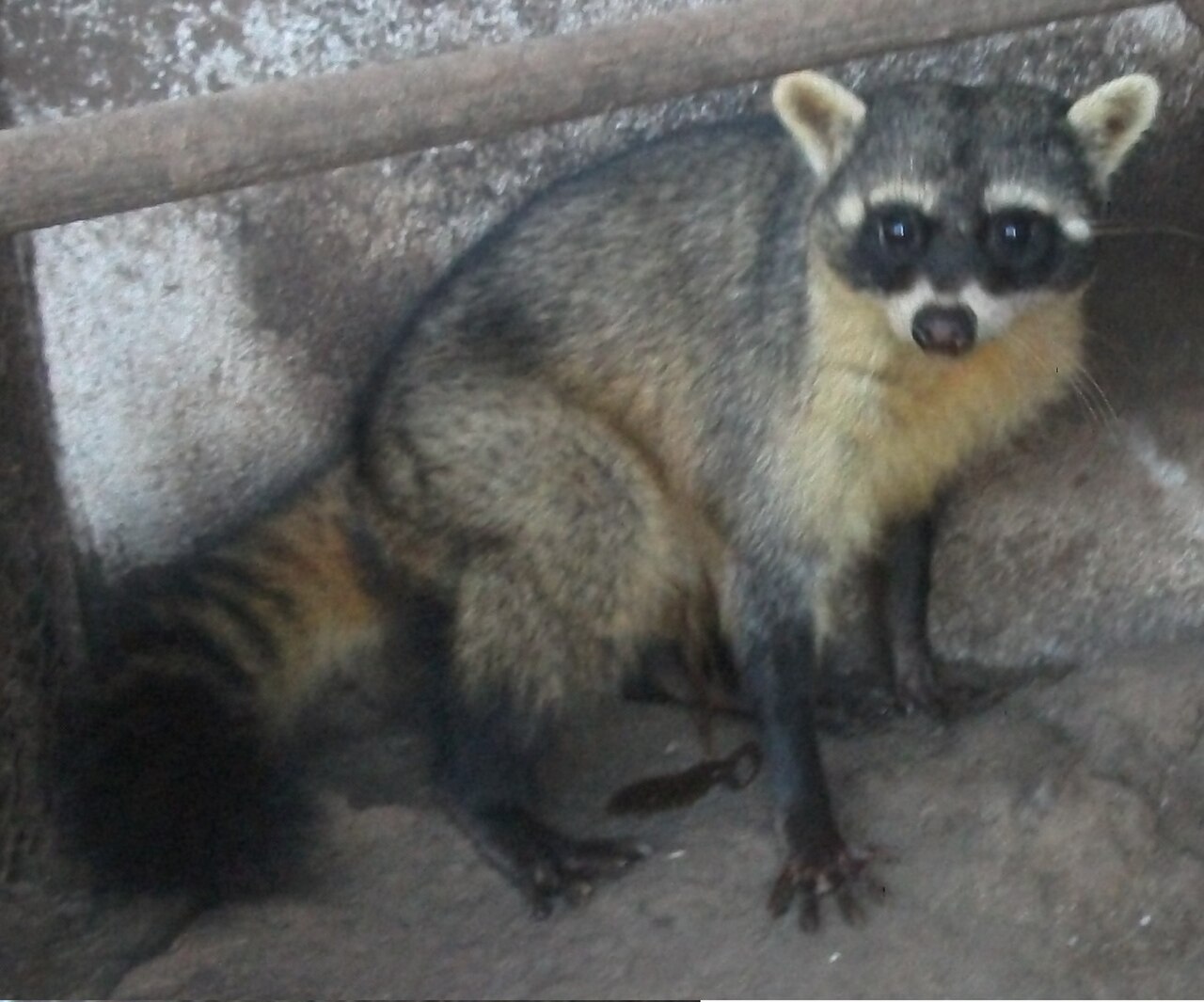
A sensitive sense of touch helps this raccoon investigate potential meals. Sight and smell also contribute to finding food.
Its diet can include crabs, other invertebrates, fish, frogs, and fruit. What it eats changes with season and availability, so the common name should not be read as an exclusive feeding rule.
It is mainly active at night, when quiet banks and wetland edges become places to search.
A waterside habitat is a whole home
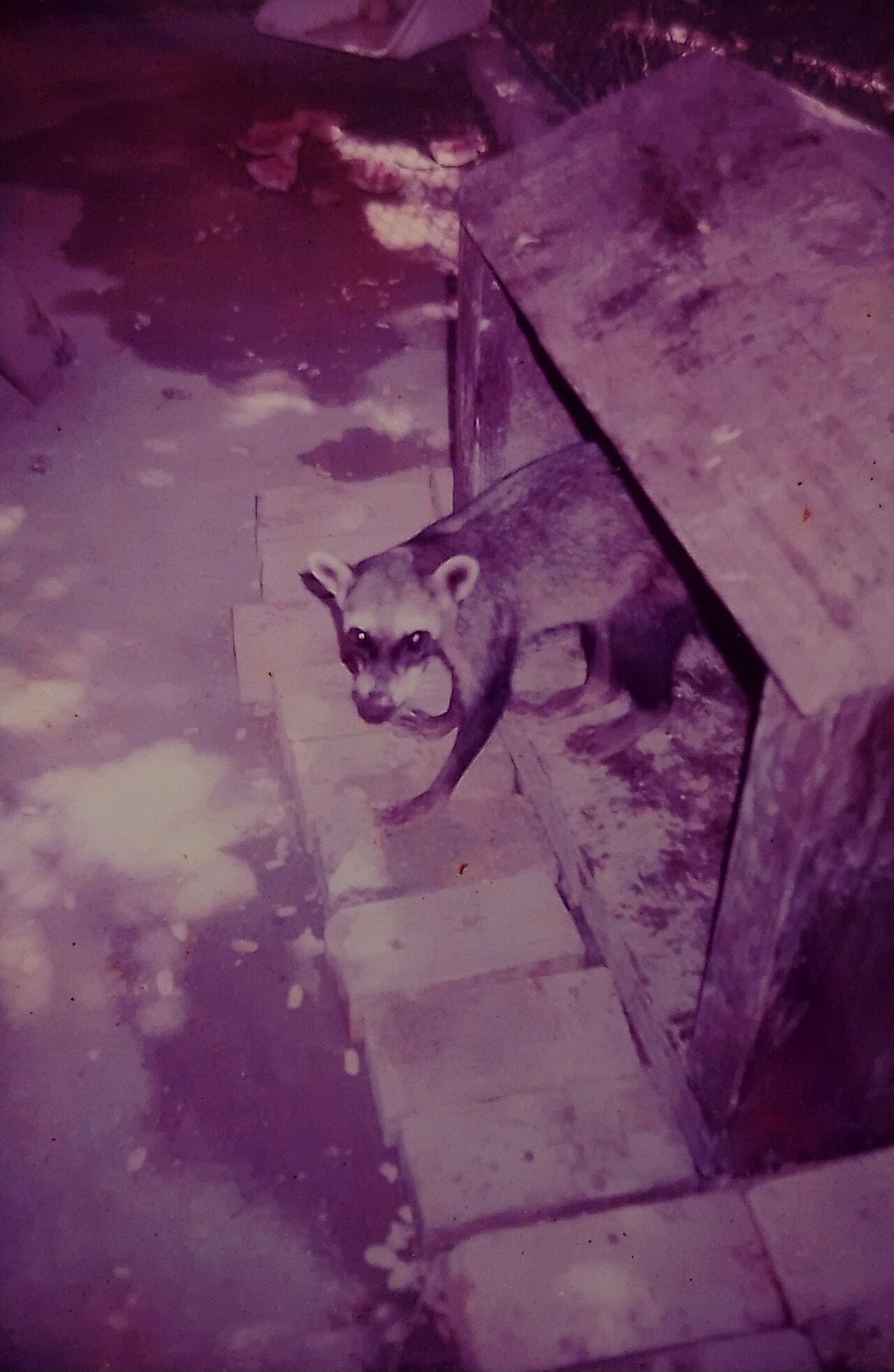
Food alone is not enough. The animal also needs cover and suitable places to rest and raise young.
Rivers, wetlands, and adjacent vegetation work together as habitat. Their value extends beyond the visible waterline.
The crab-eating raccoon is a reminder to look beyond a common name. A single food item introduces the animal, but the full story includes a versatile diet, sensitive paws, and a connected tropical landscape.
Photo credits
Featured image: Procyon cancrivorus 3, Costa Rica.JPG — Steven G. Johnson; CC BY-SA 3.0.

Body image 1: Mano pelada (Procyon cancrivorus nigripes).JPG — Melisa Banchero; CC BY-SA 4.0.

Body image 2: Zorro cangrejero (Procyon cancrivorus) Zoológico Gustavo Rivera.jpg — Escarabajo Lunar; CC0.

Photographs resized for web display where available. Existing crops are identified in the linked source files.